


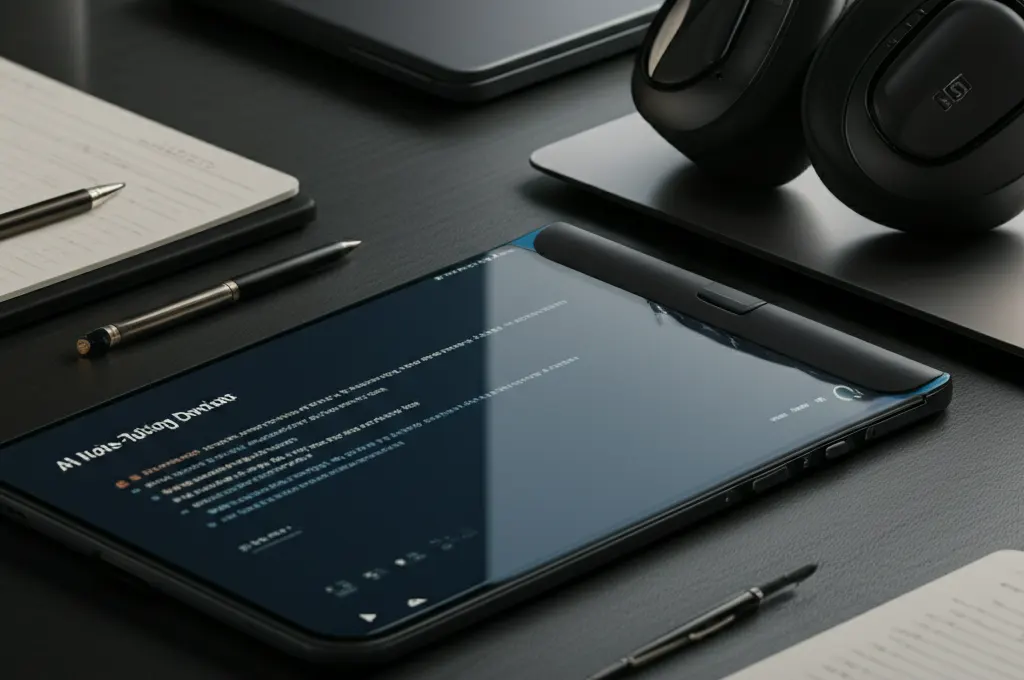
AI note-taking devices are smart tools that record lectures and meetings, then turn them into searchable text. They help students and professionals capture every detail, boosting learning and productivity.
The struggle to keep up during lectures or important meetings is real. You’re scribbling furiously, trying to catch every word, but inevitably, you miss crucial information. Important details slip away, leaving you with incomplete notes and a sense of frustration. This is where AI note-taking devices step in, acting as your personal digital scribe. They promise to revolutionize how you learn and work by ensuring no vital piece of information is lost. Get ready to discover how these clever gadgets can become your ultimate study essential.
What Exactly Are AI Note-Taking Devices?
AI note-taking devices are intelligent gadgets designed to automatically record audio, transcribe it into text, and often organize it for easy recall. They use artificial intelligence to understand speech, identify speakers, and even summarize key points. These devices aim to free you from the burden of manual note-taking.
Think of them as your super-smart assistant for lectures, meetings, or even brainstorming sessions. Instead of juggling a pen and paper, you simply activate the device, and it does the heavy lifting. This allows you to fully engage with the speaker, ask questions, and absorb information without the distraction of writing. The recorded audio and generated text are usually stored and accessible via an app, making them easy to review later.
How AI Note-Taking Devices Capture Information

These devices employ advanced microphones to pick up clear audio, even in noisy environments. Their core technology is speech recognition, which converts spoken words into written text. AI algorithms then process this text to improve accuracy and add context.
The process begins with high-quality audio capture. Sophisticated microphones minimize background noise and isolate the speaker’s voice. Next, the audio is fed into a powerful speech-to-text engine. This engine, powered by AI, converts the spoken words into a written transcript. More advanced devices can even distinguish between different speakers, labeling their contributions accurately. This makes reviewing conversations much simpler.
The Role of Artificial Intelligence in Note-Taking
AI is the brain behind these devices, enabling features like summarization, keyword identification, and translation. It learns from vast amounts of data to improve its transcription accuracy over time. AI also helps in understanding the context of conversations.
Artificial intelligence plays a crucial role in transforming raw audio into useful, organized notes. It can identify key topics discussed, flag important action items, and even provide concise summaries of lengthy discussions. Some AI note-takers can even translate recorded speech into different languages, broadening their utility for international students or global teams. This intelligent processing makes your notes far more valuable than simple transcripts.
Benefits for Students: Elevating Your Study Game
For students, AI note-taking devices are a game-changer. They ensure you don’t miss a single detail from lectures, helping you prepare for exams more effectively. You can focus on understanding complex concepts rather than frantically writing them down.
Imagine attending a challenging physics lecture. Instead of worrying about missing the derivation of a formula, you can listen intently. Later, you can access a perfect transcript, highlighting the exact steps explained. This allows for deeper comprehension and better retention of material. It also supports different learning styles, offering both auditory and textual review options.
Never Miss a Crucial Point Again
With an AI note-taking device, every word spoken in class is captured. This means no more regretting a missed explanation or a forgotten example. The device acts as a perfect backup.
This eliminates the anxiety of falling behind in fast-paced lectures. You can be fully present, absorbing the material as it’s delivered. When you review your notes later, you’ll have the complete picture, exactly as it was presented. This comprehensive capture is invaluable for subjects requiring precise understanding.
Enhanced Learning and Recall
Having accurate, searchable transcripts makes studying much more efficient. You can quickly find specific topics or keywords within your notes, speeding up revision. This leads to better understanding and improved exam performance.
Reviewing lectures becomes a breeze. Instead of wading through pages of messy handwriting, you can search for “thermodynamics” or “photosynthesis” and instantly jump to those sections. This targeted revision saves time and helps solidify your knowledge. It’s like having a searchable library of all your classes.
Supporting Diverse Learning Styles
These devices cater to both auditory and visual learners. You can listen back to lectures to reinforce auditory memory, or read the transcripts to enhance visual learning. This flexibility benefits everyone.
Some students learn best by listening, while others benefit from reading. AI note-takers provide both. You can re-listen to a professor’s tone and emphasis or scan the text for key terms. This dual-mode learning supports a wider range of student needs.
Benefits for Professionals: Boosting Productivity and Efficiency
Professionals can leverage AI note-taking devices to improve meeting efficiency and project management. Capturing every detail from client calls or team discussions ensures clarity and accountability. Action items are never forgotten.
In the fast-paced corporate world, meetings can be packed with information. AI note-takers ensure that decisions made, tasks assigned, and insights shared are all documented accurately. This leads to fewer misunderstandings and more productive outcomes. It also frees up mental bandwidth for strategic thinking.
Streamlining Meeting Minutes and Follow-ups
Automating the process of taking meeting minutes saves significant time. AI devices can generate summaries and identify action items, ensuring everyone is on the same page. This reduces administrative overhead.
Instead of one person spending hours transcribing and summarizing a meeting, the AI device handles it. You can focus on contributing to the discussion. Post-meeting, you receive a clear, actionable report. This allows for faster follow-up and quicker progress on projects.
Improving Project Management and Accountability
By accurately recording discussions, AI note-takers help track project progress and assign responsibilities clearly. This reduces the chances of tasks being missed or misunderstood, fostering better accountability. Clear records are vital for project success.
When you have a precise record of who agreed to do what and by when, projects run smoother. This documentation serves as a reliable reference point. It helps in resolving any disputes about commitments and ensures project timelines are met more reliably.
Enhancing Client Communications
For sales professionals or client-facing roles, detailed records of client interactions are invaluable. AI note-takers ensure you remember every request, feedback point, and agreed-upon detail, leading to stronger client relationships. Understanding client needs deeply is key.
After a client call, you can instantly review the conversation to recall specific preferences or concerns. This allows you to tailor your follow-up and services more effectively. Building trust through attentiveness significantly improves client satisfaction and retention.
Key Features to Look For in an AI Note-Taking Device
When choosing an AI note-taking device, consider factors like transcription accuracy, battery life, storage capacity, and ease of use. Features like speaker identification and summarization add significant value. The best devices offer a balance of these capabilities.
Not all AI note-takers are created equal. Understanding the specific features that matter most to your workflow will help you select the right tool. Prioritizing accuracy and usability will ensure you get the most out of your investment.
Transcription Accuracy and Language Support
The most critical feature is how accurately the device transcribes speech. Look for devices that support multiple languages if you often encounter different linguistic contexts. High accuracy means less manual correction.
A device that struggles with accents, technical jargon, or background noise will require more post-processing. Research reviews and compare accuracy rates for your specific use cases. Some devices offer specialized AI models for different industries.
Battery Life and Storage
For lectures or long meetings, extended battery life is essential. Similarly, ample storage is needed to save numerous recordings and transcripts. Cloud storage options can also extend your capacity.
Consider how long you’ll typically use the device without charging. If you’re always on the go, a device with all-day battery life is crucial. For storage, consider whether you prefer local storage or cloud synchronization. Many modern devices offer both.
Ease of Use and Portability
The device should be intuitive to operate, allowing you to start recording quickly. Its portability is also important, so it’s easy to carry around campus or to meetings. A sleek, user-friendly design enhances the overall experience.
A complex interface can be as distracting as manual note-taking. Look for devices with simple controls and a clear app interface for managing your notes. Compact and lightweight designs are ideal for students and mobile professionals.
Advanced AI Features: Summarization and Speaker ID
Features like automatic summarization and speaker identification can significantly enhance usability. Summaries provide quick overviews, while speaker identification clarifies who said what in group discussions. These features add professional polish.
Imagine reviewing a meeting where multiple people spoke. Speaker identification allows you to quickly attribute comments and action items. AI-powered summarization can distill hours of discussion into a few key bullet points, saving immense time.
Top AI Note-Taking Devices on the Market
The market for AI note-taking devices is growing rapidly, with several excellent options available. From dedicated recorders to smart pens and apps, there’s a solution for nearly every need and budget. We’ll explore some leading contenders.
Choosing the right device often comes down to your specific needs and budget. Some are standalone hardware, while others integrate with existing devices. Understanding the strengths of each can guide your decision.
Standalone Audio Recorders with AI
Devices like the Livescribe Echo Smartpen (though a smart pen, it integrates with recording) or dedicated AI recorders offer high-quality audio capture and robust transcription. They are built for focused recording.
These devices often boast superior microphone quality and longer battery life. They are designed to be the primary tool for capturing spoken information. Their specialized nature means they are optimized for this single, crucial task.
Smart Pens and Digital Notebooks
Smart pens can digitize handwritten notes and sync them with audio recordings. This offers a hybrid approach for those who prefer writing by hand but want the benefits of digital searchability and audio backup. It blends traditional and digital.
Combining a physical notebook with digital capabilities offers a familiar feel. As you write, the pen records audio, linking it to specific parts of your notes. This is perfect for visual thinkers who also need comprehensive records.
Mobile Apps with AI Transcription
Many smartphone apps leverage your phone’s microphone to record and transcribe audio. While potentially less sophisticated than dedicated hardware, these offer a convenient and often free or low-cost solution. They are accessible to almost everyone.
Apps like Otter.ai or Google Recorder provide powerful transcription services directly on your phone. They are excellent for capturing spontaneous conversations or quick lecture notes. Their accessibility makes them a popular choice for many users.
Integrating AI Note-Takers into Your Workflow
Successfully integrating an AI note-taking device means making it a regular part of your routine. This involves consistent use, efficient management of your recorded notes, and leveraging the transcribed data for maximum benefit. It’s about making the technology work for you.
Simply owning the device isn’t enough; you need to build habits around its use. This ensures you consistently capture valuable information and utilize the AI’s capabilities to their fullest extent. The goal is to make your workflow smarter, not just add another gadget.
Establishing a Routine for Recording
Make it a habit to start your AI note-taker at the beginning of every lecture, meeting, or important conversation. Consistency is key to ensuring you don’t miss any critical information. Integrate it into your pre-meeting or pre-class checklist.
This simple step transforms the device from an occasional tool into an indispensable part of your workflow. The more you use it, the more natural it becomes. Treat it like turning on your laptop or opening your textbook.
Organizing and Reviewing Transcripts
Develop a system for naming, saving, and organizing your recordings and transcripts. Regularly review your notes to reinforce learning or track action items. Use tags or folders to categorize content by subject or project.
Effective organization prevents your notes from becoming a digital mess. You should be able to find specific information quickly when you need it. A few minutes spent organizing each day can save hours of searching later.
Leveraging AI Insights for Action
Don’t just store the transcripts; use them. Extract key takeaways, identify action items, and use the information to inform your decisions or study strategies. This is where the real power of AI note-taking lies.
The true value comes from acting on the insights gained. Whether it’s preparing for an exam by reviewing key concepts or following up on a project task, actively using your notes drives results. The AI helps you find the information; you provide the action.
Potential Drawbacks and Considerations
While AI note-taking devices offer incredible benefits, it’s important to be aware of potential drawbacks. These can include transcription errors, privacy concerns, and the cost of some devices. Understanding these helps in making an informed decision.
No technology is perfect, and AI note-takers are no exception. Being aware of their limitations allows you to mitigate potential issues and choose a device that best suits your tolerance for these concerns. It’s about managing expectations.
Transcription Errors and Accuracy Limitations
AI transcription is not always 100% accurate. Background noise, strong accents, or technical jargon can lead to errors. You may still need to proofread and edit the transcripts for critical information. This is a known limitation of current AI.
While AI is constantly improving, it’s not foolproof. For highly sensitive or critical information, a human review is still recommended. Consider the context in which you’ll use the device when evaluating its potential for errors.
Privacy and Data Security
Recording conversations raises privacy concerns. Ensure you are aware of and comply with any local laws or regulations regarding consent for recording. Also, consider how the device manufacturer handles your data.
Always be mindful of who is being recorded and obtain consent where necessary. For business use, check your company’s policies on data recording and storage. Choosing devices with robust security features is advisable.
Cost and Device Dependency
Dedicated AI note-taking hardware can be expensive. Additionally, you become dependent on the device and its associated software or cloud services. Consider the long-term costs and potential vendor lock-in.
While apps offer a more affordable entry point, professional-grade recorders can represent a significant investment. Evaluate whether the benefits justify the cost for your specific needs. Explore options that offer good value for money.
AI Note-Taking Devices vs. Traditional Methods
Comparing AI note-taking devices to traditional methods like pen and paper or standard digital notes reveals significant advantages. While traditional methods are simple, they lack the automation and searchability of AI-powered tools. AI offers a leap in efficiency and recall.
The core difference lies in the automation and intelligence AI brings. Traditional methods require manual effort for every step, from writing to organizing to finding information later. AI automates much of this, freeing up your time and mental energy.
Speed and Efficiency Comparison
AI note-takers capture information much faster than manual note-taking. They record everything simultaneously, eliminating the need to constantly switch between listening and writing. This dramatically increases efficiency during live events.
Imagine a 60-minute lecture. Manually taking notes might require you to pause the speaker or miss parts of the explanation. An AI device captures it all instantly, allowing you to focus on learning. This speed advantage is undeniable.
Searchability and Accessibility
Transcribed notes are easily searchable using keywords, something impossible with handwritten notes. This makes reviewing and finding specific information incredibly efficient. Accessing notes on multiple devices is also common.
With a handwritten notebook, finding a specific topic might involve flipping through pages. With an AI transcript, a quick search query brings you directly to the relevant section. This accessibility is a major benefit for study and work.
Information Retention and Comprehension
By freeing you from the burden of note-taking, AI devices allow for greater focus on understanding. Reviewing accurate transcripts later further aids comprehension and long-term retention. This leads to deeper learning outcomes.
When you’re not preoccupied with writing, your brain is free to process and understand information in real-time. Later, re-reading or re-listening to clear, organized notes solidifies that understanding. This combination is powerful for learning.
The Future of Note-Taking with AI
The evolution of AI note-taking devices is far from over. We can expect even greater accuracy, more sophisticated summarization, and seamless integration with other productivity tools. The future promises even smarter ways to capture and manage information.
As AI technology advances, these devices will become even more indispensable. Imagine devices that can anticipate your needs or proactively organize information based on context. The potential is immense for transforming how we learn and work.
Advancements in Speech Recognition
Future AI note-takers will boast near-perfect transcription accuracy, even in challenging audio environments. Improved natural language processing will enable better understanding of context and nuance. Expect fewer errors and more reliable transcripts.
Developments in AI mean that speech recognition is becoming incredibly sophisticated. This will translate to devices that handle complex conversations with multiple speakers and varied accents with ease. The goal is to make transcription indistinguishable from human accuracy.
Enhanced Summarization and Analysis
AI will likely offer more advanced summarization capabilities, generating detailed reports, identifying trends, and even suggesting follow-up actions. Predictive analysis based on recorded data could also emerge. AI will become an analytical partner.
Beyond simple summaries, future AI might analyze meeting content to identify recurring issues or opportunities. It could highlight key decisions and predict potential roadblocks. This moves AI from a recorder to an intelligent assistant.
Seamless Integration with Other Tools
Expect AI note-taking devices to integrate more deeply with calendars, project management software, and other productivity platforms. This will create a more unified and automated workflow for managing information and tasks. Your digital tools will work together more harmoniously.
Imagine your AI note-taker automatically creating calendar events from meeting discussions or generating tasks in your project management tool. This level of integration will streamline workflows and reduce manual data entry significantly. It creates a connected digital workspace.
Frequently Asked Questions About AI Note-Taking Devices
What is the main purpose of an AI note-taking device?
Their main purpose is to automatically record audio from lectures or meetings, transcribe it into text, and make that information easily searchable and reviewable. They aim to help you capture every important detail without manual effort.
Can AI note-taking devices transcribe in real-time?
Yes, many AI note-taking devices and apps can transcribe speech in real-time as it happens. This allows you to see the text being generated on a screen, which can be helpful for following along.
Are AI note-taking devices accurate enough for important meetings?
Accuracy has improved greatly, but it’s not always perfect. For critical meetings, it’s wise to use a device known for high accuracy and to always proofread the transcript afterward. Consider devices with good noise-cancellation features.
Do I need an internet connection for AI note-taking devices?
Some devices require an internet connection for cloud-based transcription, while others can transcribe offline. Check the specifications of the device you are considering to understand its connectivity requirements. Offline capabilities are great for areas with poor Wi-Fi.
How do AI note-taking devices handle multiple speakers?
Advanced devices use AI to identify and distinguish between different speakers, labeling their contributions in the transcript. This makes reviewing conversations much clearer and easier to follow. Some may require initial training.
Are there any privacy concerns with using AI note-taking devices?
Yes, privacy is a key consideration. You should always ensure you have consent from all participants before recording conversations, and be aware of how the device manufacturer handles your data. Check local laws on audio recording.
Can AI note-taking devices help with learning disabilities?
Absolutely. For students with dyslexia or ADHD, AI note-takers can be incredibly beneficial. They reduce the cognitive load of manual note-taking, allowing focus on understanding, and provide easily reviewable text.
Conclusion: Your Smartest Study Companion
AI note-taking devices are rapidly evolving from a novelty to a necessity for students and professionals alike. They offer an unparalleled ability to capture, organize, and recall spoken information, transforming how we learn and work. By automating the tedious task of note-taking, these intelligent gadgets free you to focus on what truly matters: understanding concepts, engaging in discussions, and driving productivity. Whether you’re a student facing complex lectures or a professional navigating busy meeting schedules, an AI note-taking device can become your most valuable productivity tool. Invest in one, and unlock a smarter, more efficient way to manage information and achieve your goals.
Consider exploring options that align with your budget and specific needs. Many apps offer free trials, allowing you to test their capabilities before committing to hardware. The future of effective learning and work is here, and it’s powered by AI.

Belayet Hossain is a Senior Tech Expert and Certified AI Marketing Strategist. Holding an MSc in CSE (Russia) and over a decade of experience since 2011, he combines traditional systems engineering with modern AI insights. Specializing in Vibe Coding and Intelligent Marketing, Belayet provides forward-thinking analysis on software, digital trends, and SEO, helping readers navigate the rapidly evolving digital landscape. Connect with Belayet Hossain on Facebook, Twitter, Linkedin or read my complete biography.