Close Menu
itphobia.comitphobia.com
  • Home
  • Free Tools
    • Free Readability Checker
    • Free Search Engine Index Checker
    • Free Meta Tag Checker
  • Services
    • Lead Generation
  • Blog

Subscribe to Updates

Get the latest creative news from FooBar about art, design and business.

loader

Email Address*

First Name

Last Name

What's Hot

Be Prepared for Ransomware: A Practical Guide for Readiness and Resilience

05/11/2026

Best PC Configurations for Gaming, Video Editing, AI and Professional Work

05/11/2026

How to Know RAM Speed: Read Labels, Decode Model Numbers, and Check Compatibility

05/11/2026
Facebook X (Twitter)
itphobia.comitphobia.com
  • Home
  • Free Tools
    • Free Readability Checker
    • Free Search Engine Index Checker
    • Free Meta Tag Checker
  • Services
    • Lead Generation
  • Blog
itphobia.comitphobia.com
Home»Blog»Technology»Emerging Technology & Digital Security»Blockchain & Web3»Crypto»Crypto Card Security: Custodial vs Non-Custodial Risk

Crypto Card Security: Custodial vs Non-Custodial Risk

Crypto
Crypto Card Security
Share
Facebook Twitter Pinterest Email
Published on: 09/07/2026 | Updated on: July 9, 2026

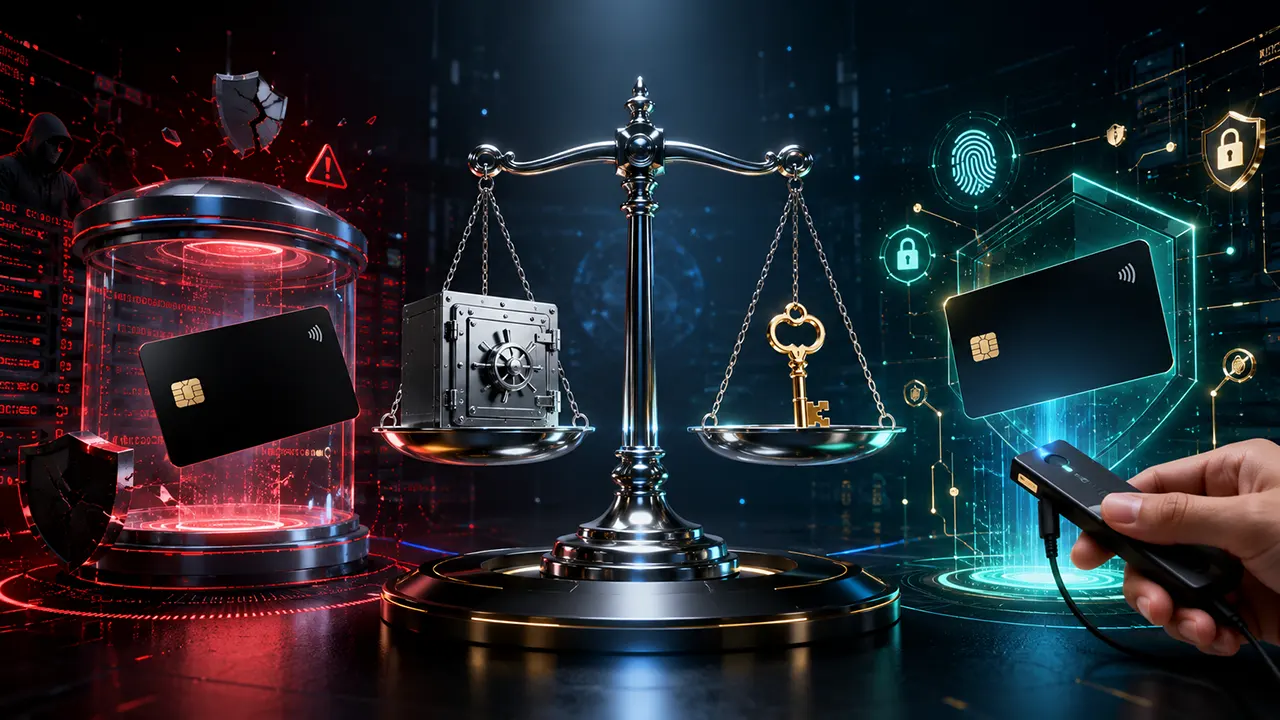
Security is the question most crypto card marketing glosses over, yet it is where the biggest differences between products live. The core issue is custody: who actually controls the funds behind your card. A clear-eyed overview like this crypto card guide frames the trade-offs so you can choose with the risks in view rather than hidden.

Custodial cards hold your converted balance on your behalf. This is convenient, but it concentrates funds in the provider’s systems, including hot wallets that have historically been prime targets for attackers. If the provider is breached or becomes insolvent, your balance is exposed in ways that depend entirely on the issuer’s safeguards and jurisdiction. Whether client funds are ring-fenced from company assets is a detail worth confirming rather than assuming.

Non-custodial cards take the opposite approach, spending directly from a wallet you control and releasing funds only at the moment of authorization. This removes the provider as a single point of failure for your balance, but it shifts responsibility to you: your key management becomes the security boundary. A lost key or a compromised device is now your risk to manage, and there is no support line to reverse that.

Neither model is universally safer; they relocate risk rather than eliminate it. The right choice depends on how much you value convenience against control, and on how confident you are managing self-custody. For many users, a hybrid habit works well: keep only a modest spending balance on a custodial card and hold larger amounts in self-custody.

Beyond custody, the usual card security features still matter: the ability to freeze the card instantly, virtual card numbers for online purchases, spending limits, and strong authentication. These reduce the damage from a lost card or a leaked number regardless of the custody model, and support for two-factor authentication and transaction alerts is a baseline worth insisting on.

Issuer stability is itself a security factor. A provider that suspends service or winds down can trap funds even without a hack, which is why the number of closed card programs makes longevity a genuine consideration.

The practical approach is to decide your custody preference first, then compare cards on their concrete security controls and the strength of their issuer. Treating security as a first-class selection criterion, rather than assuming every card is equally safe, is the difference between a tool you can trust with real money and one you cannot.

Belayet Hossain
Web | + postsBio ⮌

Belayet Hossain is a Senior Tech Expert and Certified AI Marketing Strategist. Holding an MSc in CSE (Russia) and over a decade of experience since 2011, he combines traditional systems engineering with modern AI insights. Specializing in Vibe Coding and Intelligent Marketing, Belayet provides forward-thinking analysis on software, digital trends, and SEO, helping readers navigate the rapidly evolving digital landscape. Connect with Belayet Hossain on Facebook, Twitter, Linkedin or read my complete biography.

  • Belayet Hossain
    Be Prepared for Ransomware: A Practical Guide for Readiness and Resilience
  • Belayet Hossain
    Best PC Configurations for Gaming, Video Editing, AI and Professional Work
  • Belayet Hossain
    How to Know RAM Speed: Read Labels, Decode Model Numbers, and Check Compatibility
  • Belayet Hossain
    How to Know Processor Speed by Model Number: Intel and AMD Explained
Share. Facebook Twitter Pinterest LinkedIn Tumblr Email

Recommened for You

Crypto Payment Gateway Development: A Practical Guide to Building a Secure Platform

27/08/2026

Trends in Cryptocurrency Wallet Security: Protect Your Investments

23/08/2023

Future of Web Hosting: Crypto Web Hosting for Crypto and Bitcoin Enthusiasts

23/08/2023

Dogecoin Review and Its Price Predictions

31/07/2023

Sushiswap SUSHI: Innovating Automated Market Making in DeFi

20/07/2023

Buy Yuan in India: Open Doors to International Investments

20/07/2023

Leave a ReplyCancel reply

This site uses Akismet to reduce spam. Learn how your comment data is processed.

ANYpin Note Pod P1 AI Voice Recorder
Latest Updates
  • Be Prepared for Ransomware: A Practical Guide for Readiness and Resilience
  • Best PC Configurations for Gaming, Video Editing, AI and Professional Work
  • How to Know RAM Speed: Read Labels, Decode Model Numbers, and Check Compatibility
  • How to Know Processor Speed by Model Number: Intel and AMD Explained
  • Apple Is Tightening macOS Full Disk Access in October 2026: What Mac Users Need to Know
  • How to Check and Remove Full Disk Access Permissions on Mac
  • Should I Give an AI Agent Full Disk Access on Mac? Here’s What to Know
  • macOS Full Disk Access Explained: What It Can Access and Why Apple Is Changing It
  • Best Laptop Docking Stations for a Home Office in 2026
  • Laptop Battery Draining Fast? 10 Causes and Fixes
All Categories
Navigation
  • Blog
  • Subscribe now
  • Write For Us | Become A Contributor
  • Our Partners
  • Affiliate Disclaimer
  • Contact us
Follow us
  • Facebook
  • Twitter
  • Pinterest
  • YouTube
© 2015 - 2026 IT Phobia. All Rights Reserved.
  • Home
  • Tech Blogs Trending Now!
  • Write For Us | Become A Contributor
  • Privacy Policy
  • Terms of use

Type above and press Enter to search. Press Esc to cancel.