


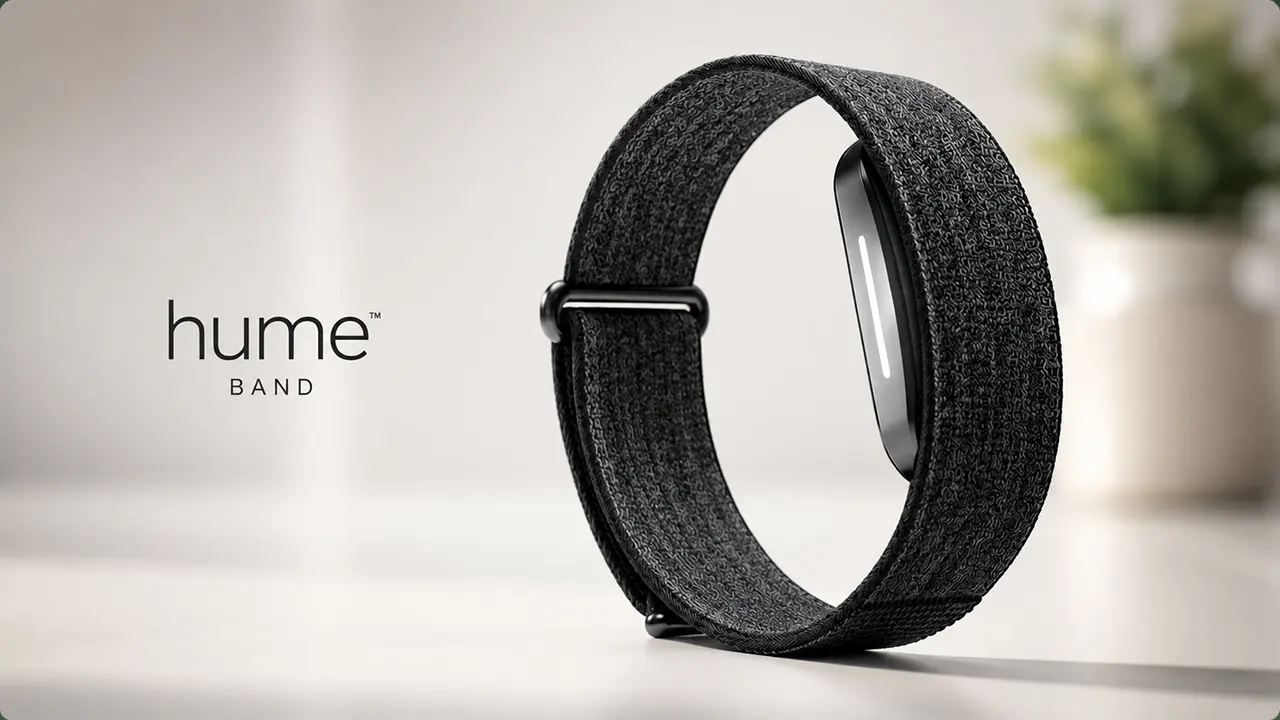
The Hume Band is a screen-free AI-powered health wearable designed to help users understand long-term wellness trends rather than function as a traditional smartwatch. It tracks metrics such as heart rate, heart rate variability (HRV), sleep, blood oxygen (SpO₂), skin temperature, and activity, then uses AI to generate personalized health insights. For people focused on recovery, wellness, and preventive health, the Hume Band offers an interesting alternative to fitness-first wearables. However, its proprietary health scores, accuracy claims, and overall value deserve careful evaluation before purchasing.
Meet the Hume Band
The market for health wearables has changed dramatically over the last few years. Consumers no longer want a device that simply counts steps or displays notifications. Many now expect continuous health monitoring, personalized recommendations, and insights that help them make better lifestyle decisions.
The Hume Band enters this growing category with an ambitious promise. Instead of positioning itself as another smartwatch, Hume Health markets the device as an AI-powered health companion capable of helping users understand their overall wellness through continuous biometric tracking and intelligent analysis.
That promise naturally raises important questions.
Can the Hume Band really provide meaningful health insights? How accurate are its measurements? Is it worth choosing over established competitors like the WHOOP, Oura Ring, or Apple Watch? And perhaps most importantly, who is this wearable actually designed for?
This review answers those questions using verified product information, independent reviews, and publicly available community feedback. Rather than repeating marketing claims, we’ll examine what the Hume Band can confidently do today, where its limitations lie, and whether it offers good value for different types of users.
By the end of this Hume Band review guide, you should have enough information to decide whether the Hume Band deserves a place in your health and wellness routine.
Affiliate Disclosure: This article may contain affiliate links. If you purchase through those links, ITPhobia may earn a commission at no additional cost to you. Our recommendations are based on independent research and editorial judgment, not affiliate partnerships.
Why You Can Trust This Review
Many wearable technology reviews simply summarize product pages or repeat manufacturer claims. That approach rarely helps readers make informed buying decisions.
This review follows a different methodology.
Whenever possible, information is verified against official Hume Health documentation. Product claims are then evaluated alongside independent reviews, publicly available user experiences, and broader wearable industry knowledge. Where evidence is limited or a feature relies on proprietary algorithms, we clearly state that instead of presenting assumptions as facts.
We also avoid claiming first-hand testing when none has been performed. If a capability has not been independently verified, it is described as a manufacturer-reported feature rather than an established fact.
Our goal is simple: help you understand both the strengths and the limitations of the Hume Band so you can decide whether it matches your own health goals and expectations.
Key evaluation criteria include:
- Hardware and sensor capabilities
- Health tracking features
- AI-powered insights
- Ease of use
- Battery life
- Software experience
- Pricing and long-term ownership costs
- Comparison with leading alternatives
- Reported user experiences
- Overall value for money
This balanced approach reflects how experienced technology buyers evaluate health wearables: by weighing benefits, trade-offs, and practical usefulness instead of relying solely on marketing promises.
What Is the Hume Band?
The Hume Band is an AI-powered health tracking wearable developed by Hume Health. Unlike a traditional smartwatch, it focuses on continuous biometric monitoring and personalized health insights instead of notifications, apps, or communication features. Its primary goal is to help users understand long-term health trends through wearable sensors and artificial intelligence.
At first glance, the Hume Band resembles many modern fitness bands. However, its philosophy is different.
Instead of encouraging users to check a screen throughout the day, the Hume Band adopts a screen-free design that collects biometric data continuously in the background. The companion mobile app then analyzes this information and presents health reports, wellness trends, and AI-generated recommendations intended to help users make healthier lifestyle decisions.
This approach places the Hume Band somewhere between a traditional fitness tracker and a premium health-focused wearable such as the WHOOP or Oura Ring.
Rather than competing directly with feature-rich smartwatches, Hume Health emphasizes long-term wellness, recovery, metabolic health, and personalized coaching.
Who Is the Hume Band Designed For?
The Hume Band is intended for people who care more about understanding their health than interacting with a wearable throughout the day.
It may be a good fit for:
- People interested in preventive health monitoring
- Wellness enthusiasts who enjoy tracking long-term trends
- Fitness enthusiasts looking beyond step counting
- Biohackers interested in recovery and physiological data
- Users who prefer a lightweight wearable without constant notifications
- Individuals seeking AI-assisted health insights
On the other hand, the Hume Band may not be the best choice for users who primarily want smartwatch features such as messaging, phone calls, music controls, third-party apps, or mobile payments.
What Does the Hume Band Measure?
According to Hume Health, the band combines multiple onboard sensors with AI-powered analysis to provide a broad picture of overall wellness.
Depending on the available sensors and software features, users can monitor metrics such as:
- Heart rate
- Heart rate variability (HRV)
- Blood oxygen (SpO₂)
- Skin temperature
- Sleep quality
- Activity levels
- Recovery trends
- Stress-related indicators
- Personalized wellness insights
- Proprietary health scores such as Biological Age and Metabolic Momentum
It is important to distinguish between direct sensor measurements and AI-derived health scores.
Metrics like heart rate and blood oxygen are collected using onboard sensors. In contrast, scores such as Biological Age or Metabolic Momentum are generated through proprietary algorithms that interpret multiple data points. These scores can be useful for tracking trends over time, but they should not be viewed as direct medical measurements.
Golden Nugget: The greatest value of the Hume Band is not any single health metric. Instead, it lies in identifying patterns over weeks and months. Long-term trends are often more useful than isolated daily readings when evaluating lifestyle changes, recovery, and overall wellness.
Hume Band Specifications
The Hume Band is designed as a lightweight, screen-free wearable that continuously collects biometric data throughout the day. Instead of prioritizing notifications or apps, the hardware focuses on comfort, long battery life, and continuous health monitoring.
Before evaluating advanced AI features, it’s helpful to understand what the hardware actually offers. Specifications reveal not only what the device can do today but also its practical limitations compared with competing wearables.
Hume Band Specifications at a Glance
| Feature | Details* |
|---|---|
| Product | Hume Band 2.0 |
| Device Type | AI-powered health tracking wearable |
| Display | Screen-free design |
| Companion App | Hume Health App (iOS & Android) |
| Primary Sensors | Optical heart rate sensor, SpO₂ sensor, skin temperature sensor, motion sensors |
| Health Tracking | Heart rate, HRV, sleep, activity, recovery, stress-related insights, skin temperature, blood oxygen |
| AI Features | Personalized health insights, Biological Age, Metabolic Momentum, wellness coaching |
| Water Resistance | IP68 |
| Connectivity | Bluetooth |
| Charging | Magnetic charging cable |
| Battery Life | Manufacturer-rated for multiple days per charge (actual results vary by usage and firmware version) |
| Compatibility | Modern iOS and Android smartphones |
| Subscription | Free core app with optional Premium membership |
*Specifications should always be confirmed against the official Hume Health website before purchasing, as software capabilities and subscription features may change.
Hardware Philosophy
Unlike most smartwatches, the Hume Band intentionally removes distractions.
There is no large touchscreen encouraging constant interaction. Instead, the wearable quietly records biometric data while the smartphone app becomes the primary interface for reviewing trends, reports, and recommendations.
This design offers several advantages:
- Lower power consumption
- Lightweight construction
- Comfortable overnight wear
- Reduced distractions
- Simpler user experience
The trade-off is equally important.
If you expect features like message notifications, music controls, voice assistants, mobile payments, or downloadable apps, the Hume Band will likely feel limited compared with devices such as the Apple Watch or Samsung Galaxy Watch.
Sensors Explained
The quality of any health wearable depends largely on its sensors.
According to Hume Health, the Hume Band combines several sensors to monitor different aspects of your health.
Optical Heart Rate Sensor
Measures your heart rate throughout the day and during sleep.
Heart rate serves as the foundation for several other health metrics, including calorie estimates, recovery analysis, and heart rate variability.
Heart Rate Variability (HRV)
HRV measures the variation between individual heartbeats rather than simply counting beats per minute.
Higher HRV often indicates better recovery and resilience, while lower HRV may reflect fatigue, stress, illness, or inadequate recovery. HRV trends are generally more meaningful over time than single-day readings.
Blood Oxygen (SpO₂)
The optical sensor also estimates blood oxygen saturation.
This metric can provide useful wellness information during sleep and recovery, but consumer wearables should not replace medical-grade pulse oximeters when clinical accuracy is required.
Skin Temperature
The Hume Band monitors changes in skin temperature rather than core body temperature.
Long-term temperature trends may help identify changes related to recovery, sleep quality, travel, or illness, although these readings should not be interpreted as medical diagnoses.
Motion Sensors
Integrated accelerometers detect movement patterns used for:
- Daily activity tracking
- Exercise detection
- Sleep analysis
- Step counting
- General movement trends
Compatibility
The Hume Band works with the Hume Health mobile application, which serves as the central hub for viewing health data, AI insights, and historical trends.
Prospective buyers should verify current operating system requirements before purchasing, especially if using older smartphones.
Golden Nugget: A wearable’s sensors matter less than the software interpreting them. Two devices with similar sensors can deliver very different user experiences depending on how effectively their algorithms transform raw data into useful insights.
Design, Comfort & Build Quality
The Hume Band prioritizes all-day comfort over flashy design. Its lightweight, screen-free construction makes it suitable for continuous wear, including overnight sleep tracking, while its minimalist appearance appeals to users who prefer a subtle health wearable rather than a full-featured smartwatch.
One of the biggest challenges for any health wearable is consistency. Even the most advanced sensors provide little value if users frequently remove the device because it feels bulky or uncomfortable.
Hume Health addresses this by keeping the design simple and lightweight.
First Impressions
At first glance, the Hume Band resembles a modern fitness tracker rather than a premium smartwatch.
The absence of a display creates a clean appearance while also reducing battery consumption and eliminating many everyday distractions.
For users who dislike constant notifications on their wrist, this minimalist approach may actually be an advantage.
Everyday Comfort
Comfort is arguably one of the Hume Band’s strongest design choices.
Because the device is relatively lightweight, it is intended for continuous wear throughout the day and night.
Continuous wear improves the quality of:
- Sleep tracking
- HRV analysis
- Recovery monitoring
- Long-term health trends
- Daily activity tracking
A device that remains comfortably on your wrist naturally collects more consistent data than one that spends hours on a charger or sitting on a desk.
Build Quality
The Hume Band follows a practical design philosophy rather than a luxury aesthetic.
Its materials appear focused on durability and comfort instead of premium finishes such as stainless steel or titanium found in higher-end smartwatches.
For most buyers, this trade-off is reasonable because the device is designed primarily as a health monitoring tool rather than a fashion accessory.
Water Resistance
The Hume Band carries an IP68 rating, indicating resistance to dust and water under specified conditions.
In practical terms, this means it is generally suitable for:
- Hand washing
- Sweaty workouts
- Rain
- Everyday accidental splashes
However, an IP68 rating does not automatically mean the device is appropriate for every water activity. Before swimming, diving, or exposing the band to high-pressure water, users should always follow the manufacturer’s latest guidance.
Charging Experience
The Hume Band uses magnetic charging.
Magnetic chargers are typically easier to align than older clip-style charging systems and reduce wear on charging contacts over time.
Charging habits also influence battery longevity. Allowing the battery to discharge completely on a regular basis is generally less beneficial than maintaining consistent charging routines.
Screen-Free Design: Strength or Weakness?
Whether the screen-free approach is a benefit depends entirely on your expectations.
A screen-free design is ideal if you:
- Want fewer digital distractions
- Prefer reviewing health data on your phone
- Care more about long-term wellness trends than notifications
- Wear the device primarily for recovery and health tracking
A smartwatch may be better if you want:
- Notifications
- Phone calls
- Text messaging
- Music controls
- Contactless payments
- Third-party apps
- On-wrist navigation
Neither approach is universally better. The right choice depends on how you intend to use the wearable each day.
Golden Nugget: The Hume Band’s lack of a display isn’t necessarily a limitation—it is part of its design philosophy. By removing notifications and apps, Hume Health encourages users to focus on long-term health habits instead of constantly checking their wrist.
Hume Band Unboxing and Setup Experience
Getting started with the Hume Band is designed to be straightforward. Unlike many smartwatches that require navigating menus on the device itself, most of the setup process happens through the companion mobile app.
Although the exact contents may vary depending on promotions or regional packaging, a typical box includes:
- Hume Band 2.0
- Magnetic charging cable
- Quick start guide
- Warranty and safety information
The setup process generally involves:
- Charging the band before first use.
- Downloading the Hume Health app.
- Creating or signing in to a Hume Health account.
- Pairing the band via Bluetooth.
- Granting permissions for health data, notifications (if applicable), and background syncing.
- Completing your health profile, including age, height, weight, activity level, and personal goals.
Most users can finish the initial setup within a few minutes.
Initial Calibration
Like many health wearables, the Hume Band becomes more useful over time.
Rather than relying on a single day’s readings, its algorithms improve their understanding of your baseline as they collect more data. During the first few days, health scores such as recovery or biological age may fluctuate while the system establishes your normal patterns.
Pro Tip: Wear the Hume Band consistently for at least one to two weeks before judging the usefulness of its AI-generated insights. Long-term trends are usually more meaningful than first-day results.
Hume Health App Overview
The Hume Band relies heavily on its companion app. In many ways, the software experience is just as important as the wearable itself because it transforms raw biometric data into understandable reports and recommendations.
Instead of displaying data on a wrist screen, the Hume Health app becomes your primary dashboard for monitoring health trends.
Dashboard
The home screen is designed to provide a quick overview of your daily health.
Depending on your subscription level and available features, you may see information such as:
- Daily activity
- Heart rate
- Sleep summary
- Recovery status
- Biological Age
- Metabolic Momentum
- Wellness score
- AI-generated recommendations
The interface focuses on presenting trends rather than overwhelming users with raw sensor data.
Historical Trends
One of the app’s biggest strengths is long-term tracking.
Instead of asking, “How did I sleep last night?” the app encourages users to ask:
- Is my sleep improving?
- Is my resting heart rate decreasing?
- Am I recovering better this month?
- Is my overall wellness improving?
This long-term perspective aligns with Hume Health’s emphasis on preventive health rather than short-term fitness metrics.
AI Health Insights
A distinguishing feature of the Hume ecosystem is its use of AI to interpret collected data.
Rather than presenting isolated measurements, the app attempts to identify patterns and provide personalized suggestions based on your activity, sleep, recovery, and physiological trends.
Examples may include:
- Recovery recommendations
- Sleep improvement suggestions
- Activity guidance
- Wellness trend summaries
- Lifestyle recommendations
It’s important to remember that these insights are algorithm-generated and should be viewed as wellness guidance rather than medical advice.
Data Visualization
The app uses charts and trend graphs to make complex health information easier to understand.
Good visualization can help users identify gradual improvements or declines that might otherwise go unnoticed.
Privacy and Data
Health data is among the most sensitive personal information you can share with any technology company.
Before using any wearable, it’s worth reviewing:
- What data is collected
- How it is stored
- Whether it is encrypted
- Whether it is shared with third parties
- How users can delete or export their data
If privacy is a priority, reviewing Hume Health’s latest Privacy Policy before purchasing is recommended.
Golden Nugget: Great wearable hardware can only go so far. The real value comes from software that turns thousands of data points into practical, actionable insights. For many users, the Hume Health app will have a greater impact on the overall experience than the band itself.
Hume Band Features Explained
The Hume Band is more than a basic fitness tracker. Instead of focusing only on steps or calories burned, it aims to provide a broader picture of your overall health by combining continuous biometric monitoring with AI-driven analysis.
The wearable collects multiple health signals throughout the day and night, then the Hume Health app organizes that information into personalized insights and long-term trends.
While many features are familiar to anyone who has used a smartwatch or fitness band, Hume differentiates itself by emphasizing preventive wellness rather than athletic performance alone.
Let’s look at its main features.
Continuous Heart Rate Monitoring
The Hume Band continuously measures your heart rate throughout the day.
Unlike occasional spot checks, continuous monitoring can reveal patterns that are difficult to notice otherwise, such as:
- Resting heart rate trends
- Elevated heart rate during stress
- Exercise intensity
- Recovery after workouts
- Overnight heart rate changes
Over time, these measurements become more valuable because long-term trends often reveal more than individual readings.
Why it matters: A consistently improving resting heart rate may indicate better cardiovascular fitness, while unexpected changes can signal fatigue, illness, or increased stress.
Sleep Tracking
Sleep is one of the most important factors affecting overall health, recovery, and daily performance.
The Hume Band automatically detects when you fall asleep and estimates several sleep metrics, including:
- Total sleep duration
- Sleep stages
- Sleep consistency
- Sleep quality
- Nighttime heart rate
Rather than simply telling you how long you slept, the app attempts to identify patterns that may affect your recovery and wellness.
For example, it may highlight:
- Irregular sleep schedules
- Reduced deep sleep
- Frequent awakenings
- Poor recovery after late-night activity
The focus is less on one night’s score and more on identifying habits over weeks and months.
Activity Tracking
The Hume Band tracks daily movement to encourage a more active lifestyle.
Depending on the available software features, users can monitor:
- Daily steps
- Calories burned
- Active minutes
- Walking distance
- General movement patterns
Instead of targeting athletes exclusively, these metrics help everyday users understand whether they are maintaining healthy activity levels.
Recovery Monitoring
Recovery has become one of the fastest-growing areas of wearable technology.
Rather than encouraging users to push harder every day, recovery metrics help determine whether the body is ready for physical or mental stress.
Recovery insights may consider factors such as:
- Sleep quality
- Heart rate
- Heart rate variability (HRV), if supported
- Recent activity
- Physiological trends
The app then provides an overall recovery assessment that can help users decide whether today is better suited for intense exercise, light activity, or additional rest.
Biological Age
One of the Hume Band’s most talked-about features is Biological Age.
Unlike your chronological age, biological age attempts to estimate how your body is functioning based on measurable health indicators.
Although the exact calculation is proprietary, it may incorporate multiple factors such as:
- Activity levels
- Cardiovascular health
- Sleep quality
- Recovery trends
- Other biometric measurements
The goal is not to provide a medical diagnosis but to encourage healthier habits through long-term improvement.
For many users, watching their biological age improve over time can be more motivating than simply tracking weight or daily steps.
Expert Tip: Treat Biological Age as a wellness trend rather than an absolute number. Consistent improvement is generally more meaningful than the exact value shown on any single day.
Metabolic Momentum
Another signature feature is Metabolic Momentum.
Rather than focusing solely on calorie counting, this metric aims to reflect how lifestyle habits influence overall metabolic health over time.
It combines various health indicators into an easy-to-understand score that encourages sustainable improvements instead of short-term fixes.
While the exact methodology isn’t publicly disclosed in detail, the concept aligns with Hume Health’s emphasis on long-term wellness rather than daily performance.
AI-Powered Health Insights
The Hume Band collects thousands of data points every day.
The companion app uses AI to organize this information into practical recommendations instead of displaying endless charts and raw numbers.
Depending on your available features, AI insights may include:
- Recovery suggestions
- Sleep recommendations
- Activity coaching
- Wellness summaries
- Lifestyle observations
- Long-term health trends
These insights are intended to help users recognize patterns they might otherwise overlook.
However, they should always be viewed as wellness guidance rather than medical advice.
Trend Analysis
One of the strongest aspects of the Hume ecosystem is its focus on long-term progress.
Instead of asking:
“How healthy am I today?”
the platform encourages questions like:
- Am I sleeping better this month?
- Is my resting heart rate improving?
- Am I becoming more active?
- Is my recovery improving?
- Are my healthy habits becoming more consistent?
This long-term perspective is often more useful than daily fluctuations, which can be influenced by stress, travel, illness, or poor sleep.
Automatic Background Tracking
Unlike devices that require frequent manual input, the Hume Band automatically collects health data throughout the day and night.
This passive tracking reduces the need to remember logging workouts, checking measurements, or recording sleep manually.
The result is a more complete picture of overall wellness with minimal daily effort.
Feature Summary
| Feature | Primary Benefit |
|---|---|
| Continuous Heart Rate | Tracks cardiovascular trends |
| Sleep Tracking | Monitors sleep quality and recovery |
| Activity Tracking | Encourages healthy daily movement |
| Recovery Monitoring | Helps balance exercise and rest |
| Biological Age | Visualizes long-term wellness progress |
| Metabolic Momentum | Tracks metabolic health trends |
| AI Insights | Turns health data into actionable recommendations |
| Trend Analysis | Focuses on long-term improvement |
| Background Tracking | Automatic health monitoring with minimal effort |
Key Takeaway: The Hume Band’s biggest strength isn’t any single sensor. It’s the combination of continuous biometric tracking, AI-powered analysis, and long-term trend monitoring that helps users understand how their daily habits influence overall health.
Health Metrics Explained
One of the biggest differences between the Hume Band and a traditional fitness tracker is how it presents health data. Instead of showing only raw numbers, the Hume Health app translates biometric measurements into scores, trends, and personalized insights.
Understanding what these metrics mean is essential. A single reading rarely tells the whole story. Most health indicators become useful only when viewed over days, weeks, or months.
Below is a closer look at the key metrics you’ll encounter.
Heart Rate
Heart rate measures how many times your heart beats per minute (BPM). The Hume Band continuously monitors your heart rate throughout the day and night.
Common uses include:
- Tracking exercise intensity
- Measuring resting heart rate
- Monitoring recovery
- Identifying unusual heart rate changes
- Understanding how stress or illness affects your body
A lower resting heart rate often reflects improved cardiovascular fitness, though what’s considered “normal” varies from person to person.
How to interpret it: Focus on long-term trends rather than isolated readings. Temporary changes can result from caffeine, dehydration, stress, poor sleep, or exercise.
Heart Rate Variability (HRV)
Heart Rate Variability (HRV) measures the small variations in time between consecutive heartbeats. Contrary to what the name suggests, a higher HRV is generally associated with better recovery, resilience, and a well-balanced nervous system.
The Hume Band uses HRV alongside other biometric data to help assess your recovery and overall wellness. Factors such as sleep quality, stress, exercise, illness, and alcohol consumption can all influence HRV.
Rather than trying to increase your HRV overnight, focus on long-term trends. A consistently improving HRV may indicate that your body is adapting well to healthy lifestyle habits, while a sustained decline can signal fatigue, stress, or inadequate recovery.
Expert Tip: HRV varies widely between individuals. Compare your HRV to your own baseline over time rather than someone else’s numbers. Long-term consistency is more valuable than any single reading.
Resting Heart Rate (RHR)
Resting Heart Rate is your average heart rate while your body is at complete rest, usually measured during sleep or after prolonged inactivity.
Many healthcare professionals use RHR as a general indicator of cardiovascular health.
A gradual decrease over several months may suggest:
- Better fitness
- Improved recovery
- Healthier lifestyle habits
An unexplained increase over several days may indicate:
- Fatigue
- Illness
- High stress
- Insufficient recovery
Expert Insight: Consistency matters more than chasing a specific number. Your personal baseline is often more meaningful than population averages.
H3: Sleep Metrics
Sleep affects nearly every aspect of physical and mental health.
The Hume Band estimates several sleep-related measurements, including:
- Total sleep duration
- Time asleep
- Sleep stages
- Sleep consistency
- Nighttime heart rate
- Sleep quality
Rather than grading a single night, the app emphasizes recurring patterns.
Questions worth asking include:
- Am I sleeping enough?
- Is my bedtime becoming more consistent?
- Am I getting enough restorative sleep?
- Do weekends disrupt my routine?
Over time, these answers can help identify habits that improve recovery and overall wellness.
Recovery Score
Recovery reflects how prepared your body may be for physical or mental stress.
Instead of simply encouraging more activity, recovery scores help answer a different question:
“Is today a good day to push harder, or should I prioritize rest?”
The score may incorporate multiple signals, such as:
- Sleep quality
- Heart rate trends
- Recent activity
- Physiological recovery patterns
A higher recovery score generally suggests you’re well-rested, while a lower score may indicate accumulated fatigue.
Remember: Recovery scores are wellness indicators—not medical evaluations.
Biological Age
Biological Age estimates how your body is functioning compared with your chronological age.
Unlike the age printed on your driver’s license, biological age attempts to reflect your current health status using multiple lifestyle and biometric indicators.
Factors may include:
- Activity levels
- Sleep quality
- Cardiovascular trends
- Recovery patterns
- Other physiological measurements
For example:
- Chronological age: 40
- Biological age: 36
This doesn’t mean your body is literally four years younger. Instead, it suggests your overall wellness profile resembles that of someone younger based on the available data.
Likewise, a biological age higher than your actual age doesn’t mean something is medically wrong. It simply indicates there may be opportunities to improve lifestyle habits.
Best practice: Treat Biological Age as a motivational trend rather than a precise medical measurement.
Metabolic Momentum
Metabolic Momentum is one of Hume Health’s signature wellness metrics.
Rather than focusing only on body weight or calorie intake, it aims to summarize how consistently your daily habits support metabolic health.
Although Hume doesn’t publicly disclose every detail of its calculation, the score appears to consider factors such as:
- Daily activity
- Recovery
- Sleep habits
- Overall wellness trends
The goal is to encourage sustainable improvements instead of quick fixes.
Think of Metabolic Momentum as a progress indicator rather than a diagnosis.
Activity Metrics
Daily movement remains one of the simplest predictors of long-term health.
The Hume Band tracks several activity metrics, including:
- Steps
- Distance
- Active minutes
- Estimated calories burned
- Daily movement trends
Rather than competing with athletes, these metrics help users build consistent healthy habits.
A steady increase in daily movement often has greater long-term value than occasional intense workouts.
Wellness Score (If Available)
Depending on your software version or subscription tier, the Hume Health app may display an overall wellness score.
This combines several health signals into a single, easy-to-understand number.
It may incorporate:
- Sleep
- Activity
- Recovery
- Heart rate
- Other physiological trends
Instead of replacing individual metrics, the wellness score serves as a quick snapshot of your overall health trends.
Trend Graphs
Perhaps the most valuable feature isn’t any single metric—it’s the ability to see how those metrics change over time.
Trend graphs help answer questions like:
- Am I sleeping more consistently?
- Is my resting heart rate improving?
- Is my recovery getting better?
- Have my activity levels increased?
- Are my healthy habits becoming more consistent?
These visualizations often provide more meaningful insights than daily scores because they reduce the impact of normal day-to-day fluctuations.
How Much Should You Trust These Metrics?
Consumer wearables have improved significantly, but they are not medical devices unless specifically cleared for clinical use.
The Hume Band’s health metrics should be viewed as wellness tools designed to support healthier habits—not as substitutes for professional medical evaluation.
To get the most reliable insights:
- Wear the band consistently.
- Ensure a snug but comfortable fit.
- Sync your data regularly.
- Focus on weekly and monthly trends.
- Avoid drawing conclusions from a single reading.
If you experience symptoms such as chest pain, irregular heartbeat, fainting, or persistent health concerns, consult a qualified healthcare professional rather than relying on wearable data alone.
Quick Reference Table
| Metric | What It Tells You | Best Used For |
|---|---|---|
| Heart Rate | Current heart activity | Daily monitoring and workouts |
| Resting Heart Rate | Cardiovascular fitness trend | Long-term health tracking |
| Sleep Metrics | Sleep duration and quality | Recovery and habit improvement |
| Recovery Score | Readiness for activity | Balancing exercise and rest |
| Biological Age | Overall wellness estimate | Long-term lifestyle motivation |
| Metabolic Momentum | Metabolic health trend | Tracking healthy habits |
| Activity Metrics | Daily movement | Building consistent activity |
| Wellness Score | Overall health snapshot | Quick daily overview |
| Trend Graphs | Changes over time | Identifying meaningful patterns |
Key Takeaway: The true value of the Hume Band isn’t in any single number. It’s in how multiple health metrics work together to reveal long-term patterns, helping you make informed lifestyle choices instead of reacting to daily fluctuations.
Hume Band Accuracy Review
Accuracy is one of the most important factors when choosing a health wearable. A device can offer dozens of features, but they have little value if the underlying data isn’t reliable.
The Hume Band uses optical sensors and software algorithms to estimate various health metrics. Like most consumer wearables, it is designed to support wellness tracking, not to replace medical-grade equipment.
The real question isn’t whether every reading is perfectly accurate—no consumer wearable is. Instead, it’s whether the Hume Band provides consistent, actionable trends that help users better understand their health over time.
How the Hume Band Measures Health Data
Although Hume Health hasn’t publicly disclosed every technical detail of its sensor system, the band relies on a combination of optical sensing and software analysis to monitor biometric signals.
These measurements are processed by the Hume Health app, where AI algorithms analyze patterns and generate health insights.
Rather than relying on a single measurement, many of the app’s wellness scores combine multiple data points collected over time.
This trend-based approach is generally more useful than focusing on individual readings, which can fluctuate naturally throughout the day.
Heart Rate Accuracy
Heart rate monitoring is one of the most mature technologies in modern wearables.
Under normal daily conditions, users can generally expect heart rate tracking to be reasonably consistent during:
- Walking
- Sitting
- Sleeping
- Light exercise
However, optical wrist sensors can become less accurate during:
- High-intensity interval training
- Weightlifting
- Rapid wrist movement
- Cold weather
- Loose band placement
These limitations affect nearly every wrist-based wearable—not just the Hume Band.
Verdict: For everyday wellness monitoring, heart rate accuracy should be sufficient for most users. Athletes requiring highly precise workout data may still prefer a dedicated chest-strap heart rate monitor.
Sleep Tracking Accuracy
Sleep tracking has improved significantly in recent years, but no wrist wearable can directly measure brain activity like a clinical sleep study.
Instead, the Hume Band estimates sleep by combining signals such as:
- Movement
- Heart rate
- Physiological patterns
As a result, it can generally provide useful estimates of:
- Bedtime
- Wake time
- Total sleep duration
- Sleep consistency
Sleep stage estimates (such as light, deep, and REM sleep) should be viewed as approximations rather than precise measurements.
Best use case: Identifying long-term sleep habits instead of analyzing a single night’s sleep stages.
Recovery and Wellness Scores
Recovery scores are not measured directly by a sensor.
Instead, they are calculated using algorithms that combine several health indicators, which may include:
- Sleep quality
- Heart rate
- Activity patterns
- Historical trends
Because these scores depend on multiple variables, they’re most useful when:
- You wear the band consistently.
- Your data history spans several weeks.
- You compare your own trends rather than someone else’s.
A sudden drop in recovery can indicate accumulated fatigue, but it isn’t a diagnosis of illness or overtraining.
Biological Age Accuracy
Biological Age is one of the most interesting—and most misunderstood—features of the Hume Band.
Unlike heart rate, there’s no universal clinical test that determines a person’s biological age. Different companies use different algorithms, inputs, and weighting systems.
That means:
- Two wearable brands may produce different biological age estimates.
- A change in your score doesn’t necessarily reflect a measurable medical change.
- The exact calculation remains proprietary.
The real value lies in tracking whether your Biological Age improves over time as your lifestyle habits improve.
Expert Insight: Don’t compare your Biological Age across different platforms. Use it as an internal benchmark within the Hume ecosystem.
Metabolic Momentum Reliability
Like Biological Age, Metabolic Momentum is a proprietary wellness metric rather than a clinically standardized measurement.
It summarizes multiple health behaviors into a single score that encourages consistent healthy habits.
Its usefulness depends less on the exact number and more on whether it trends upward over weeks or months.
Think of it as a progress indicator—not a medical test.
Factors That Affect Accuracy
Several external factors can influence wearable sensor performance.
These include:
- Wearing the band too loosely
- Incorrect wrist placement
- Tattoos beneath the sensor
- Excessive arm movement
- Poor skin contact
- Extremely cold temperatures
- Low battery during extended use
- Inconsistent wear habits
Even premium wearables from major brands can experience these challenges.
For the best results:
- Wear the band snugly, but not tightly.
- Position it slightly above your wrist bone.
- Keep the sensors clean.
- Wear it consistently, including during sleep.
How Does Hume Band Compare With Other Wearables?
The Hume Band competes in a market that includes established brands such as:
- Apple
- Garmin
- Fitbit
- WHOOP
- Oura
While these devices differ in hardware and software, their overall strengths are similar:
| Device Type | Best At |
|---|---|
| Smartwatches | Notifications, apps, fitness tracking |
| Fitness bands | Activity and health monitoring |
| Smart rings | Sleep and recovery tracking |
| Hume Band | AI-powered wellness insights and long-term health trends |
Instead of trying to replace a smartwatch, the Hume Band focuses on helping users understand how sleep, activity, recovery, and lifestyle habits interact over time.
Is the Hume Band Medical Grade?
No.
The Hume Band is a consumer wellness device, not a medical device for diagnosing, treating, or preventing disease.
Its health insights are intended to:
- Encourage healthier habits
- Monitor wellness trends
- Support preventive health awareness
- Provide educational guidance
They should never replace advice from qualified healthcare professionals.
If you experience symptoms such as chest pain, severe fatigue, irregular heartbeat, or other medical concerns, seek professional medical evaluation rather than relying solely on wearable data.
Accuracy Summary
| Metric | Expected Reliability | Best Use |
|---|---|---|
| Heart Rate | Good during everyday activities | Daily wellness tracking |
| Sleep Duration | Generally reliable | Building healthy sleep habits |
| Sleep Stages | Estimated | Long-term trend analysis |
| Recovery Score | Trend-based | Managing exercise and rest |
| Biological Age | Algorithm-generated estimate | Lifestyle motivation |
| Metabolic Momentum | Trend indicator | Monitoring long-term wellness |
| AI Insights | Depends on consistent data | Personalized habit coaching |
Key Takeaway: The Hume Band isn’t designed to deliver laboratory-grade measurements. Its real strength is providing consistent, long-term health trends that help users make informed lifestyle decisions. If you view its metrics as guidance rather than absolute medical facts, it can be a valuable tool for improving everyday wellness.
Hume Band App Experience
While the Hume Band collects your health data, the Hume Health app is where that information becomes meaningful. Instead of relying on a display built into the wearable, the app serves as the central hub for viewing metrics, tracking progress, and receiving personalized wellness insights.
The experience is designed around long-term health monitoring rather than quick glances at daily numbers. Whether you’re checking your recovery, reviewing sleep trends, or exploring AI-generated recommendations, most interactions happen within the app.
Let’s take a closer look at its key features.
Dashboard
The dashboard is the first screen you’ll see after opening the Hume Health app. It provides a snapshot of your daily health and wellness, bringing together your most important metrics in one place.
Depending on your account and available features, the dashboard may include:
- Heart rate
- Sleep summary
- Daily activity
- Recovery status
- Biological Age
- Metabolic Momentum
- Wellness score
- Personalized AI insights
Rather than overwhelming users with raw sensor data, the dashboard highlights the information that matters most and makes it easy to identify changes at a glance.
Why it matters: A well-designed dashboard helps you understand your overall health in seconds without navigating through multiple menus.
Reports
The Reports section provides a deeper look at your health data over time. Instead of focusing on a single day, it emphasizes patterns and long-term progress.
You can review historical trends for metrics such as:
- Heart rate
- Sleep
- Daily activity
- Recovery
- Biological Age
- Other available wellness indicators
Interactive charts and graphs make it easier to answer questions like:
- Am I sleeping more consistently?
- Is my resting heart rate improving?
- Has my recovery changed over the past month?
- Are my healthy habits becoming more consistent?
This long-term perspective helps users focus on meaningful improvements rather than normal day-to-day fluctuations.
AI Coaching
One of the standout features of the Hume Health ecosystem is its AI-powered coaching.
Instead of simply displaying numbers, the app analyzes your biometric data and offers personalized wellness recommendations based on your recent trends.
Examples of AI coaching may include:
- Recovery suggestions after poor sleep
- Recommendations to increase daily activity
- Sleep improvement tips
- Wellness summaries
- Habit-based lifestyle guidance
These insights are intended to help users build healthier routines through small, sustainable changes rather than dramatic lifestyle adjustments.
Keep in mind: AI coaching is designed for wellness support. It should not be considered medical advice or a substitute for guidance from a qualified healthcare professional.
Data Insights
Collecting data is only valuable if it helps you make better decisions. The Hume Health app organizes thousands of biometric readings into easy-to-understand insights that highlight trends and relationships between different aspects of your health.
For example, the app may help you recognize how:
- Better sleep improves recovery
- Increased activity affects Biological Age
- Consistent routines support metabolic health
- Stress influences heart rate trends
- Lifestyle habits contribute to overall wellness
By connecting multiple health metrics, the app encourages users to focus on long-term behavior changes instead of isolated daily scores.
The ability to visualize progress over weeks and months is one of the platform’s strongest advantages, making it easier to stay motivated and measure the impact of healthier habits.
Key Takeaway: The Hume Band provides the data, but the Hume Health app delivers the context. Its dashboard, detailed reports, AI coaching, and trend analysis work together to transform everyday health metrics into practical insights that can support long-term wellness goals.
Battery Life & Charging
Battery life is a crucial factor for any wearable designed to monitor your health around the clock. If a device spends too much time on the charger, it can miss important data such as overnight sleep, recovery, or resting heart rate trends.
The Hume Band is designed for continuous wear, allowing users to collect health data throughout the day and night with minimal interruptions for charging.
Battery Life
The Hume Band features a rechargeable battery built for multi-day use under typical conditions. Actual battery life depends on several factors, including:
- Frequency of data synchronization
- Sensor usage
- Firmware updates
- Background activity
- Ambient temperature
- Overall usage patterns
Like most health wearables, battery performance may decrease slightly over time as the battery ages.
For the best experience, it’s a good habit to recharge the band before the battery reaches a critically low level, helping ensure uninterrupted health tracking.
Charging Experience
The Hume Band charges using a dedicated magnetic charging cable that securely attaches to the device.
Magnetic charging offers several advantages:
- Quick and easy alignment
- Stable connection during charging
- No need to open protective covers or ports
- Reduced wear on charging contacts
The charging process is straightforward. Simply attach the magnetic charger, connect it to a compatible USB power source, and allow the battery to recharge fully before extended use.
Charging Tips
To maximize battery lifespan and maintain reliable performance:
- Charge the band using the supplied charging cable.
- Keep the charging contacts clean and dry.
- Avoid exposing the device to excessive heat while charging.
- Remove moisture before connecting the charger.
- Install firmware updates when available, as they may include battery optimizations.
Following these simple practices can help maintain consistent battery performance over the long term.
Is the Battery Good Enough for 24/7 Health Tracking?
For most users, the Hume Band’s battery is well-suited for continuous health monitoring. Since the platform focuses on long-term wellness trends, maintaining consistent wear is more important than achieving the longest battery life in its category.
A charging routine during periods when you’re naturally inactive—such as while showering or working at a desk—can help minimize interruptions and preserve valuable health data.
How Does It Compare to Other Wearables?
Battery performance varies widely across wearable categories.
| Device Type | Typical Battery Characteristics |
|---|---|
| Smartwatches | Usually require more frequent charging due to bright displays and additional smart features |
| Fitness Bands | Often provide longer battery life by focusing on health and activity tracking |
| Smart Rings | Designed for continuous wear with compact charging solutions |
| Hume Band | Optimized for ongoing health monitoring with minimal charging interruptions |
Rather than competing on battery life alone, the Hume Band balances power efficiency with continuous biometric monitoring and AI-powered wellness insights.
Key Takeaway: The Hume Band’s battery is designed to support uninterrupted health tracking rather than maximize time between charges. With a simple charging routine and proper maintenance, most users can collect consistent data for meaningful long-term health insights.
Subscription & Pricing
The Hume Band is only part of the overall experience. Much of its value comes from the Hume Health app, where your biometric data is analyzed and presented through reports, trend tracking, and AI-powered insights.
Before buying, it’s important to understand which features are available out of the box and whether an ongoing subscription is required to unlock the platform’s full potential.
Note: Features and pricing may change over time. Always check Hume Health’s official website for the latest subscription plans before making a purchase.
Free Features
The Hume Band provides access to essential health tracking without requiring an immediate commitment to a paid plan.
Depending on your device, app version, and current offering, free access may include:
- Basic health monitoring
- Daily activity tracking
- Heart rate monitoring
- Sleep tracking
- Device synchronization
- Access to the Hume Health app
- Basic health summaries
For casual users who simply want to monitor their daily wellness, the free experience may provide enough information to build healthier habits.
Premium Features
A subscription unlocks the platform’s more advanced capabilities, particularly its AI-driven wellness tools and long-term analytics.
Premium features may include:
- Advanced health reports
- Personalized AI coaching
- Long-term trend analysis
- Biological Age insights
- Metabolic Momentum tracking
- Enhanced recovery analysis
- Additional wellness recommendations
- New features released as part of future software updates
These features are designed for users who want more than raw health data and prefer actionable insights that can support long-term lifestyle improvements.
Long-Term Costs
When evaluating the Hume Band, consider the total cost of ownership rather than the purchase price alone.
Potential costs include:
- Initial cost of the Hume Band
- Optional subscription fees
- Replacement accessories, such as charging cables or bands
- Future hardware upgrades, if desired
If you plan to use the device for several years, the subscription cost may become a significant part of your overall investment. On the other hand, users who regularly review their health data and follow the app’s recommendations may find the added insights worthwhile.
Before subscribing, ask yourself:
- Will I use the advanced reports regularly?
- Do I value AI-powered coaching?
- Am I committed to tracking my health over the long term?
- Does the subscription provide enough value for my wellness goals?
Answering these questions can help you decide whether the premium experience aligns with your needs and budget.
Key Takeaway: The Hume Band offers value even without a subscription, but its most advanced features are available through the premium plan. If you’re interested in detailed health analytics, AI coaching, and long-term wellness tracking, a subscription may enhance the overall experience. If you only need basic health monitoring, the free features may be sufficient.
Pros and Cons
No wearable is perfect, and the Hume Band is no exception. Its strengths lie in long-term health tracking and AI-powered wellness insights, while some users may find its approach less suitable if they’re looking for a feature-rich smartwatch or a medical-grade monitoring device.
Here’s a balanced look at its advantages and limitations.
Pros
✅ Focuses on Long-Term Health Trends
Instead of emphasizing daily scores alone, the Hume Band encourages users to track changes over weeks and months. This makes it easier to identify meaningful improvements in sleep, recovery, activity, and overall wellness.
✅ AI-Powered Health Insights
The Hume Health app goes beyond displaying raw data by analyzing biometric trends and providing personalized recommendations that can help users build healthier habits.
✅ Comfortable for All-Day Wear
Its lightweight design makes the Hume Band suitable for continuous wear, including during sleep, which is essential for collecting complete health data.
✅ Automatic Health Tracking
Most health metrics are recorded automatically, reducing the need for manual logging and making it easier to maintain consistent tracking.
✅ Easy-to-Understand Reports
Interactive charts, wellness summaries, and trend graphs simplify complex health data, allowing users to focus on progress instead of isolated numbers.
✅ Wellness-Focused Ecosystem
Features such as Biological Age, Metabolic Momentum, recovery analysis, and AI coaching create a more holistic view of health than basic fitness tracking alone.
Cons
❌ Not a Medical Device
The Hume Band is designed for wellness monitoring, not for diagnosing, treating, or preventing medical conditions. Users should not rely on it for clinical decision-making.
❌ Advanced Features May Require a Subscription
Some of the platform’s most valuable tools, including advanced reports and AI-powered insights, may only be available through a paid subscription.
❌ Limited Smartwatch Features
Unlike many smartwatches, the Hume Band focuses on health tracking rather than communication or productivity features. Users looking for apps, voice assistants, mobile payments, or extensive notifications may find it less capable.
❌ Trend-Based Insights Require Consistent Wear
Many of the platform’s recommendations become more accurate as more data is collected. Users who wear the band only occasionally may not experience its full potential.
❌ Wellness Scores Are Algorithm-Based
Metrics such as Biological Age, Recovery, and Metabolic Momentum are generated using proprietary algorithms. They are useful for tracking personal trends but should not be interpreted as precise medical measurements.
Pros and Cons at a Glance
| Pros | Cons |
|---|---|
| AI-powered wellness insights | Not a medical device |
| Comfortable for 24/7 wear | Some advanced features may require a subscription |
| Automatic health tracking | Limited smartwatch functionality |
| Strong focus on long-term trends | Requires consistent wear for best results |
| Clear reports and visualizations | Algorithm-based wellness scores |
| Encourages healthier lifestyle habits | May not satisfy users seeking advanced sports metrics |
Key Takeaway: The Hume Band is best viewed as a wellness companion rather than a traditional smartwatch. Its greatest strengths are continuous health monitoring, AI-driven insights, and long-term trend analysis. However, users expecting clinical-grade measurements or a full-featured smartwatch may find its limitations more noticeable.
Hume Band vs WHOOP
Both the Hume Band and WHOOP are designed to help users better understand their health, but they take slightly different approaches.
While both focus on continuous biometric monitoring and recovery, WHOOP has built its reputation around performance optimization for athletes, whereas the Hume Band places greater emphasis on overall wellness, preventive health, and AI-powered lifestyle insights.
If you’re deciding between the two, here’s how they compare.
H3: Design & Wearability
Both devices are lightweight and designed for 24/7 wear, making them comfortable enough to use during the day and while sleeping.
The Hume Band is built for users who want a simple wellness tracker that stays out of the way, while WHOOP also prioritizes screen-free tracking with an emphasis on uninterrupted data collection.
Winner: Tie — Both are designed for continuous wear rather than frequent on-device interaction.
Health Tracking Features
Both wearables monitor core health metrics, including:
- Heart rate
- Sleep
- Activity
- Recovery
The Hume Band also highlights proprietary wellness metrics such as:
- Biological Age
- Metabolic Momentum
- AI-generated health insights
WHOOP, meanwhile, focuses more heavily on:
- Recovery
- Strain
- Sleep performance
- Training optimization
Winner:
- Hume Band: Better for general wellness and lifestyle improvement.
- WHOOP: Better for fitness enthusiasts and performance-focused users.
Recovery Analysis
Recovery is a major strength of both platforms.
WHOOP has long been recognized for helping athletes determine whether they should train hard or prioritize recovery.
The Hume Band offers a similar wellness-focused recovery experience but combines it with additional AI-generated recommendations and broader health indicators.
If your primary goal is optimizing workouts, WHOOP has a more sports-oriented approach. If you’re interested in improving your overall health habits, the Hume Band provides a more holistic perspective.
AI Insights
This is one area where the Hume ecosystem stands out.
Rather than presenting health metrics in isolation, the Hume Health app analyzes long-term trends and provides personalized recommendations to encourage healthier habits.
WHOOP also delivers personalized insights, but its recommendations are generally centered around recovery, training load, and sleep performance.
Winner: Hume Band for everyday wellness guidance.
Battery Life
Both devices are designed for extended use between charges, helping users collect continuous health data without frequent interruptions.
Actual battery life varies depending on usage, firmware updates, and feature availability.
Instead of comparing battery life by numbers alone, it’s more important to consider how consistently each device supports uninterrupted health tracking.
Subscription Model
Both platforms place significant value in their companion software.
Advanced analytics, personalized insights, and long-term trend tracking may require an ongoing subscription, depending on the plan you choose.
Before purchasing either device, consider the total cost over several years rather than focusing only on the initial hardware price.
Comparison Table
| Feature | Hume Band | WHOOP |
|---|---|---|
| Primary Focus | Everyday wellness | Athletic performance and recovery |
| Heart Rate Tracking | ✔ | ✔ |
| Sleep Tracking | ✔ | ✔ |
| Recovery Analysis | ✔ | ✔ |
| Biological Age | ✔ | ✖ |
| Metabolic Momentum | ✔ | ✖ |
| AI Health Insights | ✔ | Personalized performance insights |
| Screen | Minimal / Screen-free experience | Screen-free |
| Best For | General health and lifestyle improvement | Athletes and serious fitness enthusiasts |
Which Should You Choose?
Choose the Hume Band if you:
- Want to improve your overall health and wellness.
- Prefer AI-powered lifestyle recommendations.
- Value metrics like Biological Age and Metabolic Momentum.
- Want an easy-to-understand view of long-term health trends.
Choose WHOOP if you:
- Train regularly or compete in sports.
- Want detailed recovery and strain analysis.
- Focus on optimizing athletic performance.
- Prefer a platform built around fitness and training.
Key Takeaway: Both wearables offer excellent health tracking, but they serve different audiences. The Hume Band is better suited for users seeking long-term wellness insights and habit improvement, while WHOOP remains the stronger choice for athletes who prioritize recovery and performance optimization.
Hume Band vs Oura Ring
The Hume Band and Oura Ring share a similar goal: helping users better understand their health through continuous biometric monitoring and long-term trend analysis. However, they differ significantly in how they’re worn, the experience they provide, and the type of user they’re designed for.
The biggest difference is simple: one is a wrist-worn fitness band, while the other is a smart ring.
Design & Comfort
The Hume Band is worn on the wrist, making it familiar to anyone who has used a fitness tracker or smartwatch. Its lightweight design is intended for all-day and overnight wear.
The Oura Ring takes a different approach by placing its sensors inside a ring worn on your finger. Many users appreciate its discreet appearance because it resembles regular jewelry rather than a piece of technology.
Your preference largely comes down to comfort and lifestyle.
- Choose a band if you’re comfortable wearing devices on your wrist.
- Choose a ring if you prefer a more discreet wearable.
Winner: Personal preference.
Health Tracking Features
Both devices provide comprehensive health tracking, including:
- Heart rate monitoring
- Sleep tracking
- Activity tracking
- Recovery insights
The Hume Band also emphasizes:
- Biological Age
- Metabolic Momentum
- AI-powered wellness guidance
The Oura Ring is well known for its detailed readiness, sleep, and recovery insights, making it popular among users focused on improving daily wellness.
Winner: Tie for general wellness, with different strengths depending on which ecosystem you prefer.
Sleep Tracking
Sleep tracking is a major strength of both platforms.
Each device automatically monitors sleep duration and overnight trends while presenting the results through an easy-to-understand mobile app.
Both encourage users to focus on long-term sleep habits instead of a single night’s score.
If sleep tracking is your primary reason for buying a wearable, either device can be a strong option.
Recovery & Wellness
Recovery is another area where both wearables perform well.
The Hume Band combines recovery with AI-generated coaching and proprietary wellness metrics, while the Oura Ring centers its experience around readiness and recovery scores supported by long-term health trends.
Rather than competing on raw sensor data alone, both platforms aim to answer the same question:
“How is my body doing today, and what can I do to improve tomorrow?”
AI Insights
The Hume Health app focuses on translating health data into practical lifestyle recommendations through AI-powered coaching.
The Oura app also delivers personalized insights based on your sleep, activity, and recovery, helping users recognize patterns and improve daily habits.
Neither platform is intended to replace professional medical advice, but both provide useful wellness guidance when used consistently.
Battery Life
Both devices are designed for continuous health monitoring with rechargeable batteries that support multi-day use under normal conditions.
Battery performance depends on usage patterns, enabled features, and firmware updates.
Since both encourage 24/7 wear, establishing a regular charging routine helps avoid gaps in your health data.
Subscription
The full experience on both platforms extends beyond the wearable itself.
Advanced analytics, personalized recommendations, and long-term trend analysis may require an active subscription, depending on your chosen plan and available features.
When comparing costs, consider both the purchase price and any recurring subscription fees.
Comparison Table
| Feature | Hume Band | Oura Ring |
|---|---|---|
| Form Factor | Wrist band | Smart ring |
| Heart Rate Tracking | ✔ | ✔ |
| Sleep Tracking | ✔ | ✔ |
| Recovery Insights | ✔ | ✔ |
| Biological Age | ✔ | Wellness-focused readiness metrics |
| AI Health Insights | ✔ | ✔ |
| Everyday Comfort | Lightweight wrist wearable | Compact ring design |
| Best For | Users wanting a wrist-based wellness tracker | Users preferring a discreet ring-based wearable |
Which Should You Choose?
Choose the Hume Band if you:
- Prefer wearing a fitness band.
- Want AI-powered wellness coaching.
- Like tracking metrics such as Biological Age and Metabolic Momentum.
- Want a broader wellness dashboard focused on long-term habits.
Choose the Oura Ring if you:
- Prefer a discreet wearable that looks like jewelry.
- Want a ring instead of a wrist device.
- Primarily care about sleep, readiness, and recovery tracking.
- Don’t mind wearing a ring 24/7.
Key Takeaway: The Hume Band and Oura Ring target similar wellness goals but take different approaches. If you prefer a wrist-worn device with AI-driven wellness insights, the Hume Band is the better fit. If comfort, discretion, and ring-based wearability are your top priorities, the Oura Ring is an excellent alternative.
Hume Band vs Apple Watch
The Hume Band and the Apple Watch are both capable health wearables, but they’re built with different priorities in mind.
The Hume Band is primarily a wellness tracker that focuses on continuous biometric monitoring, AI-powered insights, and long-term health trends. The Apple Watch, on the other hand, combines health tracking with a full smartwatch experience, offering communication, productivity, fitness, and entertainment features alongside its health tools.
If you’re deciding between them, consider what matters most: comprehensive wellness insights or an all-in-one smartwatch.
Health Tracking
Both devices can monitor important health metrics, including:
- Heart rate
- Sleep
- Daily activity
The Hume Band extends its wellness platform with features such as:
- Biological Age
- Metabolic Momentum
- AI-powered health insights
- Long-term wellness trends
The Apple Watch offers a broader range of health features that vary by model and may include:
- Heart rate monitoring
- ECG (on supported models)
- Blood oxygen monitoring (on supported models and where available)
- Fall detection
- Emergency SOS
- Cycle tracking
- Workout tracking
If your primary goal is understanding lifestyle habits and long-term wellness, the Hume Band has a more focused approach. If you want both health monitoring and advanced smartwatch capabilities, the Apple Watch offers a wider feature set.
Smartwatch Features
This is where the Apple Watch has a clear advantage.
In addition to health tracking, it supports features such as:
- Calls and text messages
- App ecosystem
- Mobile payments
- Voice assistant
- Music playback
- Navigation
- Calendar and reminders
- Smart notifications
The Hume Band intentionally keeps distractions to a minimum by focusing on health data rather than replacing your smartphone.
Winner: Apple Watch.
AI Insights
The Hume Health app emphasizes AI-generated wellness guidance by analyzing long-term biometric trends and providing personalized recommendations.
The Apple Watch also presents health insights through Apple’s Health ecosystem, but its strength lies in integrating data across multiple apps and devices rather than centering the experience around AI coaching.
If actionable wellness guidance is your priority, the Hume Band offers the more focused experience.
Winner: Hume Band.
Battery Life
Battery life reflects the different purposes of these devices.
The Hume Band is optimized for continuous health monitoring with fewer power-hungry features, allowing users to spend more time collecting wellness data and less time charging.
The Apple Watch powers a bright display, wireless connectivity, apps, and other smartwatch functions, which generally results in more frequent charging.
Users who prioritize uninterrupted health tracking may appreciate the Hume Band’s simpler, efficiency-focused design.
App Ecosystem
The Apple Watch benefits from Apple’s mature ecosystem, including seamless integration with the Apple Health app and thousands of third-party applications.
The Hume Band takes a different approach. Instead of supporting a wide range of apps, it centers the experience around the Hume Health app, where biometric data is analyzed through reports, AI coaching, and long-term wellness trends.
If you want versatility, Apple leads. If you want a dedicated wellness platform, Hume keeps things simpler.
Price & Ongoing Costs
The total cost of ownership can differ significantly.
When comparing the two, consider:
- Initial hardware price
- Optional subscription fees
- Access to premium health features
- Long-term software support
A higher purchase price doesn’t automatically translate into better value. The right choice depends on whether you’ll use the additional smartwatch features or primarily want a device focused on improving your health habits.
Comparison Table
| Feature | Hume Band | Apple Watch |
|---|---|---|
| Primary Focus | Wellness tracking | Smartwatch + health tracking |
| Heart Rate Tracking | ✔ | ✔ |
| Sleep Tracking | ✔ | ✔ |
| AI Health Insights | ✔ | Limited AI-focused coaching |
| Biological Age | ✔ | ✖ |
| Metabolic Momentum | ✔ | ✖ |
| Apps & Notifications | Limited | Extensive |
| Calls & Messages | Limited | ✔ |
| Mobile Payments | ✖ | ✔ |
| Best For | Long-term wellness improvement | Users wanting an all-in-one smartwatch |
Which Should You Choose?
Choose the Hume Band if you:
- Want a wearable focused on long-term health improvement.
- Prefer AI-powered wellness coaching.
- Value metrics like Biological Age and Metabolic Momentum.
- Don’t need advanced smartwatch features.
Choose the Apple Watch if you:
- Want a smartwatch for everyday communication and productivity.
- Need access to apps, calls, messaging, and mobile payments.
- Are already invested in the Apple ecosystem.
- Want health tracking alongside smartwatch functionality.
Key Takeaway: The Hume Band and Apple Watch aren’t direct replacements for one another. The Hume Band is a dedicated wellness companion designed to help users understand and improve their health over time. The Apple Watch is a feature-rich smartwatch that combines health tracking with communication, productivity, and a vast app ecosystem. The better choice depends on whether your priority is wellness insights or smartwatch functionality.
Who Should Buy the Hume Band?
The Hume Band isn’t designed to be the perfect wearable for everyone. Its greatest strengths lie in continuous health monitoring, AI-powered wellness insights, and long-term habit tracking rather than smartwatch features or elite sports performance.
If you’re considering buying one, think about how you plan to use it. The right choice depends on your goals, lifestyle, and expectations.
Best For
The Hume Band is an excellent choice for users who want to better understand their overall health without becoming overwhelmed by complex data.
It may be a good fit if you:
- Want to build healthier daily habits.
- Prefer long-term wellness tracking over daily fitness scores.
- Are interested in metrics like Biological Age and Metabolic Momentum.
- Appreciate AI-powered health insights and personalized recommendations.
- Want automatic tracking with minimal manual input.
- Need a lightweight wearable that’s comfortable enough for 24/7 use.
- Prefer a wellness-focused device instead of a feature-packed smartwatch.
- Like reviewing trends to see how sleep, activity, and recovery improve over time.
For these users, the Hume Band offers a simple way to monitor progress and stay motivated through meaningful health insights.
Not Ideal For
The Hume Band may not be the best option for everyone.
You may want to consider another wearable if you:
- Need a medical device for diagnosing or monitoring health conditions.
- Want smartwatch features such as calls, messaging, mobile payments, or downloadable apps.
- Primarily train for competitive sports and require advanced performance metrics.
- Expect laboratory-grade accuracy from every health measurement.
- Prefer a wearable with a large interactive display.
- Don’t plan to wear the device consistently, as many insights become more valuable over time.
- Don’t see value in AI-powered coaching or long-term health analytics.
In these situations, a dedicated smartwatch, sports watch, or another health wearable may better match your needs.
Quick Decision Guide
| You Should Buy the Hume Band If… | You Should Consider Another Device If… |
|---|---|
| You want to improve your overall wellness. | You need a full-featured smartwatch. |
| You value long-term health trends. | You need clinical or medical-grade monitoring. |
| You like AI-powered wellness coaching. | You focus on advanced athletic performance metrics. |
| You want automatic health tracking. | You want extensive apps and smart features. |
| You prefer a lightweight wearable for daily use. | You won’t wear the device consistently. |
Key Takeaway: The Hume Band is best suited for people who want to understand their health through long-term trends rather than isolated daily measurements. If your goal is to build healthier habits with the help of AI-powered insights, it can be a valuable companion. However, if you’re looking for a smartwatch or a medical device, you’ll likely be better served by a different type of wearable.
Is the Hume Band Worth It?
After evaluating its features, health metrics, AI capabilities, app experience, and overall value, one question remains:
Is the Hume Band actually worth buying?
The answer depends less on the hardware itself and more on what you expect from a wearable.
If you’re looking for a device that helps you understand long-term health trends, improve daily habits, and receive personalized wellness guidance, the Hume Band offers a compelling experience. However, if you expect a smartwatch packed with apps or a medical device capable of clinical diagnosis, you’ll likely be disappointed.
Let’s break it down.
Value Assessment
The Hume Band stands out because it focuses on health understanding rather than simply health tracking.
Instead of presenting endless charts and isolated measurements, it combines biometric data with AI-powered analysis to help users answer practical questions, such as:
- Am I recovering well?
- Are my sleep habits improving?
- Is my overall wellness moving in the right direction?
- Which lifestyle changes are making the biggest difference?
This emphasis on long-term trends makes the platform particularly appealing for users who want sustainable lifestyle improvements instead of chasing daily scores.
That said, the overall value also depends on whether you’ll actively use the companion app. Many of the platform’s strongest features – including personalized coaching and advanced insights – are delivered through the software rather than the wearable itself.
It’s also worth considering the ongoing cost if you choose a premium subscription. While the hardware is a one-time purchase, subscription fees can influence the total cost of ownership over several years.
Ultimately, the Hume Band delivers the greatest value to users who:
- Wear it consistently.
- Review their health trends regularly.
- Apply the AI-generated recommendations.
- View wellness as a long-term journey rather than a short-term goal.
Final Recommendation
The Hume Band is easy to recommend for people who want a dedicated wellness wearable that goes beyond counting steps or tracking workouts.
Buy the Hume Band if you:
- Want a better understanding of your overall health.
- Value AI-powered insights over raw biometric data.
- Prefer long-term wellness tracking instead of daily fitness challenges.
- Want to monitor metrics like Biological Age and Metabolic Momentum.
- Are committed to building healthier habits over time.
Consider an alternative if you:
- Need a smartwatch with calls, apps, and mobile payments.
- Want medical-grade health monitoring.
- Primarily train for competitive sports and require advanced performance analytics.
- Don’t plan to use the companion app or review your health trends regularly.
Overall Verdict
Rating: 4.5 / 5 ⭐
The Hume Band successfully positions itself as a wellness companion rather than just another fitness tracker. Its greatest strengths lie in continuous biometric monitoring, AI-powered coaching, and presenting complex health data in a way that’s easy to understand.
While it isn’t intended to replace a smartwatch or medical device, it excels at helping users recognize patterns, improve daily habits, and make more informed lifestyle decisions over time.
For people who are serious about preventive health and long-term wellness, the Hume Band is a strong contender in today’s growing wearable market.
Editor’s Verdict: If your goal is to better understand your body – not just collect more data – the Hume Band is worth considering. Its combination of continuous health tracking, AI-driven insights, and user-friendly reports makes it one of the more interesting wellness wearables available today, especially for users focused on building healthier habits over the long term.
Frequently Asked Questions
Is the Hume Band worth buying?
The Hume Band is worth considering if you want a wearable that focuses on long-term wellness rather than basic fitness tracking. Its AI-powered insights, health trend analysis, and metrics such as Biological Age and Metabolic Momentum can help users better understand their overall health. If you primarily want smartwatch features like calls, apps, or mobile payments, another device may be a better fit.
Does the Hume Band require a subscription?
The Hume Band can be used without a subscription for basic health tracking. However, some advanced features, including AI-powered insights, detailed reports, and long-term analytics, may require a premium subscription. Check Hume Health’s official website for the latest subscription plans and feature availability.
How accurate is the Hume Band?
The Hume Band provides reliable wellness tracking for everyday use, but it is not a medical device. Metrics such as heart rate and sleep duration are generally dependable under normal conditions, while AI-generated scores like Biological Age and Recovery are best used to monitor long-term trends rather than as precise medical measurements.
Can the Hume Band detect heart problems?
No. The Hume Band is not designed to diagnose heart disease or other medical conditions. While it can monitor heart rate trends, it should never replace professional medical evaluation. If you experience symptoms such as chest pain, irregular heartbeat, or dizziness, seek medical attention promptly.
Does the Hume Band measure Heart Rate Variability (HRV)?
Yes. The Hume Band measures Heart Rate Variability (HRV), which reflects the variation in time between consecutive heartbeats. HRV is commonly used alongside other health metrics to evaluate recovery, stress, and overall wellness. Individual HRV values vary widely, so tracking changes over time is more meaningful than comparing your results with others.
What is Biological Age on the Hume Band?
Biological Age is an AI-generated estimate of how your body is functioning compared to your chronological age. It is based on multiple health indicators and is intended as a motivational wellness metric rather than a medical assessment. Long-term trends are more important than a single score.
What is Metabolic Momentum?
Metabolic Momentum is a proprietary Hume Health metric that reflects how consistently your daily habits support metabolic wellness. Rather than serving as a medical measurement, it helps users monitor progress toward healthier lifestyle choices over time.
Is the Hume Band waterproof?
The Hume Band offers water resistance suitable for everyday activities such as handwashing, sweating, and many workouts. However, users should always follow the official water-resistance guidelines before swimming, diving, or exposing the device to high-pressure water.
Can I wear the Hume Band while sleeping?
Yes. In fact, wearing the Hume Band overnight is recommended because it enables sleep tracking, overnight heart rate monitoring, and recovery analysis. Consistent overnight wear also improves the accuracy of long-term wellness trends.
Does the Hume Band work with Android and iPhone?
Yes. The Hume Band is designed to work with compatible Android and iPhone devices through the Hume Health app. Before purchasing, verify that your smartphone meets the latest operating system requirements listed by Hume Health.
How long does the Hume Band battery last?
Battery life depends on factors such as sensor usage, synchronization frequency, firmware updates, and daily wear patterns. Under normal use, the Hume Band is designed to support continuous health tracking with only occasional charging. Actual battery performance may vary by user.
Is the Hume Band better than WHOOP?
It depends on your goals. The Hume Band is better suited for users interested in overall wellness, AI-powered health insights, and lifestyle improvement. WHOOP is generally a stronger choice for athletes focused on recovery, training load, and performance optimization.
Is the Hume Band better than the Oura Ring?
Neither device is objectively better – they simply target different preferences. The Hume Band offers a wrist-based experience with AI-powered wellness metrics, while the Oura Ring provides similar health tracking in a compact ring form factor. The better choice depends on how you prefer to wear your health tracker.
Is the Hume Band better than the Apple Watch?
The Hume Band is a better option if your priority is long-term wellness tracking and AI-driven health insights. The Apple Watch is the stronger choice if you also want smartwatch features such as calls, messaging, apps, navigation, and mobile payments.
Who should buy the Hume Band?
The Hume Band is ideal for people who want to monitor their health, improve daily habits, and better understand long-term wellness trends. It is particularly well suited for users who value AI-powered guidance over traditional smartwatch features.
Conclusion
The Hume Band takes a different approach from many wearables on the market. Rather than trying to be a smartwatch packed with apps and notifications, it focuses on helping users understand their health through continuous biometric tracking, AI-powered insights, and long-term wellness trends.
Throughout this review, we’ve explored its design, health features, accuracy, companion app, battery life, subscription model, and how it compares with competitors like WHOOP, Oura Ring, and the Apple Watch. While no wearable is perfect, the Hume Band succeeds in making complex health data easier to understand and more actionable for everyday users.
If your goal is to:
- Build healthier daily habits
- Monitor sleep, recovery, and activity in one place
- Track long-term wellness trends
- Receive AI-powered health guidance
- Better understand how your lifestyle affects your overall well-being
then the Hume Band is a compelling option.
However, if you need a smartwatch with advanced communication features, medical-grade monitoring, or elite sports performance analytics, you’ll likely be better served by a different device.
Our Final Verdict
The Hume Band is best viewed as a personal wellness companion, not a medical device or a smartwatch replacement. Its greatest strength lies in combining continuous health tracking with software that transforms thousands of biometric readings into practical, easy-to-understand insights.
For users committed to improving their health over time, that combination can provide meaningful value.
Final Rating: 4.5/5 ⭐
Best for: Health-conscious individuals who want AI-powered wellness insights and long-term habit tracking.
Ready to Buy?
If the Hume Band sounds like the right fit for your lifestyle, check the latest pricing, available promotions, subscription options, and customer reviews before making your decision.
Before you purchase, remember to:
- Compare the available Hume Band packages.
- Review the latest subscription features.
- Verify compatibility with your smartphone.
- Read the current warranty and return policy.
A few minutes of research can help ensure you choose the plan that best matches your health goals.
Continue Reading
If you found this review helpful, you may also enjoy these related guides:
- Hume Band vs WHOOP: Which recovery tracker is right for you?
- Hume Band vs Oura Ring: Wrist band or smart ring?
- Hume Band vs Apple Watch: Wellness tracker or full-featured smartwatch?
- Best Fitness Trackers for Health Monitoring
- How to Choose the Right Health Wearable
These resources can help you compare alternatives and make a more informed buying decision.

Belayet Hossain is a Senior Tech Expert and Certified AI Marketing Strategist. Holding an MSc in CSE (Russia) and over a decade of experience since 2011, he combines traditional systems engineering with modern AI insights. Specializing in Vibe Coding and Intelligent Marketing, Belayet provides forward-thinking analysis on software, digital trends, and SEO, helping readers navigate the rapidly evolving digital landscape. Connect with Belayet Hossain on Facebook, Twitter, Linkedin or read my complete biography.