
Published on: 10/10/2025 | Updated on: October 10, 2025
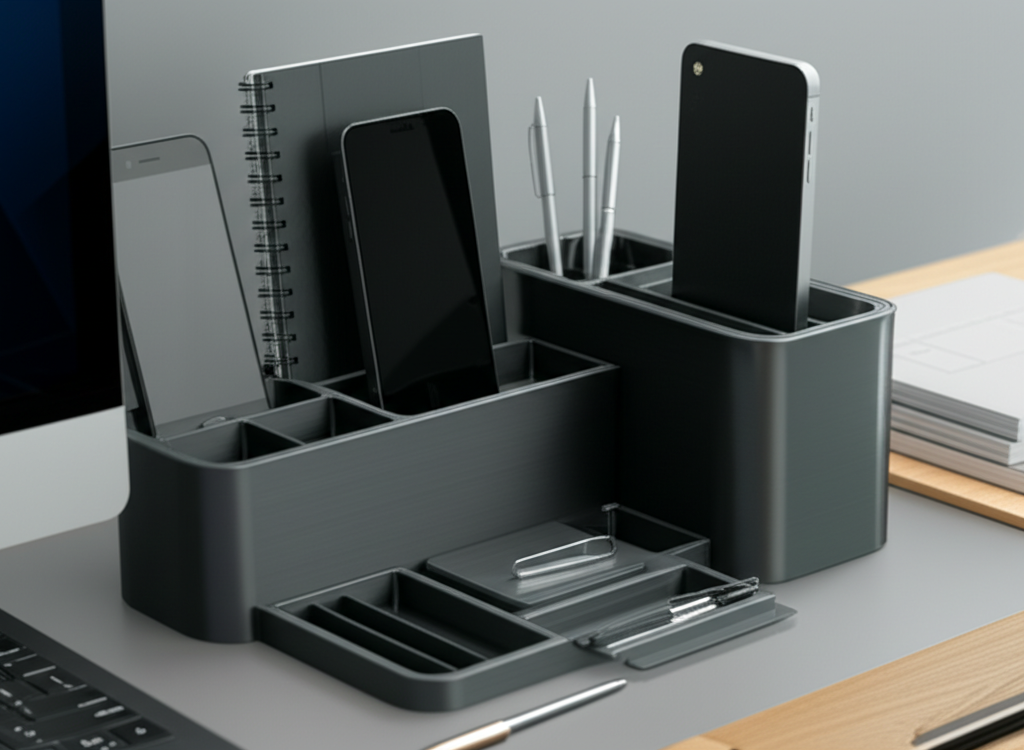
Unlock ultimate desk organization with custom 3D printable solutions, transforming clutter into efficiency. Discover essential, genius designs that perfectly fit your space and needs, making your workspace smarter and more productive.
Our desks can become a chaotic mess. Papers pile up, pens roll away, and chargers tangle. It’s frustrating when you can’t find what you need. This chaos wastes time and kills productivity. But what if you could create perfect organizers just for your stuff? 3D printing makes this possible. We’ll explore amazing 3D printable desk organizer ideas. You’ll learn how to find and use them to make your desk tidy and efficient. Get ready to transform your workspace!
Why a 3D Printable Desk Organizer is a Game-Changer
A 3D printable desk organizer offers unparalleled customization. You can design or find designs that fit your exact tools and space. This isn’t just about tidiness; it’s about making your workflow smoother. Imagine a holder perfectly shaped for your favorite stylus or a tray with just the right slots for your specific cables. These solutions are often more affordable and adaptable than store-bought options. They bring a unique, personal touch to your workspace, blending function with personal style.
Designing Your Dream Desk Organizer: What You Need to Know
Creating your own 3D printable desk organizer starts with an idea. You need to know what items you want to organize. Think about their shapes and sizes. Then, you can sketch out your organizer or look for existing designs online. Software like Tinkercad is great for beginners. It lets you build shapes and combine them easily. More advanced users might use Fusion 360 for complex designs. The key is to think about how you use your desk and what will make it better.
Finding the Best 3D Printable Desk Organizer Designs
The internet is full of amazing 3D printable desk organizer designs. Websites like Thingiverse, MyMiniFactory, and Cults3D host thousands of free and paid models. When searching, use specific keywords like “pen holder,” “cable management,” or “phone stand.” Look at the pictures and read the descriptions carefully. Check the comments and ratings from other users. This helps you find well-tested designs that work well. Many designers also offer customization options or are happy to tweak designs for you.
Essential 3D Printable Desk Organizer Categories to Explore
There are many types of 3D printable desk organizers. Each category tackles a common desk problem. Pen and pencil holders are very popular. Cable management solutions keep your wires neat and untangled. Phone and tablet stands improve ergonomics and viewing angles. Drawer inserts help organize smaller items like paper clips and USB drives. Monitor risers can add storage space underneath. Even specialized holders for headphones or game controllers exist. Finding the right type depends on your biggest desk challenges.
Pen and Pencil Holders: Beyond the Basic Cup

A simple cup can only hold so much. 3D printable pen holders can be much smarter. You can design them with individual slots for different writing tools. Some have sections for markers, pens, and pencils separately. Others include small compartments for erasers or sharpeners. Many designs incorporate a weighted base for stability. You can even find modular holders that let you connect multiple units together. This allows you to build a personalized pen storage system that grows with your needs.
Cable Management Solutions: Taming the Wire Beast
Messy cables are a common desktop eyesore. 3D printable cable clips and ties are fantastic solutions. You can print clips that attach to the edge of your desk to route cables neatly. There are also designs for managing charging cables for phones and laptops. Some organizers even have integrated channels to hide wires completely. This makes your desk look cleaner and prevents cables from falling behind your desk. It also makes it easier to find the right cable when you need it.
Phone and Tablet Stands: Ergonomics Meet Customization
Holding your phone or tablet for long periods can be uncomfortable. 3D printable stands offer a perfect solution. You can create stands with adjustable angles for comfortable viewing. Some designs include space for a charging cable, turning them into charging docks. Others are designed to hold your device vertically or horizontally. You can even print stands with extra features like a small tray for earbuds. These stands improve your posture and keep your device accessible.
Drawer Inserts and Small Item Organizers
Desk drawers often become black holes for small items. 3D printable drawer inserts are a lifesaver. You can design trays with specific-sized compartments for everything. Think about slots for USB drives, SD cards, staples, and paper clips. Some inserts are designed to fit specific drawer sizes perfectly. This prevents items from sliding around. It also makes finding small essentials quick and easy. A well-organized drawer saves precious time during your workday.
Monitor Risers with Integrated Storage
Raising your monitor can improve ergonomics and desk space. 3D printable monitor risers can do even more. Many designs include shelves or compartments underneath. These spaces are perfect for storing keyboards, notebooks, or even a small external hard drive. Some risers have integrated holders for pens or phones. This adds valuable storage without taking up more desk surface area. It’s a smart way to utilize vertical space effectively.
The Magic of Modularity: Building Your Perfect System
One of the most powerful aspects of 3D printable organizers is modularity. Many designs are created in interlocking pieces. This means you can start with a basic pen holder and add more modules later. You might add a phone stand, a cable organizer, or a small tray. These modules can often be arranged in different configurations. This allows you to adapt your organizer setup as your needs change. It’s a flexible system that grows with you.
Choosing the Right 3D Printing Material for Your Organizer
The material you choose for your 3D printable desk organizer matters. PLA is a popular choice because it’s easy to print and comes in many colors. It’s also biodegradable and relatively inexpensive. PETG is stronger and more durable than PLA, making it good for parts that might experience more stress. ABS is also strong but can be harder to print and requires good ventilation. For most desk organizers, PLA or PETG will be excellent choices. Consider the aesthetics too; many materials come in wood-fill, metal-fill, or matte finishes.
Step-by-Step: Printing Your Own Desk Organizer
Printing your own 3D desk organizer is a rewarding process. First, find a design you like on a site like Thingiverse. Download the STL file. Next, use slicing software (like Cura or PrusaSlicer) to prepare the file for your 3D printer. This software converts the 3D model into instructions for the printer. You’ll choose your material, layer height, and print speed here. Then, load your filament and start the print. Most small organizers take a few hours to print. Once finished, you might need to remove supports and clean up the print.
Example Printing Process:
1. Find Design: Search for “modular desk organizer” on Thingiverse.
2. Download File: Save the STL file for the desired module.
3. Slice Model: Open the STL in Cura. Select your PLA filament and standard settings.
4. Prepare Printer: Ensure your print bed is level and clean. Load your filament.
5. Start Print: Send the sliced file to your 3D printer and begin printing.
6. Post-Processing: Once cooled, carefully remove any support structures.
This structured approach ensures a smooth printing experience. It helps avoid common issues and results in a quality final product.
Beyond the Print: Customization and Enhancement
Once you have your 3D printed organizer, you can customize it further. Painting is a great option to match your desk’s color scheme. You can also add felt or cork lining to protect your items. Some people embed magnets into their organizers for attaching small metal objects. If the design isn’t quite perfect, you can often tweak it in 3D modeling software. For example, you might want to slightly enlarge a slot or add a small logo. This level of personalization is unmatched by off-the-shelf products.
Troubleshooting Common 3D Printing Issues for Organizers
Sometimes, 3D prints don’t turn out perfectly. Common issues include stringing (fine wisps of plastic), poor layer adhesion, or supports being difficult to remove. Stringing can often be fixed by adjusting your printer’s retraction settings or temperature. Poor layer adhesion might indicate your print temperature is too low or your cooling fan is too high. Difficult supports can be managed by adjusting support settings in your slicer software. Many online communities and forums offer detailed troubleshooting guides for specific problems. Learn more about common 3D printing issues and solutions.
Integrating AI into Your Workspace Organization
AI is transforming many aspects of our lives, and workspace organization is no exception. While AI doesn’t directly print organizers, it can help you design them. AI-powered design tools can generate concepts based on your input. Imagine describing your desk needs, and an AI suggests optimal layouts or even creates a basic 3D model. Furthermore, AI can analyze your work habits to suggest the most efficient organization strategies. Tools that manage your digital files or schedule tasks can also reduce physical clutter. The synergy between AI insights and 3D printed solutions creates a truly smart workspace.
Case Study: The Freelancer’s Desk Transformation
Sarah, a freelance graphic designer, struggled with a cluttered desk. Her space was filled with drawing tablets, styluses, reference books, and multiple charging cables. She found standard organizers didn’t accommodate her unique tools. Sarah discovered Thingiverse and found a modular desk organizer system. She printed custom holders for her specific styluses and a larger base for her tablet. She also printed a multi-port USB hub organizer. This transformation took her desk from chaos to a highly functional creative hub. “I can now focus on my work, not on searching for things,” she said.
The Environmental Impact of 3D Printed Organizers
3D printing can be an eco-friendlier option for organizers. By printing on demand, you avoid the mass production waste often associated with manufactured goods. Materials like PLA are biodegradable. You also reduce shipping emissions if you print at home. Furthermore, you can print organizers from recycled filament. This approach minimizes waste and resource consumption compared to traditional manufacturing. Choosing sustainable materials and practices makes your custom organizer even better.
Future Trends: Smart Organizers and Beyond
The future of desk organization is exciting. We’re seeing a rise in “smart” organizers. These might include built-in wireless chargers, subtle LED lighting, or even small displays. Imagine an organizer that reminds you of upcoming meetings or tracks your device battery levels. 3D printing will continue to play a key role, allowing for the creation of these complex, integrated devices. We might even see organizers that connect to your smart home ecosystem. This blend of physical and digital organization will create truly intelligent workspaces.
Frequently Asked Questions About 3D Printable Desk Organizers
What is the best material for a 3D printable desk organizer?
PLA is a great choice for most desk organizers. It’s easy to print, affordable, and comes in many colors. PETG is a good alternative if you need more strength and durability.
Where can I find 3D printable desk organizer designs?
Popular websites include Thingiverse, MyMiniFactory, and Cults3D. You can also find designs on Printables and GrabCAD.
Do I need a 3D printer to get a 3D printable desk organizer?
No, you don’t necessarily need your own printer. Many online services will print files for you. You can also find local makerspaces or libraries with 3D printers.
How much does it cost to 3D print a desk organizer?
The cost depends on the size of the organizer and the material used. Printing a small organizer at home can cost less than $1-$5 in filament. Using a printing service might cost more, typically $10-$30 for a standard organizer.
Can I modify existing 3D printable desk organizer designs?
Yes, if the design is licensed for modification. You can often download the source files (like .f3d or .step) and edit them using 3D modeling software.
How long does it take to print a desk organizer?
A small organizer might take 2-4 hours. Larger or more complex designs could take 8-12 hours or even longer.
Conclusion: Build Your Ideal Workspace, One Print at a Time
A 3D printable desk organizer is more than just a storage solution. It’s a pathway to a more efficient, personalized, and enjoyable workspace. By leveraging the power of 3D printing, you can overcome clutter and create a system tailored precisely to your needs. From simple pen holders to complex modular systems, the possibilities are vast. Embrace the innovation and start designing or printing your ideal desk setup today. You’ll find that a little organization can make a huge difference in your productivity and well-being. Ready to transform your desk? Explore the incredible world of 3D printable organizers and make your workspace work for you.

Belayet Hossain is a Senior Tech Expert and Certified AI Marketing Strategist. Holding an MSc in CSE (Russia) and over a decade of experience since 2011, he combines traditional systems engineering with modern AI insights. Specializing in Vibe Coding and Intelligent Marketing, Belayet provides forward-thinking analysis on software, digital trends, and SEO, helping readers navigate the rapidly evolving digital landscape. Connect with Belayet Hossain on Facebook, Twitter, Linkedin or read my complete biography.