
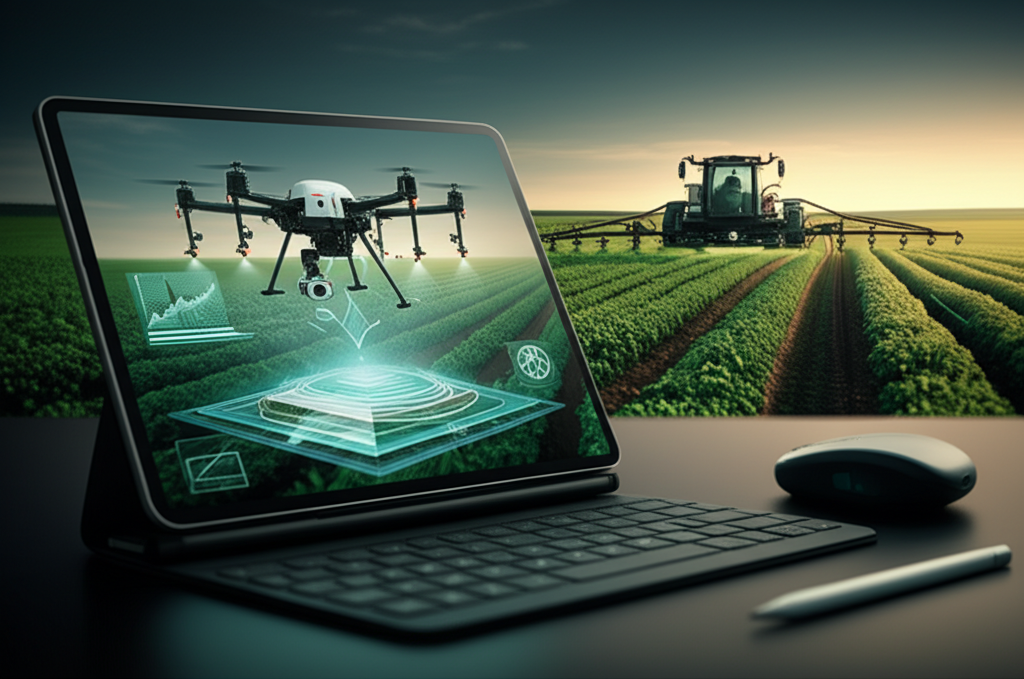
Published on: 30/09/2025 | Updated on: September 30, 2025
Agriculture Tech and Productivity: Essential Breakthroughs Revolutionizing Farming
Agriculture tech and productivity are undergoing a seismic shift, with AI-driven innovations enhancing yields, reducing waste, and creating more sustainable farming practices. This article explores the crucial breakthroughs transforming how we grow food.
Farming, the bedrock of human civilization, has always been about maximizing output from the land. Yet, traditional methods often grapple with unpredictable weather, resource limitations, and the sheer scale of feeding a growing global population. Frustrating inefficiencies can lead to wasted crops and increased costs for both farmers and consumers. But what if technology could offer a smarter, more productive way forward? We’re on the cusp of a revolution, powered by cutting-edge agriculture tech and AI, promising to elevate farming productivity to unprecedented levels. Get ready to discover the essential breakthroughs that are reshaping our fields.
The AI-Powered Farm: Smart Solutions for Smarter Yields
Artificial intelligence is no longer just a buzzword; it’s a driving force behind significant advancements in agriculture, directly impacting productivity. AI algorithms analyze vast datasets to provide insights that were previously impossible to obtain. These smart systems help farmers make more informed decisions, leading to optimized resource allocation and ultimately, higher yields.
Precision Agriculture: Cultivating Every Inch with Data

Precision agriculture leverages technology to manage crops and soil with pinpoint accuracy. Instead of treating an entire field uniformly, farmers can now apply resources like water, fertilizer, and pesticides only where and when they are needed. This targeted approach minimizes waste, reduces environmental impact, and boosts overall crop health and yield.
Sensors and IoT Devices: The Eyes and Ears of the Smart Farm
The foundation of precision agriculture lies in an array of sophisticated sensors and Internet of Things (IoT) devices. These gadgets, embedded throughout the farm, collect real-time data on crucial parameters such as soil moisture, nutrient levels, temperature, humidity, and even pest presence. This constant stream of information provides a comprehensive, dynamic picture of the farm’s conditions. Devices like soil moisture sensors, weather stations, and drone-mounted cameras work in synergy to gather actionable data.
Data Analytics and Machine Learning: Turning Data into Decisions
Raw data from sensors is only valuable when it’s analyzed and translated into actionable insights. This is where big data analytics and machine learning algorithms come into play. AI systems can process this information to identify patterns, predict potential problems like disease outbreaks or drought stress, and recommend specific interventions. For instance, a machine learning model can analyze historical yield data alongside current weather patterns to forecast the optimal time for planting or harvesting. Companies like John Deere are integrating these AI-driven insights directly into their equipment.
Variable Rate Application (VRA): Applying Exactly What’s Needed
Building on the insights from data analytics, Variable Rate Application (VRA) technology allows for the precise delivery of inputs across a field. GPS-guided tractors equipped with VRA systems can adjust the application rate of seeds, fertilizers, or pesticides on the go, based on the specific needs of different zones within the field. This ensures that each area receives the optimal amount of resources, preventing over-application in some areas and under-application in others. The result is more efficient resource use and improved crop uniformity.
This data-driven approach to precision agriculture minimizes waste and maximizes the effectiveness of every farming input. By understanding the unique needs of different parts of their land, farmers can cultivate healthier crops and achieve significantly better productivity.
Robotics and Automation: The Future of Farm Labor
The agricultural sector faces ongoing challenges with labor shortages and the demanding physical nature of farm work. Robotics and automation are emerging as powerful solutions, taking over repetitive, labor-intensive, and even dangerous tasks. These smart machines enhance efficiency, improve worker safety, and contribute to consistent, high-quality output.
Autonomous Tractors and Machinery: Driving Efficiency on Autopilot
Self-driving tractors and other autonomous farm machinery are transforming field operations. Equipped with advanced GPS, lidar, and AI-powered navigation systems, these machines can perform tasks like plowing, planting, and harvesting with remarkable precision, often around the clock. This frees up human operators to focus on more complex management tasks and supervision. Companies like CNH Industrial are heavily investing in autonomous solutions for their agricultural equipment.
Automated Planting and Seeding: Perfect Spacing for Optimal Growth
Robotic seeders and planters ensure that seeds are placed at the optimal depth and spacing, maximizing germination rates and early-stage growth. These systems can adapt to different soil types and conditions, providing a level of consistency that is difficult to achieve with manual planting. This meticulous approach sets the stage for healthier plants and higher yields from the very beginning of the growing season.
Robotic Harvesting: Gentle and Efficient Crop Collection
Harvesting is often one of the most labor-intensive phases of agriculture. Robotic harvesters are being developed to gently and efficiently pick fruits, vegetables, and other crops. These robots use sophisticated vision systems to identify ripe produce and robotic arms with delicate grippers to collect it, minimizing damage and spoilage. This technology is particularly valuable for delicate crops where manual handling can lead to significant losses.
Weeding and Pest Control Robots: Targeted Intervention
Robots are also being deployed for automated weeding and targeted pest control. Some robots use AI-powered cameras to distinguish between crops and weeds, then precisely remove weeds with mechanical tools or targeted herbicide application. Others can identify and remove diseased plants or pests before they spread, reducing the need for broad-spectrum chemical treatments. This targeted approach is a cornerstone of sustainable agriculture.
The integration of robotics and automation in agriculture promises to address labor challenges and boost operational efficiency. These technologies enable more precise and consistent execution of farming tasks, leading to increased productivity and reduced reliance on manual labor.
Biotechnology and Genetic Innovation: Engineering for Resilience and Yield
Biotechnology plays a crucial role in developing crops that are more resilient, nutritious, and higher-yielding. Through advanced genetic research and engineering, scientists are creating plants better equipped to withstand environmental challenges and produce more food. These innovations are fundamental to ensuring food security in a changing world.
Genetically Modified Organisms (GMOs) and Gene Editing (CRISPR): Tailoring Crops for Success
Genetically Modified Organisms (GMOs) have been used for decades to introduce beneficial traits into crops, such as resistance to pests, diseases, or herbicides, and improved nutritional content. More recently, gene-editing technologies like CRISPR-Cas9 offer even greater precision in modifying plant DNA. These tools allow scientists to make specific, targeted changes to a plant’s genetic makeup, accelerating the development of crops with desirable traits. This can lead to crops that require fewer inputs and are more productive under challenging conditions.
Enhanced Nutritional Value: Feeding the World Better
Biotechnology is not just about yield; it’s also about improving the nutritional quality of our food. Researchers are developing crops that are biofortified with essential vitamins and minerals, such as Golden Rice, which is engineered to produce beta-carotene, a precursor to Vitamin A. This can help combat malnutrition in regions where dietary deficiencies are prevalent.
Disease and Pest Resistance: Reducing Crop Loss and Chemical Use
Developing crops with inherent resistance to common diseases and pests significantly reduces crop losses and the need for chemical pesticides. Biotechnology enables the introduction of resistance genes, creating plants that can defend themselves naturally. This not only protects yields but also contributes to more environmentally friendly farming practices by reducing chemical runoff.
Drought and Stress Tolerance: Adapting to a Changing Climate
Climate change poses significant threats to agriculture, with increased frequency of droughts, floods, and extreme temperatures. Biotechnology is crucial in developing crops that are tolerant to these stresses. By enhancing a plant’s ability to survive and thrive in harsh conditions, these innovations help ensure stable food production even in challenging environments.
These advancements in biotechnology and genetic innovation are vital for creating crops that are not only more productive but also more resilient and nutritious. They offer powerful tools for addressing global food security and adapting agriculture to environmental challenges.
Drones and Aerial Imaging: A Bird’s-Eye View for Better Management
Drones have revolutionized the way farmers monitor and manage their fields. Equipped with high-resolution cameras and sensors, these unmanned aerial vehicles (UAVs) provide a comprehensive, detailed overview of crop health, soil conditions, and field variability, enabling more precise and efficient farm management.
Crop Monitoring and Health Assessment: Early Detection of Issues
Drones equipped with multispectral and thermal cameras can capture images that reveal much more than the human eye can see. These images can highlight variations in plant health, identify areas affected by nutrient deficiencies, pests, or diseases, and even detect irrigation problems. Early detection allows farmers to intervene quickly, preventing small issues from becoming major problems and impacting yields.
Field Mapping and Analysis: Understanding Your Land Better
Drones can rapidly create detailed 2D and 3D maps of fields. These maps provide valuable information on topography, soil composition, and crop density. By analyzing these maps, farmers can identify areas that are prone to erosion, optimize planting patterns, and understand the variability across their fields. This granular understanding is key to effective precision agriculture.
Precision Spraying and Seeding: Targeted Application from Above
Specialized drones are now capable of performing precision spraying of fertilizers, pesticides, and even seeds. These drones can cover large areas quickly and apply treatments with high accuracy, reducing drift and ensuring that inputs are delivered precisely where they are needed. This is particularly useful for hard-to-reach areas or for applying treatments to specific patches of a field.
Livestock Monitoring: Keeping an Eye on Your Herd
Beyond crop farming, drones are also finding applications in livestock management. Farmers can use drones to monitor the location and health of their herds, identify animals that may be injured or sick, and even count livestock in large pastures. This can save time and improve the overall welfare of the animals.
The adoption of drones and aerial imaging offers farmers an invaluable tool for enhanced monitoring and management. The detailed insights provided by these technologies lead to more informed decisions, optimized resource use, and ultimately, improved agricultural productivity.
Smart Irrigation Systems: Water Wisdom for Thriving Crops
Water is one of the most critical resources in agriculture, and managing it efficiently is paramount to productivity and sustainability. Smart irrigation systems leverage technology to deliver the right amount of water at the right time, minimizing waste and ensuring optimal crop hydration.
Soil Moisture Sensors: Knowing When and How Much to Water
At the heart of smart irrigation are soil moisture sensors. These devices are strategically placed throughout fields to measure the water content of the soil in real-time. This data allows irrigation systems to activate only when the soil moisture drops below a predetermined threshold, preventing overwatering and conserving water.
Weather Forecasting Integration: Adapting to Nature’s Rhythms
Smart irrigation systems can integrate with local weather forecasts. If rain is predicted, the system can automatically delay or skip an irrigation cycle, further optimizing water use. This proactive approach ensures that water is not wasted when natural precipitation is expected.
Automated Control and Remote Monitoring: Efficiency at Your Fingertips
These systems often feature automated controllers that can manage irrigation schedules based on sensor data and weather information. Furthermore, many systems offer remote monitoring capabilities via smartphone apps or web portals. This allows farmers to check irrigation status, adjust settings, and receive alerts from anywhere, providing unparalleled control and flexibility. Companies like Lindsay Corporation are at the forefront of developing advanced irrigation technologies.
Drip and Micro-irrigation Technologies: Delivering Water Directly to Roots
Smart irrigation often works in conjunction with efficient water delivery methods like drip irrigation and micro-sprinklers. These systems deliver water directly to the root zone of plants, minimizing evaporation and runoff. This targeted delivery ensures that water is used most effectively, promoting healthy growth and maximizing yields.
Smart irrigation systems are essential for sustainable agriculture, ensuring that precious water resources are used wisely. By providing crops with precisely what they need, these technologies enhance plant health, boost productivity, and reduce operational costs.
Vertical Farming and Controlled Environment Agriculture (CEA): Farming in New Dimensions
As urban populations grow and arable land becomes scarcer, innovative farming methods like vertical farming and Controlled Environment Agriculture (CEA) are gaining traction. These approaches allow food production in controlled indoor settings, independent of traditional weather conditions, offering consistent yields and reduced resource consumption.
Vertical Farms: Maximizing Space with Layered Cultivation
Vertical farms grow crops in vertically stacked layers, often within buildings or shipping containers. This method maximizes crop production in a small footprint, making it ideal for urban environments. By controlling light, temperature, humidity, and nutrients, vertical farms can produce crops year-round with consistent quality.
Hydroponics, Aeroponics, and Aquaponics: Soil-Free Growing Systems
These systems typically use soil-free growing methods. Hydroponics involves growing plants in nutrient-rich water solutions. Aeroponics mists plant roots with nutrient-rich water. Aquaponics combines aquaculture (raising fish) with hydroponics, where fish waste provides nutrients for the plants. These methods can lead to faster growth cycles and higher yields compared to traditional soil-based farming.
Controlled Environment Agriculture (CEA): Optimizing Every Variable
CEA encompasses a range of technologies that allow for precise control over the growing environment. This includes managing lighting (often LED grow lights), temperature, humidity, CO2 levels, and nutrient delivery. The ability to optimize these variables leads to predictable growth patterns, reduced pest and disease issues, and higher productivity per square foot. Companies like AeroFarms are pioneers in this field.
Reduced Water Usage and Land Footprint: Sustainable Production
Vertical farms and CEA systems typically use significantly less water than conventional farming, often recycling and reusing water. Their compact, multi-layered design also drastically reduces the land footprint required for food production, making them a sustainable solution for feeding growing populations.
Vertical farming and CEA represent a significant shift in agricultural paradigms, enabling hyper-local food production with unprecedented efficiency and sustainability. These technologies are crucial for ensuring food security in urban areas and adapting to the challenges of land and resource scarcity.
Blockchain in Agriculture: Enhancing Transparency and Traceability
The agricultural supply chain is complex, often lacking transparency and traceability. Blockchain technology offers a secure and immutable way to track food products from farm to fork, enhancing trust, reducing fraud, and improving efficiency throughout the chain.
Supply Chain Transparency: Knowing Where Your Food Comes From
Blockchain creates a distributed ledger that records every transaction and movement of a food product. Each step, from planting and harvesting to processing and distribution, can be recorded on the blockchain. This allows consumers and stakeholders to easily access verified information about the origin, journey, and handling of their food.
Traceability and Food Safety: Rapid Recall and Risk Management
In the event of a food safety issue or contamination, blockchain technology enables rapid and precise tracing of affected products. This allows for targeted recalls, minimizing public health risks and reducing the economic impact on businesses. It provides a clear audit trail for regulatory compliance.
Reducing Fraud and Counterfeiting: Ensuring Authenticity
The immutability of blockchain records makes it difficult to tamper with data, thereby reducing the risk of fraud, counterfeiting, and mislabeling of agricultural products. This is particularly important for high-value commodities or products with specific certifications.
Improved Efficiency and Reduced Costs: Streamlining Operations
By digitizing and securing transactions and record-keeping, blockchain can streamline processes, reduce paperwork, and minimize disputes within the supply chain. This can lead to significant cost savings and operational efficiencies for all parties involved. IBM Food Trust is a prominent example of a blockchain solution for the food industry.
Blockchain technology is poised to revolutionize agricultural supply chains by providing unprecedented levels of transparency, traceability, and security. This fosters greater trust among consumers and improves the overall efficiency and integrity of the food system.
AI for Predictive Analytics and Disease Management
Beyond operational efficiency, AI is proving invaluable in predicting and managing agricultural diseases and optimizing crop health proactively. By analyzing complex data patterns, AI can help farmers stay ahead of potential threats.
Early Disease Detection: Identifying Outbreaks Before They Spread
AI algorithms can analyze images from drones, sensors, or even mobile devices to detect early signs of plant diseases or pest infestations. These systems are trained on vast datasets of plant pathology, allowing them to identify subtle visual cues that might be missed by the human eye. Early detection is critical for effective containment and treatment.
Predictive Modeling for Outbreaks: Forecasting Potential Risks
By integrating data on weather patterns, soil conditions, historical disease occurrences, and plant health indicators, AI can build predictive models. These models can forecast the likelihood and potential severity of disease outbreaks in specific regions or fields, allowing farmers to take preventative measures.
Optimized Treatment Strategies: Targeted Interventions
Once a disease is identified or predicted, AI can help recommend the most effective and targeted treatment strategies. This might involve suggesting specific fungicides or pesticides, or advising on adjustments to irrigation or fertilization to enhance plant resilience. This precision minimizes the use of chemicals and reduces costs.
Crop Yield Prediction: Better Planning and Resource Allocation
AI models can also predict crop yields with increasing accuracy by analyzing a multitude of factors throughout the growing season. This helps farmers make better decisions regarding harvesting, storage, marketing, and resource allocation for future seasons.
AI-powered predictive analytics and disease management tools are transforming agriculture from a reactive to a proactive industry. These intelligent systems empower farmers with the foresight needed to protect their crops, maximize yields, and ensure sustainable production.
Conclusion: The Smart Future of Agriculture is Here
The convergence of advanced technologies like Artificial Intelligence, robotics, biotechnology, and data analytics is ushering in an era of unprecedented productivity and sustainability in agriculture. These essential breakthroughs are not just incremental improvements; they represent a fundamental shift in how we grow food, ensuring that we can feed a growing global population more efficiently and responsibly. From precision planting guided by AI to resilient crops engineered through biotechnology, the future of agriculture is intelligent, data-driven, and incredibly promising. Embracing these innovations is key to navigating the challenges of food security and climate change, making agriculture tech and productivity the driving force for a healthier planet and a well-nourished world.
Frequently Asked Questions
What is the most significant impact of AI on agriculture productivity?
AI’s most significant impact on agriculture productivity lies in its ability to analyze vast amounts of data to provide actionable insights for precision farming, leading to optimized resource use, early detection of issues, and ultimately, higher yields.
How do drones improve farming practices?
Drones provide aerial perspectives for detailed crop monitoring, field mapping, and precision spraying. They enable early detection of diseases and stress, allowing for timely interventions and more efficient management of resources across large areas.
What is precision agriculture?
Precision agriculture uses technology like GPS, sensors, and data analytics to manage crops and soil with pinpoint accuracy. It involves applying resources such as water and fertilizer only where and when they are needed, minimizing waste and maximizing yield.
How does biotechnology help in increasing crop yields?
Biotechnology helps increase crop yields by developing plants that are more resistant to pests, diseases, and harsh environmental conditions like drought. It also enables the enhancement of nutritional value and growth rates, contributing to more robust and productive crops.
What are the benefits of vertical farming?
Vertical farming allows for year-round crop production in urban areas using minimal space and water. It offers consistent yields, reduces transportation costs and emissions, and provides fresh produce locally.
Can blockchain really improve food safety?
Yes, blockchain can significantly improve food safety by providing a transparent and immutable record of a food product’s journey from farm to fork. This allows for rapid traceability in case of recalls and helps prevent fraud.
What role do IoT sensors play in smart farming?
IoT sensors are the eyes and ears of smart farms, collecting real-time data on soil conditions, weather, and plant health. This data is crucial for making informed decisions, automating tasks, and optimizing resource management for increased productivity.

Belayet Hossain is a Senior Tech Expert and Certified AI Marketing Strategist. Holding an MSc in CSE (Russia) and over a decade of experience since 2011, he combines traditional systems engineering with modern AI insights. Specializing in Vibe Coding and Intelligent Marketing, Belayet provides forward-thinking analysis on software, digital trends, and SEO, helping readers navigate the rapidly evolving digital landscape. Connect with Belayet Hossain on Facebook, Twitter, Linkedin or read my complete biography.