


Published on: 30/09/2025 | Updated on: September 30, 2025
Discover the essential breakthrough of adding oatmeal to formula, a simple yet effective way to enhance your baby’s nutrition and digestion. This guide provides a comprehensive, step-by-step approach to safely incorporating this wholesome grain into your infant’s diet, ensuring optimal growth and development.
Welcome! If you’re a parent exploring ways to enrich your baby’s formula, you’ve likely stumbled upon the idea of adding oatmeal. It’s a common thought, especially as babies approach solid food introduction. But how do you do it safely and effectively? This article is your friendly guide, demystifying the process of adding oatmeal to formula. I’ll walk you through the benefits, the right way to prepare it, and what to watch out for, so you can feel confident in this nutritional boost.
Why Consider Adding Oatmeal to Formula?
Adding oatmeal to formula can be a fantastic way to introduce a new texture and nutrient source to your baby’s diet. It’s a gentle way to start exploring solids, offering potential benefits for digestion and providing sustained energy. This simple addition can be a valuable step in your baby’s feeding journey.
Oatmeal, a whole grain, is packed with essential nutrients that can complement your baby’s formula. It’s a good source of fiber, which can aid in promoting healthy digestion and potentially preventing constipation. Furthermore, oatmeal offers carbohydrates for energy and can introduce your baby to new tastes and textures in a palatable way.
When is the Right Time to Introduce Oatmeal?
The timing of introducing any new food, including oatmeal, is crucial for your baby’s development. Generally, babies are ready for solids around six months of age, or when they show key developmental signs. Always consult with your pediatrician before making any significant changes to your baby’s diet.
Before introducing oatmeal, ensure your baby can sit up with support, has good head and neck control, and shows an interest in food. These are important indicators that their digestive system is maturing and they are ready for new experiences. Waiting for these signs ensures a smoother and safer transition to solids.
Choosing the Best Oatmeal for Your Baby
Not all oatmeal is created equal when it comes to feeding infants. For your baby’s delicate system, opt for specific types of oatmeal designed for their age and digestive capabilities. This choice is fundamental to a positive introduction.
The best choice is typically plain, single-grain infant oatmeal. These are usually iron-fortified and processed to be easily digestible for babies. Avoid flavored or sweetened varieties, as these can introduce unnecessary sugars and artificial ingredients. Always check the label to ensure it’s suitable for infants.
The Safe and Simple Method: Adding Oatmeal to Formula
Successfully adding oatmeal to formula involves a precise method to ensure safety and optimal consistency. This process should be straightforward and adaptable to your baby’s needs. Here’s how to get it right.
The key is to mix the oatmeal with breast milk or formula to create a smooth, thin consistency. Start with a very small amount of oatmeal and gradually increase it as your baby gets used to the texture. The goal is a smooth, pourable mixture, not a thick paste, especially when first introducing it.
Step-by-Step Guide to Mixing Oatmeal and Formula

Here’s a clear, actionable guide to help you mix oatmeal into your baby’s formula. Follow these steps carefully for a smooth and successful feeding experience.
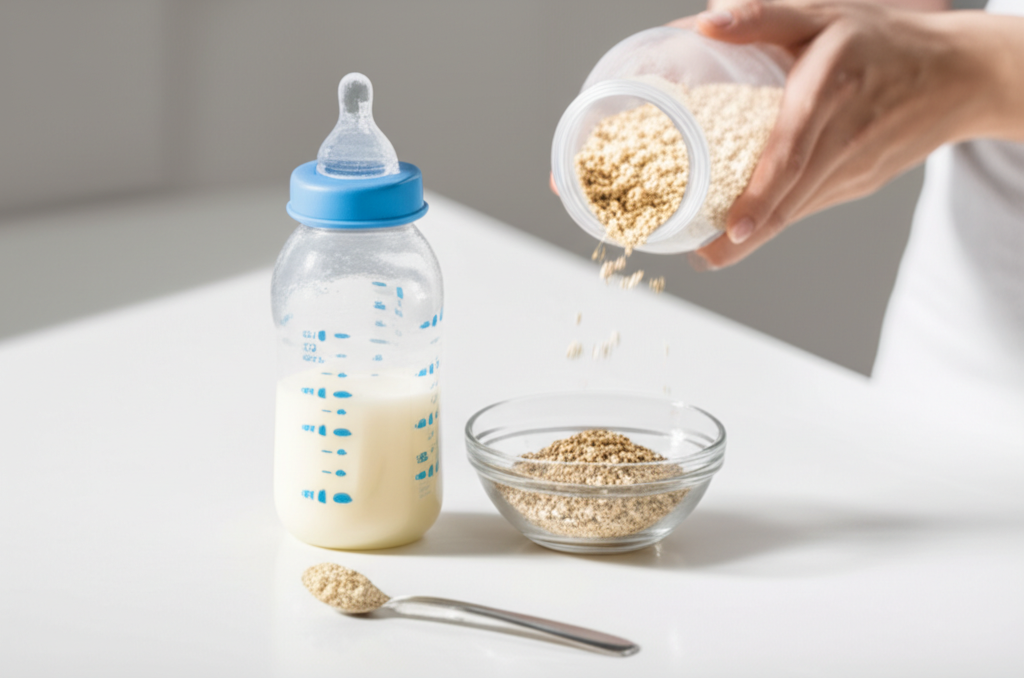
1. Prepare the Formula: Prepare your baby’s regular bottle of formula or breast milk according to its usual instructions. Ensure it’s at the correct temperature.
2. Measure the Oatmeal: Measure a small amount of infant oatmeal, starting with about 1 teaspoon. For a single bottle, this is a good starting point.
3. Combine and Mix: Add the measured oatmeal to the prepared bottle of formula.
4. Shake Well: Secure the nipple and lid tightly on the bottle. Shake vigorously until the oatmeal is completely dissolved and there are no clumps.
5. Check Consistency: Pour a small amount onto a spoon to check the consistency. It should be slightly thicker than plain formula but still pourable. If it’s too thick, add a little more formula or breast milk.
6. Feed Immediately: Feed your baby the mixture right away. Do not store leftover mixtures.
This method ensures that the oatmeal is well-integrated and the consistency is appropriate for your baby’s age and feeding ability. Always supervise your baby during feeding.
Nutritional Benefits of Oatmeal in Formula
Beyond just adding bulk, oatmeal brings a host of nutritional advantages to your baby’s diet. These benefits can contribute significantly to your baby’s overall health and development. Understanding these advantages can empower your choices.
Oatmeal is a good source of iron, which is vital for cognitive development in infants. It also provides dietary fiber, promoting a healthy digestive system and potentially alleviating constipation, a common issue for some babies. The complex carbohydrates in oatmeal offer a steady release of energy, helping to keep your baby satisfied.
Potential Downsides and What to Watch For
While adding oatmeal to formula offers benefits, it’s essential to be aware of potential challenges. Being prepared helps you navigate any issues smoothly and ensures your baby’s comfort and well-being.
Some babies might experience digestive upset, such as gas or changes in stool consistency, when first introduced to oatmeal. It’s also possible for babies to develop an allergy or sensitivity, though this is less common with oats compared to other allergens. Always introduce new foods one at a time.
Signs of Digestive Discomfort or Sensitivity
Pay close attention to your baby’s reactions after feeding them oatmeal mixed with formula. Recognizing these signs early can help you adjust or pause the introduction.
Increased Gas: You might notice your baby seems more gassy or uncomfortable after feeds.
Changes in Stool: Stools might become firmer, harder to pass, or you might observe a change in color or smell.
Spitting Up More: While some spitting up is normal, an increase could indicate intolerance.
Irritability: If your baby is unusually fussy or irritable after feeds, it could be a sign of discomfort.
Rash or Hives: Though rare for oatmeal, any skin reaction should be taken seriously.
If you notice any of these signs, it’s best to stop offering oatmeal and consult your pediatrician. They can offer personalized advice based on your baby’s specific needs and health history.
Tips for a Smooth Introduction to Oatmeal in Formula
Making the transition to adding oatmeal to formula a positive experience involves a few thoughtful strategies. These tips are designed to ease the process for both you and your baby.
Start slowly and observe your baby’s cues. Patience is key, and consistency in your approach will help your baby adapt more readily. Don’t be discouraged if they don’t take to it immediately; sometimes it takes a few tries.
Best Practices for Feeding
Start Small: Begin with a tiny amount of oatmeal, just a teaspoon, mixed into a few ounces of formula.
Observe for Allergies: Introduce oatmeal as a single new food, waiting 2-3 days before introducing another new food to monitor for any reactions.
Consistency is Key: Aim for a thin, smooth consistency, similar to thin yogurt. Adjust with more liquid if needed.
Temperature Matters: Ensure the mixture is lukewarm, never hot.
Timing: Offer it when your baby is happy and alert, not overly hungry or tired.
One Meal at a Time: Initially, introduce oatmeal in just one feeding per day.
Don’t Force It: If your baby refuses it or shows discomfort, don’t force them to eat. Try again another day or adjust the consistency.
These practices will help ensure that adding oatmeal to formula is a safe and enjoyable experience for your little one.
Oatmeal vs. Other Baby Cereal Options
When exploring cereal options for your baby, it’s helpful to understand how oatmeal compares to other popular choices. Each cereal has its own characteristics, and oatmeal often stands out for specific reasons.
Infant oatmeal is a fantastic starting point due to its nutritional profile and digestibility. Other cereals, like rice cereal, have historically been popular but may lack the same fiber content and can sometimes be constipating if not managed carefully. Choosing oatmeal often aligns well with promoting a healthy digestive system from the outset.
Comparison Table: Infant Cereals
| Cereal Type | Key Nutritional Benefit | Potential Downsides | Ease of Digestion |
| :—————– | :—————————————————– | :———————————————— | :—————- |
| Infant Oatmeal | High in fiber, iron-fortified, good source of energy. | Can cause gas initially; ensure smooth consistency. | High |
| Rice Cereal | Easily digestible, often iron-fortified. | Low in fiber, can be constipating for some babies. | Very High |
| Barley Cereal | Good fiber content, iron-fortified. | Less common, ensure it’s single-grain infant type. | High |
| Multi-Grain | Broader nutrient profile, higher fiber. | Introduce after single grains; monitor for reactions. | Moderate to High |
This table highlights why infant oatmeal is often recommended as a primary choice for introducing cereal to babies. Its balance of nutrients and fiber makes it a well-rounded option.
Integrating Oatmeal into a Balanced Diet
Adding oatmeal to formula is just one step in building a comprehensive and nutritious diet for your baby. As they grow and develop, introducing a variety of foods is essential for their overall health. Think of oatmeal as a foundational element.
Once your baby is comfortable with oatmeal mixed into their formula, you can explore offering it as a standalone food, mixed with breast milk or formula to a thicker consistency. This progression helps them learn to eat from a spoon and experience different textures. The goal is to expand their palate and nutrient intake gradually.
Transitioning to Spoon-Fed Oatmeal
When you feel your baby is ready, you can transition to offering oatmeal from a spoon. This is a significant milestone in their feeding journey, encouraging independent eating skills.
Start by preparing the oatmeal slightly thicker than you would for a bottle, but still smooth and easily spoonable. Offer a small amount on a baby spoon and let your baby explore it. Don’t worry if it’s messy; it’s part of the learning process.
When to Seek Professional Advice
While this guide offers comprehensive information, it’s always wise to consult with healthcare professionals. Your pediatrician or a registered dietitian can provide personalized guidance tailored to your baby’s specific needs.
If you have any concerns about your baby’s growth, digestion, or potential allergies, never hesitate to reach out to your doctor. They are your best resource for ensuring your baby is thriving and receiving the optimal nutrition for their development.
Common Questions About Adding Oatmeal to Formula
Here are some frequently asked questions that parents often have when considering adding oatmeal to their baby’s formula.
Q1: Can I add regular rolled oats to my baby’s formula?
A1: It’s best to use plain, single-grain infant oatmeal specifically designed for babies. Regular oats are not processed for infant digestion and may be too coarse or difficult to mix smoothly.
Q2: How much oatmeal should I add to formula?
A2: Start with a very small amount, about 1 teaspoon, mixed into a standard bottle of formula. Gradually increase the amount as your baby gets accustomed to it, ensuring the consistency remains smooth and pourable.
Q3: Will adding oatmeal make my baby sleep longer?
A3: Some parents report that adding cereal like oatmeal to a bedtime bottle helps their baby sleep longer, possibly due to the feeling of fullness. However, this is not guaranteed and varies greatly among babies. Always consult your pediatrician before making changes to bedtime feedings.
Q4: Is it okay to add fruit or vegetables to oatmeal in the formula?
A4: Once your baby has successfully tolerated plain oatmeal for a few days, you can introduce small amounts of pureed fruits or vegetables. Introduce these new ingredients one at a time to monitor for any reactions.
Q5: What if my baby doesn’t like the taste of oatmeal in their formula?
A5: Babies’ palates are developing, and it can take multiple exposures for them to accept a new taste. Try again in a few days, perhaps with a slightly different consistency or at a different time of day. If they continue to refuse, it’s okay to wait and try again later or explore other infant cereals.
Q6: How do I clean bottles after adding oatmeal?
A6: Oatmeal can be sticky. It’s best to rinse bottles immediately after use to prevent residue from drying. Use warm, soapy water and a bottle brush to ensure thorough cleaning.
Conclusion
Adding oatmeal to formula can be an enriching step in your baby’s nutritional journey, offering essential nutrients and aiding digestion. By choosing the right type of oatmeal, preparing it correctly, and introducing it gradually, you can confidently enhance your baby’s diet. Remember to always observe your baby’s cues and consult with your pediatrician for personalized advice. This simple breakthrough can pave the way for a healthy and happy feeding experience.

Belayet Hossain is a Senior Tech Expert and Certified AI Marketing Strategist. Holding an MSc in CSE (Russia) and over a decade of experience since 2011, he combines traditional systems engineering with modern AI insights. Specializing in Vibe Coding and Intelligent Marketing, Belayet provides forward-thinking analysis on software, digital trends, and SEO, helping readers navigate the rapidly evolving digital landscape. Connect with Belayet Hossain on Facebook, Twitter, Linkedin or read my complete biography.