
Published on: 19/10/2025 | Updated on: October 19, 2025
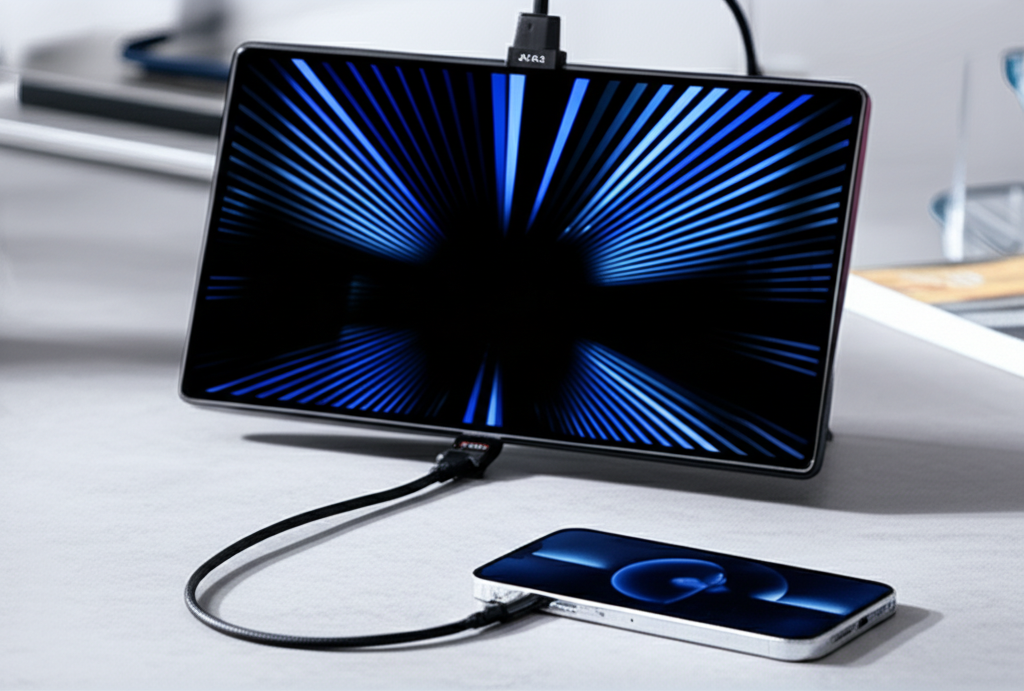
Arzopa portable monitor with iPhone offers an essential and stunning upgrade for mobile productivity and entertainment, turning your iPhone into a larger, more versatile display. Experience enhanced workflow and immersive viewing anywhere.
The way we work and play is changing fast. Many of us rely on our iPhones for everything. But sometimes, a small screen just isn’t enough. You want more space to see your work clearly or enjoy movies better. This is where a portable monitor comes in. Specifically, pairing your iPhone with an Arzopa portable monitor can be a game-changer. It’s an upgrade that’s both practical and impressive.
In this guide, I’ll walk you through why the Arzopa portable monitor is a fantastic choice for iPhone users. We’ll look at how it works, its best features, and how it can transform your daily tasks. Get ready to see your iPhone in a whole new light!
Why an Arzopa Portable Monitor with iPhone is a Smart Choice
A portable monitor expands your iPhone’s capabilities significantly. It’s like giving your phone a bigger, better brain for visuals. This is especially useful for tasks that require more screen real estate. Think about editing photos, writing longer emails, or even playing games. An Arzopa portable monitor makes these experiences much smoother.
It bridges the gap between mobile convenience and desktop-like functionality. You get the portability of your iPhone with the visual comfort of a larger display. This setup is ideal for people on the go. It’s also great for those who want a flexible workspace at home.
Enhancing Productivity with a Second Screen

Imagine working on your iPhone and needing to reference a document. On a small screen, you’re constantly switching between apps. With an Arzopa portable monitor, you can have both documents open side-by-side. This makes comparing information and multitasking much easier. It’s a real boost for your workflow.
Professionals who travel often can benefit greatly. They can set up a mini-office anywhere. Students can use it for research and writing papers. Even casual users can enjoy browsing the web or managing social media with more clarity.
Unlocking Immersive Entertainment
Your iPhone is great for watching videos, but a larger screen makes it even better. The Arzopa portable monitor provides a more immersive viewing experience. Whether you’re streaming your favorite shows or watching a movie, the bigger display pulls you in. It’s like having a personal cinema on the go.
Gaming on your iPhone can also be transformed. Larger visuals and the ability to see more of the game world at once can enhance your gameplay. It feels more engaging and less cramped than playing on the phone alone. This makes your entertainment time more enjoyable.
Arzopa Portable Monitor: Key Features for iPhone Users
Arzopa offers several portable monitors, and many are designed with compatibility in mind. They often come with the necessary cables to connect to various devices, including iPhones. The goal is to make the setup as simple as possible. You want to plug in and play.
These monitors are built for portability. They are lightweight and slim, making them easy to carry in a bag. Their versatility means they aren’t just for iPhones; they can often connect to laptops, PCs, and gaming consoles too. This makes them a valuable addition to any tech arsenal.
Display Quality: A Visual Treat
The display quality is crucial for any monitor. Arzopa portable monitors typically offer vibrant colors and good resolution. This ensures that what you see on the screen is sharp and clear. Whether you are looking at text, images, or videos, the visual experience is pleasing.
Many models feature Full HD (1920×1080) resolution. Some might even offer higher resolutions for even sharper detail. The screen size is also a major factor. Arzopa offers various sizes, commonly ranging from 11 to 17 inches. This gives you options based on your preference for portability versus screen real estate.
Connectivity: Seamless iPhone Integration
Connecting an Arzopa portable monitor to your iPhone is usually straightforward. Most modern iPhones use a Lightning port or USB-C. Arzopa monitors typically offer both HDMI and USB-C inputs. For iPhones with a Lightning port, you might need a Lightning to HDMI adapter. Newer iPhones with USB-C can often connect directly with a USB-C cable.
Some USB-C connections can also provide power and display signals simultaneously. This is known as a single-cable solution. It simplifies the setup and reduces cable clutter. Always check the specific model’s requirements and included accessories for your iPhone version.
Design and Portability: Built for Life on the Move
Arzopa portable monitors are designed with portability as a priority. They are thin, lightweight, and often come with a protective cover. This cover can double as a stand, allowing you to position the monitor at different angles. This makes them perfect for use in coffee shops, airplanes, or hotel rooms.
The build quality is generally robust, designed to withstand the rigors of travel. Despite their lightweight nature, they feel durable. This combination of sleek design and practical build makes them an ideal companion for your iPhone.
Setting Up Your Arzopa Portable Monitor with iPhone
Getting your Arzopa portable monitor working with your iPhone is usually a simple process. The exact steps can vary slightly depending on your iPhone model and the specific Arzopa monitor you have. However, the core principle remains the same: connecting the two devices so they can share a display signal.
I’ve found that having the right cables is the most important part. Once you have those, it’s mostly plug-and-play. This ease of setup means you can start enjoying your expanded screen in minutes.
Connection Methods: Adapters and Cables
For iPhones with a Lightning port, you’ll typically need a Lightning to Digital AV Adapter. This adapter has an HDMI port. You’ll then connect an HDMI cable from the adapter to your Arzopa monitor’s HDMI input. Some setups might also require a separate USB cable for power.
iPhones with a USB-C port offer a more direct connection. You can often use a single USB-C cable that supports DisplayPort Alternate Mode. This cable handles both video output and, in some cases, power delivery. It’s the cleanest and most efficient way to connect.
Powering Your Portable Monitor
Most portable monitors require their own power source. This is usually provided via a USB cable connected to a power adapter or a power bank. Some Arzopa models can also draw power directly from the connected device if it supports sufficient power output over USB-C.
When connecting to an iPhone, especially older models or through adapters, it’s often best to ensure the monitor has its own dedicated power source. This prevents draining your iPhone’s battery too quickly. Using a portable power bank is a great solution for truly mobile setups.
Mirroring Your iPhone Display
Once connected, you’ll need to tell your iPhone to mirror its display. On iOS, this is usually handled automatically when a compatible external display is detected. For Lightning-based connections via the adapter, the iPhone’s screen should appear on the Arzopa monitor. For USB-C, it should also be automatic.
If mirroring doesn’t start immediately, check your iPhone’s display settings. Sometimes, there might be an option to enable external display output. The Arzopa monitor itself may also have input source selection, so ensure it’s set to the correct input (e.g., HDMI or USB-C).
Top Arzopa Portable Monitor Models for iPhone Users
Arzopa has a range of portable monitors. For iPhone users, models with USB-C connectivity and good color accuracy are often preferred. I’ve looked at some popular options that tend to work well with Apple devices. These models balance features, price, and performance effectively.
When choosing, consider the screen size you need and the ports available. Ensure the model supports the connection method your iPhone uses. Arzopa’s website and product descriptions usually detail compatibility.
Arzopa Z1 (15.6-inch)
The Arzopa Z1 is a popular choice for its balance of size and portability. Its 15.6-inch screen offers ample workspace. It typically features both USB-C and Mini-HDMI ports. This makes it versatile for connecting to various devices, including iPhones.
The display is usually Full HD, providing clear visuals. It’s lightweight and comes with a protective case that doubles as a stand. This makes it a convenient option for those who travel frequently.
Arzopa A2 (15.6-inch)
Similar to the Z1, the Arzopa A2 is another strong contender. It also boasts a 15.6-inch Full HD IPS screen. IPS panels are known for their good color reproduction and wide viewing angles, which is great for sharing content.
It offers multiple connection options, including USB-C for both signal and power (if supported by your iPhone) and HDMI. This monitor is praised for its slim profile and ease of use.
Arzopa S1 (11.6-inch)
If ultimate portability is your goal, the Arzopa S1 might be ideal. Its smaller 11.6-inch screen makes it even more compact and lighter. This is perfect for situations where space is extremely limited.
Despite its smaller size, it often still offers Full HD resolution. It connects via USB-C or HDMI, ensuring compatibility with iPhones and other devices. It’s a great option for quick tasks or light usage on the go.
Comparing Arzopa with Other Portable Monitors
When looking at portable monitors, it’s helpful to see how Arzopa stacks up against competitors. Many brands offer similar products. Key differences often lie in display technology, build quality, port selection, and price. Arzopa generally positions itself as offering good value for money.
Other popular brands include ASUS, GeChic, and UPERFECT. Each has its strengths. ASUS monitors, for instance, might offer premium features or branding. GeChic is known for its durable designs. UPERFECT offers a wide range of specifications, sometimes including higher resolutions or touch capabilities.
Here’s a general comparison:
| Feature | Arzopa Portable Monitors | Competitor A (e.g., ASUS ZenScreen) | Competitor B (e.g., UPERFECT) |
| :—————- | :——————————————- | :———————————- | :————————————- |
| Price Range | Budget-friendly to mid-range | Mid-range to premium | Mid-range to high-end |
| Display Size | 11.6″ – 17″ | 13.3″ – 15.6″ | 13.3″ – 17″ |
| Resolution | Mostly Full HD (1920×1080) | Full HD, some QHD/4K | Full HD, some QHD/4K, touch options |
| Connectivity | USB-C (DP Alt Mode), Mini-HDMI | USB-C (DP Alt Mode), HDMI | USB-C (DP Alt Mode), HDMI, some others |
| Portability | Very good, lightweight, often with cover/stand | Good, sometimes heavier | Varies, can be heavier for larger sizes |
| Build Quality | Good for the price, functional | Often premium materials, very durable | Varies, generally good |
| iPhone Compat.| Generally good with adapters/USB-C | Generally good with adapters/USB-C | Generally good with adapters/USB-C |
This table shows that Arzopa often hits a sweet spot for price and features. If you need top-tier specs or premium build materials, you might look elsewhere. But for most iPhone users seeking an upgrade, Arzopa provides excellent bang for your buck.
Advanced Use Cases: Beyond Basic Mirroring
While mirroring your iPhone’s screen is the primary function, you can do more with an Arzopa portable monitor. Think about using it as an extended display for specific apps that support it. Or, consider using it with accessories that enhance its functionality further. The possibilities expand your mobile setup.
These advanced uses can truly unlock the potential of your iPhone. They transform it from a pocket device into a capable workstation or entertainment hub. I’ve found these methods to be incredibly useful.
Using with iPadOS or macOS (via specific apps/hacks)
While this article focuses on iPhones, it’s worth noting that some portable monitors can be used with iPads and Macs. For iPads with USB-C, the connection is often seamless. For Macs, it’s a standard external monitor connection.
For iPhones, there are some niche applications and potential workarounds that might allow for more than just mirroring. However, these are often complex and not officially supported. Sticking to mirroring is the most reliable way to use an Arzopa monitor with an iPhone.
Gaming on a Larger Screen
As mentioned, gaming is a fantastic use case. Connect your iPhone to the Arzopa monitor and use your favorite mobile games. The larger display makes action more immersive and details clearer. You might even find that using a controller connected to your iPhone feels more natural with a bigger screen in front of you.
Some games benefit greatly from this setup. Fast-paced action games or complex strategy titles become easier to manage. You can see the battlefield or your strategy map with much greater clarity.
Presentation and Collaboration
For professionals, using an Arzopa portable monitor can be great for impromptu presentations. You can connect your iPhone and display slides, documents, or app interfaces to colleagues or clients. This is far more impactful than crowding around a small phone screen. It shows a level of polish and preparedness.
Collaborating on documents or design projects also becomes easier. Multiple people can view the content on the larger screen simultaneously. This facilitates discussion and feedback in real-time.
Powering Your Portable Setup: Battery Life and Charging
A key consideration for any portable device is power management. When you connect an Arzopa portable monitor to your iPhone, you need to think about how both devices will stay powered. Draining your iPhone’s battery while using the monitor can be a concern.
Fortunately, there are several ways to manage power effectively. Understanding these options ensures you can work or play for longer periods without interruption. I always recommend having a portable power solution.
iPhone Battery Considerations
iPhones, especially older models, might not have the power output needed to drive an external monitor and charge simultaneously over a single USB-C cable. This is why using the Lightning to HDMI adapter with a separate power source for the monitor is often the most reliable method. Even with USB-C iPhones, you should check the specific power delivery capabilities.
Using your iPhone for extended periods with an external display can drain its battery faster than usual. Monitor usage, especially at higher brightness, consumes more power. Be mindful of your iPhone’s battery percentage.
Using Power Banks and Adapters
A portable power bank is your best friend for mobile setups. You can use it to power the Arzopa monitor, ensuring your iPhone’s battery is primarily used for its own operations. This is the most flexible solution for on-the-go use. Many USB-C portable monitors can be powered by standard USB power banks.
Alternatively, if you’re working near a power outlet, you can plug the monitor’s power adapter in. Some setups might allow you to charge your iPhone simultaneously using a hub or adapter, especially with USB-C models.
Tips for Optimizing Your Arzopa Monitor Experience
To get the most out of your Arzopa portable monitor with your iPhone, a few tweaks can make a big difference. These tips focus on settings, cable management, and overall usability. They help ensure a smooth and enjoyable experience every time you connect.
Making these small adjustments can significantly enhance productivity and entertainment. It’s about fine-tuning the setup to your specific needs. I’ve found these practices invaluable.
Cable Management and Portability
Tangled cables can be a hassle, especially when you’re trying to maintain a clean, portable setup. Use Velcro ties or magnetic cable clips to keep your cables organized. If your monitor and iPhone support it, a single USB-C cable for both display and power is the ultimate in clean connectivity.
When packing your monitor, ensure the cables are stored safely. This prevents damage and makes setup quicker when you need it. The protective cover that often comes with Arzopa monitors is great for this.
Adjusting Display Settings
Don’t forget to adjust the monitor’s settings for optimal viewing. Most Arzopa monitors have on-screen display (OSD) controls. You can adjust brightness, contrast, color temperature, and sharpness. Experiment with these settings to find what looks best for your eyes and the content you’re viewing.
For your iPhone, ensure the display mirroring settings are configured as you like. You might be able to adjust the resolution or refresh rate if your iPhone and the monitor support it, though this is less common for iPhone connections.
Using the Monitor Stand Effectively
The foldable stand or cover that comes with most Arzopa monitors is very useful. It allows you to adjust the viewing angle. Position the monitor at eye level whenever possible. This is important for ergonomics, especially if you plan to use it for extended periods.
Avoid placing the monitor at an angle that causes glare from overhead lights or windows. Proper positioning can significantly improve comfort and reduce eye strain.
Troubleshooting Common Issues
Even with simple setups, occasional issues can arise. If your Arzopa portable monitor isn’t displaying your iPhone’s screen, don’t worry. Most problems are easily fixed with a few troubleshooting steps. I’ve encountered these myself and found solutions.
The most common culprits are connection issues, power problems, or incorrect settings. Let’s go through some common scenarios and their fixes.
No Signal or Black Screen
Check Cables: Ensure all cables are securely plugged into both the iPhone (or adapter) and the monitor. Try a different cable if possible.
Power: Verify the monitor is receiving power. Check the power cable and adapter. If using USB-C for power, ensure the port provides enough wattage.
Input Source: Make sure the monitor is set to the correct input source (HDMI, USB-C). Use the monitor’s OSD controls to cycle through inputs.
iPhone Compatibility: Confirm your iPhone model and iOS version are compatible with the connection method. For Lightning iPhones, ensure the adapter is MFi certified.
Flickering or Distorted Image
Cable Quality: Poor quality or damaged cables can cause flickering. Try a higher-quality cable, especially for USB-C connections.
Power Issues: Insufficient power can lead to unstable display signals. Ensure the monitor has adequate and stable power.
Interference: Electronic interference can sometimes affect the signal. Try moving other devices away from the monitor and cables.
Touchscreen Not Working (if applicable)
Some portable monitors have touch functionality. If your monitor has touch and it’s not working with your iPhone:
Check USB Connection: Ensure the USB cable for touch functionality is connected to your iPhone and the monitor. This is a separate connection from the video signal for some monitors.
Driver/Compatibility: While iOS generally handles touch input well, ensure your specific monitor model is designed to work with iOS touch input.
If you continue to face issues, consult the Arzopa user manual or their customer support. They can provide model-specific guidance.
Frequently Asked Questions (FAQ)
Q1: Can I use an Arzopa portable monitor with any iPhone?
A: Yes, you can use it with most modern iPhones. iPhones with Lightning ports will require a Lightning to HDMI adapter. iPhones with USB-C can often connect directly with a USB-C cable that supports video output.
Q2: Does an Arzopa portable monitor charge my iPhone?
A: Typically, no. The monitor itself usually needs separate power. While some USB-C connections might* offer pass-through charging, it’s not guaranteed and depends on your iPhone and the monitor’s capabilities. It’s best to power the monitor separately or use your iPhone’s charger.
Q3: Do I need special software to connect my iPhone to an Arzopa monitor?
A: No, generally no special software is needed. iPhones support external display mirroring natively. You just need the correct adapter and cables to bridge the connection.
Q4: What is the best Arzopa portable monitor for iPhone gaming?
A: For gaming, look for models with good refresh rates (though this is less common for iPhone output) and Full HD resolution. A larger screen size, like 15.6 inches, can also enhance the gaming experience. Models like the Arzopa Z1 or A2 are good choices.
Q5: How do I adjust the brightness on my Arzopa portable monitor?
A: You can usually adjust brightness using the physical buttons on the monitor itself. These buttons access the On-Screen Display (OSD) menu, where you’ll find brightness, contrast, and other display settings.
Q6: Can I use my Arzopa monitor as a second screen for my Mac or iPad?
A: Yes, Arzopa portable monitors are often compatible with MacBooks and iPads, especially those with USB-C ports. The connection process is usually straightforward, similar to connecting to a laptop.
Conclusion: An Essential Upgrade for Your iPhone
The Arzopa portable monitor with iPhone pairing is more than just a gadget; it’s a significant upgrade to your mobile experience. It transforms your iPhone into a more capable device for work, study, and entertainment. The ease of setup, combined with the impressive display quality and portability, makes it an indispensable tool for many.
Whether you’re a professional needing to stay productive on the go, a student managing multiple tasks, or someone who enjoys immersive entertainment, this setup delivers. The Arzopa portable monitor provides that extra screen real estate you’ve been craving, all without the bulk of a traditional monitor. It’s a smart investment that enhances your digital life.
Ready to expand your view? Consider adding an Arzopa portable monitor to your tech arsenal and see how it elevates your iPhone usage.

Belayet Hossain is a Senior Tech Expert and Certified AI Marketing Strategist. Holding an MSc in CSE (Russia) and over a decade of experience since 2011, he combines traditional systems engineering with modern AI insights. Specializing in Vibe Coding and Intelligent Marketing, Belayet provides forward-thinking analysis on software, digital trends, and SEO, helping readers navigate the rapidly evolving digital landscape. Connect with Belayet Hossain on Facebook, Twitter, Linkedin or read my complete biography.