


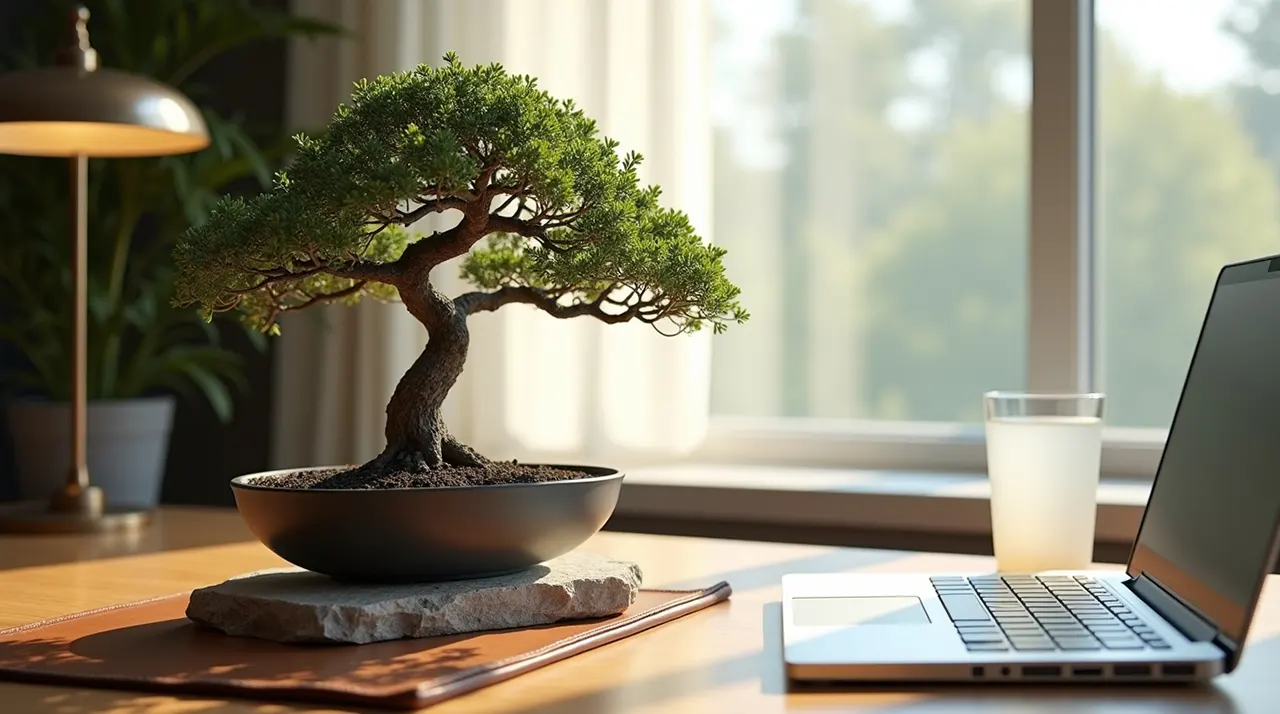
Bring the beauty of nature to your workspace with a stunning bonsai for your office desk. Discover how these miniature trees enhance focus, reduce stress, and add a touch of serene elegance to your professional environment.
The modern office, whether at home or in a corporate setting, often feels sterile. We surround ourselves with screens and gadgets, but something vital is missing: a connection to nature. This is where a bonsai for your office desk can transform your workspace. Imagine a tiny, ancient-looking tree gracing your desk, a living piece of art that brings calm and beauty. It’s more than just decoration; it’s a gateway to a more peaceful and productive workday.
Why a Bonsai for Your Office Desk? It’s More Than Just Greenery
A bonsai for your office desk is a miniature tree cultivated to mimic the shape and scale of its full-sized counterparts. These living sculptures have been a part of art and culture for centuries. Bringing one into your workspace offers unique benefits beyond simple aesthetics. It can help you feel more connected to the natural world, even when you’re deep in work.
The Zen of the Workspace: How Bonsai Boosts Focus and Reduces Stress
The presence of plants in the workplace is well-documented to improve mood and reduce stress. Bonsai, with their deliberate artistry and slow growth, embody tranquility. This calming effect can significantly impact your ability to concentrate on tasks. Studies have shown that even looking at nature can lower blood pressure and reduce feelings of anxiety.
Reduced Stress: Observing a bonsai can be a meditative experience, helping to detach from work pressures.
Improved Focus: The quiet beauty of a bonsai can act as a natural focal point, aiding concentration.
Enhanced Mood: A touch of living green can brighten your outlook and make your workspace more inviting.
This connection to nature is crucial for mental well-being, especially in environments dominated by technology. A small bonsai is like a mini-escape, offering a moment of peace during a busy day.
Choosing the Right Bonsai for Your Desk: Light, Care, and Species
Selecting the perfect bonsai for your office desk involves considering your workspace’s conditions and your willingness to provide care. Not all bonsai are created equal when it comes to indoor environments. Some thrive with minimal light, while others need more attention. Understanding these needs is key to ensuring your miniature tree flourishes.
Low-Light Bonsai Options for Dim Offices
Many office spaces lack direct sunlight. Fortunately, several bonsai species can adapt well to lower light conditions. These are excellent choices for desks far from windows or in offices with artificial lighting.
Chinese Elm: Hardy and forgiving, it tolerates lower light and infrequent watering.
Ficus: Many varieties of Ficus are adaptable to indoor conditions and can survive with moderate indirect light.
Hawaiian Umbrella Tree (Schefflera arboricola): Known for its resilience, it can handle a range of indoor light levels.
These species are often recommended for beginners due to their forgiving nature. They can still bring a sense of living art to your desk without demanding constant, bright sunshine.
Light-Loving Bonsai for Sunny Spots
If your office desk receives ample natural light, you have more species to choose from. These bonsai will thrive with more light and may even produce flowers or fruits.
Fukien Tea: Blooms small white flowers and requires good light to do so.
Serissa: Also known as the “Snow Rose,” it produces delicate white flowers with sufficient light.
Juniper: While often kept outdoors, some varieties can be brought inside to a very bright window.
Ensuring your bonsai gets the right amount of light is the most critical factor for its long-term health. It’s the foundation of successful bonsai cultivation indoors.
Essential Bonsai Care for Office Desk Success
Caring for a bonsai for your office desk is a rewarding practice that requires attention to a few key details. Unlike typical houseplants, bonsai have specific needs due to their confined root systems and artistic cultivation. Consistency is key to maintaining their health and beauty.
Watering: The Art of Not Too Much, Not Too Little
Proper watering is paramount for bonsai survival. Overwatering can lead to root rot, while underwatering can quickly desiccate the tree. The soil should be kept moist but not soggy.
Check the soil: Feel the top inch of soil. If it feels dry, it’s time to water.
Water thoroughly: When you water, saturate the soil until water drains from the bottom of the pot.
Avoid schedules: Water based on the tree’s needs and the environment, not a fixed calendar.
“Consistent, mindful watering is the cornerstone of healthy bonsai. It’s a practice that teaches patience and observation.”
This careful balance ensures the roots receive enough moisture without becoming waterlogged. It’s a skill that develops with practice and observation of your specific tree.
Lighting and Placement: Finding the Sweet Spot
The right location is crucial for your bonsai’s health. Most indoor bonsai require bright, indirect light for at least a few hours a day. Direct, hot sunlight can scorch their leaves.
Window placement: An east or west-facing window is often ideal.
Artificial light: If natural light is insufficient, consider a grow light.
Air circulation: Good airflow helps prevent fungal diseases. Avoid placing your bonsai near heating or cooling vents.
Finding the perfect spot ensures your bonsai receives the light it needs without being exposed to harsh conditions. This careful placement supports its growth and vitality.
Fertilizing: Nourishing Your Miniature Tree
Bonsai in small pots deplete nutrients quickly. Regular feeding with a balanced fertilizer is essential for maintaining their health and vigor. Use a fertilizer specifically formulated for bonsai or a diluted general-purpose fertilizer.
Frequency: Fertilize during the growing season (spring to fall), typically every 2-4 weeks.
Dilution: Always dilute liquid fertilizers to half or quarter strength to avoid burning the roots.
Dormancy: Reduce or stop fertilizing during the winter months when growth slows.
Providing the right nutrients ensures your bonsai has the energy to stay healthy and beautiful. It’s a vital part of its ongoing care regimen.
Pruning and Shaping: The Art of Bonsai
Pruning is what gives bonsai their characteristic miniature appearance. It involves cutting back branches and roots to maintain size and shape. This is often done to encourage denser foliage and a more refined silhouette.
Maintenance pruning: Regularly trim new growth to keep the tree’s shape.
Structural pruning: Remove larger branches to refine the overall design.
Root pruning: Done periodically during repotting to encourage a compact root system.
Pruning is an artistic process that sculpts the tree over time. It’s a key element in the long-term development and aesthetic appeal of any bonsai.
Repotting Your Office Bonsai: A Vital Step for Longevity
Repotting is a fundamental part of bonsai care, ensuring the tree has fresh soil and adequate space for its roots. It also provides an opportunity to inspect the root system and prune it if necessary. This process is typically done every 1-5 years, depending on the species and age of the tree.
When and How to Repot
The best time to repot most indoor bonsai is in early spring, just as new growth begins. This allows the tree to recover quickly.
1. Gently remove the tree: Carefully slide the bonsai out of its pot.
2. Inspect and prune roots: Remove about one-third of the old soil and trim any circling or dead roots.
3. Prepare the new pot: Ensure it has drainage holes. Add a layer of fresh, well-draining bonsai soil.
4. Place the tree: Position the bonsai in the pot, spreading the roots gently.
5. Add soil: Fill in around the roots with fresh soil, tamping it down lightly.
6. Water thoroughly: Water until it drains freely from the bottom.
Repotting might seem daunting, but it’s essential for the long-term health of your bonsai. It replenishes nutrients and prevents the roots from becoming pot-bound.
Common Pests and Diseases Affecting Desk Bonsai
Even a well-cared-for bonsai can sometimes fall victim to pests or diseases. Early detection and treatment are crucial to saving your miniature tree. The enclosed office environment can sometimes harbor or exacerbate these issues.
Identifying and Treating Pests
Common pests include spider mites, mealybugs, and aphids. These tiny invaders can weaken your bonsai by sucking sap from its leaves and stems.
Spider Mites: Look for fine webbing and stippling on leaves. Increase humidity and wash the tree. Use insecticidal soap if severe.
Mealybugs: These white, cottony insects often cluster in leaf axils. Wipe them off with a cotton swab dipped in rubbing alcohol or use insecticidal soap.
Aphids: Small, green or black insects found on new growth. Blast them off with water or use insecticidal soap.
Regularly inspecting your bonsai, especially the undersides of leaves, can help catch infestations early. Prompt action can prevent significant damage.
Dealing with Fungal Diseases
Fungal issues, like root rot or powdery mildew, can arise from overwatering or poor air circulation.
Root Rot: Symptoms include yellowing leaves and wilting, even when the soil is moist. Ensure good drainage and allow the soil to dry slightly between waterings. Repotting and removing affected roots may be necessary.
Powdery Mildew: A white, powdery substance on leaves. Improve air circulation and avoid wetting foliage when watering. Fungicides can be used for severe cases.
Maintaining optimal conditions—proper watering, good light, and airflow—is the best defense against pests and diseases. It keeps your bonsai healthy and resilient.
Bonsai as a Productivity Tool: Beyond the Aesthetic Appeal
While a bonsai for your office desk is undeniably beautiful, its benefits extend into enhancing your productivity. The mindful care and the calming presence it offers can subtly, yet powerfully, improve your work performance. It’s a living reminder to take breaks and stay grounded.
The Psychological Impact of Nature in the Workplace
Numerous studies highlight the positive psychological effects of incorporating nature into workspaces. This is often referred to as biophilia—our innate human tendency to connect with nature. A bonsai taps into this by bringing a living element into an otherwise artificial environment.
Restorative Effects: Looking at a bonsai can provide a mental break, helping to restore attention and reduce mental fatigue.
Increased Creativity: Exposure to nature has been linked to improved problem-solving skills and creative thinking.
Sense of Accomplishment: Successfully nurturing a living thing can boost confidence and provide a sense of purpose outside of work tasks.
These psychological benefits contribute to a more positive and productive work environment. The bonsai acts as a natural stress reliever and a source of gentle inspiration.
Mindfulness and Breaks with Your Bonsai
The practice of caring for a bonsai encourages mindfulness. Even a few minutes spent observing your tree, checking its soil, or gently misting its leaves can serve as a micro-break. These short pauses are vital for preventing burnout and maintaining focus throughout the day.
Moment of Calm: A quick glance at your bonsai can be an instant de-stressor.
Mindful Observation: Engaging with your bonsai encourages present-moment awareness.
Structured Breaks: Use watering or light pruning as cues for short, refreshing breaks.
Incorporating your bonsai into your break routine can make these pauses more intentional and restorative. It transforms a simple task into a mindful practice.
Styling Your Desk with a Bonsai: Aesthetics and Ergonomics
When choosing a bonsai for your office desk, consider not only its care needs but also its visual impact and how it fits into your overall workspace setup. A well-chosen bonsai can complement your ergonomic accessories and tech gadgets, creating a harmonious and inspiring environment.
Matching Bonsai Style to Your Workspace
The aesthetic of your bonsai should ideally harmonize with your office decor. Whether your style is minimalist, modern, or traditional, there’s a bonsai that can fit.
Minimalist Desk: A Ficus or Chinese Elm with clean lines and a simple pot can enhance a minimalist setup.
Modern Tech Hub: A more sculptural bonsai like a Juniper or a styled Satsuki Azalea can add an artistic focal point.
Cozy Home Office: A flowering bonsai like a Fukien Tea or Serissa can add warmth and color.
The pot’s material and color also play a role. Ceramic pots offer a classic look, while unglazed clay can provide a more rustic feel.
Bonsai Placement for Ergonomics and Visual Balance
Beyond aesthetics, consider where on your desk the bonsai will sit. It should be accessible for care but not obstruct your primary work area.
Corner Placement: Placing the bonsai in a corner of your desk can create a visual anchor without interfering with your keyboard or monitor.
Monitor Riser Integration: If you use a monitor riser, the space underneath might be perfect for a small bonsai, utilizing vertical space.
Avoid Clutter: Ensure the bonsai doesn’t add to desk clutter. A well-chosen pot and a tidy presentation are key.
“Integrating a bonsai thoughtfully into your desk setup enhances both your environment and your workflow. It’s about creating a space that is both functional and beautiful.”
A balanced desk setup considers both your tools and elements that promote well-being. A bonsai fits perfectly into this holistic approach.
Where to Buy a Bonsai for Your Office Desk
Finding the right bonsai for your office desk is an exciting part of the process. You can source these miniature trees from various places, each offering different benefits. Quality and selection can vary, so it’s wise to know where to look.
Local Nurseries and Bonsai Specialists
Specialty bonsai nurseries are often the best places to find high-quality, healthy trees. Staff at these locations are typically knowledgeable and can offer expert advice. Local garden centers and larger nurseries may also have a bonsai section.
Expert Advice: Staff can guide you on species suitable for indoor care and your specific office conditions.
See Before You Buy: You can physically inspect the tree’s health and shape.
Support Local: Shopping locally supports small businesses.
Visiting a specialist nursery allows for a hands-on experience and ensures you’re getting a well-maintained specimen.
Online Retailers and Marketplaces
Many online stores offer a wide selection of bonsai for sale. This can be convenient, especially if local options are limited. However, buying online requires careful research into the seller’s reputation.
Wider Selection: Access to a broader range of species and styles.
Convenience: Delivered directly to your door.
Reputation is Key: Read reviews and check seller return policies carefully.
When ordering online, look for retailers that provide detailed care instructions and photos of the actual tree you will receive. Websites like Bonsai Empire offer extensive resources and a marketplace.
Considerations for Shipping and Acclimation
If you purchase your bonsai online, consider shipping times and how the tree will acclimate to your office environment.
Shipping Stress: Trees can be stressed by the journey. Provide good care upon arrival.
Acclimation: Allow the tree a few days to adjust before making major changes to its environment.
Proper acclimation ensures your new bonsai starts its life on your desk on the right foot, ready to thrive.
Frequently Asked Questions About Bonsai for Office Desks
Can any bonsai live on an office desk?
Not all bonsai are suited for office desks. Species that tolerate lower light and humidity, like Ficus or Chinese Elm, are better choices. Outdoor bonsai species generally need more light and temperature fluctuations than an office can provide.
How often do I need to water an office bonsai?
Watering frequency depends on the species, pot size, humidity, and light. Generally, check the soil daily. Water thoroughly when the top inch of soil feels dry. Avoid letting the soil dry out completely or become waterlogged.
Do office bonsai need direct sunlight?
Most indoor bonsai prefer bright, indirect light. Direct, harsh sunlight can scorch their leaves. An east or west-facing window is often ideal. If light is insufficient, consider a grow light.
What are the easiest bonsai for beginners?
Beginner-friendly bonsai include the Chinese Elm, Ficus varieties, and the Hawaiian Umbrella Tree. These are forgiving and can tolerate minor care mistakes, making them ideal for those new to bonsai cultivation.
Can I use a regular houseplant fertilizer for my bonsai?
It’s best to use a fertilizer specifically formulated for bonsai, or a diluted general-purpose fertilizer. Regular houseplant fertilizers can be too strong for the sensitive root systems of bonsai. Always dilute to half or quarter strength.
Conclusion: Your Desk’s Living Masterpiece Awaits
Adding a bonsai for your office desk is a powerful yet simple way to enhance your workspace. It’s an investment in beauty, tranquility, and productivity. These miniature trees offer a unique connection to nature, helping to reduce stress, improve focus, and foster a more serene atmosphere. By understanding the basic needs of light, water, and care, you can ensure your bonsai thrives, becoming a living masterpiece that elevates your daily work experience. Start your journey today and transform your desk into a more inspiring and balanced environment.
If you found this guide helpful, consider subscribing to our newsletter for more tips on optimizing your workspace with smart tech and natural elements.

Belayet Hossain is a Senior Tech Expert and Certified AI Marketing Strategist. Holding an MSc in CSE (Russia) and over a decade of experience since 2011, he combines traditional systems engineering with modern AI insights. Specializing in Vibe Coding and Intelligent Marketing, Belayet provides forward-thinking analysis on software, digital trends, and SEO, helping readers navigate the rapidly evolving digital landscape. Connect with Belayet Hossain on Facebook, Twitter, Linkedin or read my complete biography.