
Published on: 07/11/2025 | Updated on: November 7, 2025
Learn how phone repair with essential genius fixes to diagnose, troubleshoot, and mend common smartphone issues confidently and affordably, using the right tools and techniques for lasting results.
Your smartphone is a lifeline. When it breaks, it feels like a disaster. A cracked screen or a dead battery can disrupt your whole day. But fixing a phone doesn’t always mean expensive trips to the shop. Many common issues have simple solutions. This guide will show you how phone repair can be easier than you think. We will cover common problems, the tools you need, and safe steps to get your phone working again.
Why Learn How Phone Repair?
Understanding how phone repair works saves you time and money. It also helps you keep your device longer. Many repairs are straightforward. A simple fix can prevent you from buying a new phone. This guide offers practical, easy-to-follow advice. You will gain the confidence to tackle common phone problems.
Common Phone Problems and Their Causes
Many issues that plague smartphones have identifiable causes. Knowing these helps in diagnosing the problem. This allows for a targeted repair approach. It’s like being a detective for your phone.
Battery Issues

A phone that won’t charge or drains too quickly often has battery problems. This can be due to an old battery. Batteries degrade over time. Heavy app usage also strains the battery. Sometimes, a faulty charging port can be the culprit. A dirty port can prevent a good connection.
Screen Problems
Cracked or unresponsive screens are very common. Drops and impacts are the usual cause of cracks. If the screen flickers or shows lines, it might be a loose connection. Sometimes, software glitches can make the screen seem unresponsive. This is less common than physical damage.
Charging Port Failures
If your phone won’t charge, the charging port might be the issue. Dirt and debris can get stuck inside. This blocks the charging cable. Physical damage to the port itself can also happen. This might occur if the cable is yanked too hard.
Speaker and Microphone Issues
Sound problems can be frustrating. A muffled speaker might be blocked by dirt. If the microphone doesn’t pick up your voice, it could be dirty. Sometimes, water damage affects these components. Software can also cause sound issues.
Essential Tools for How Phone Repair
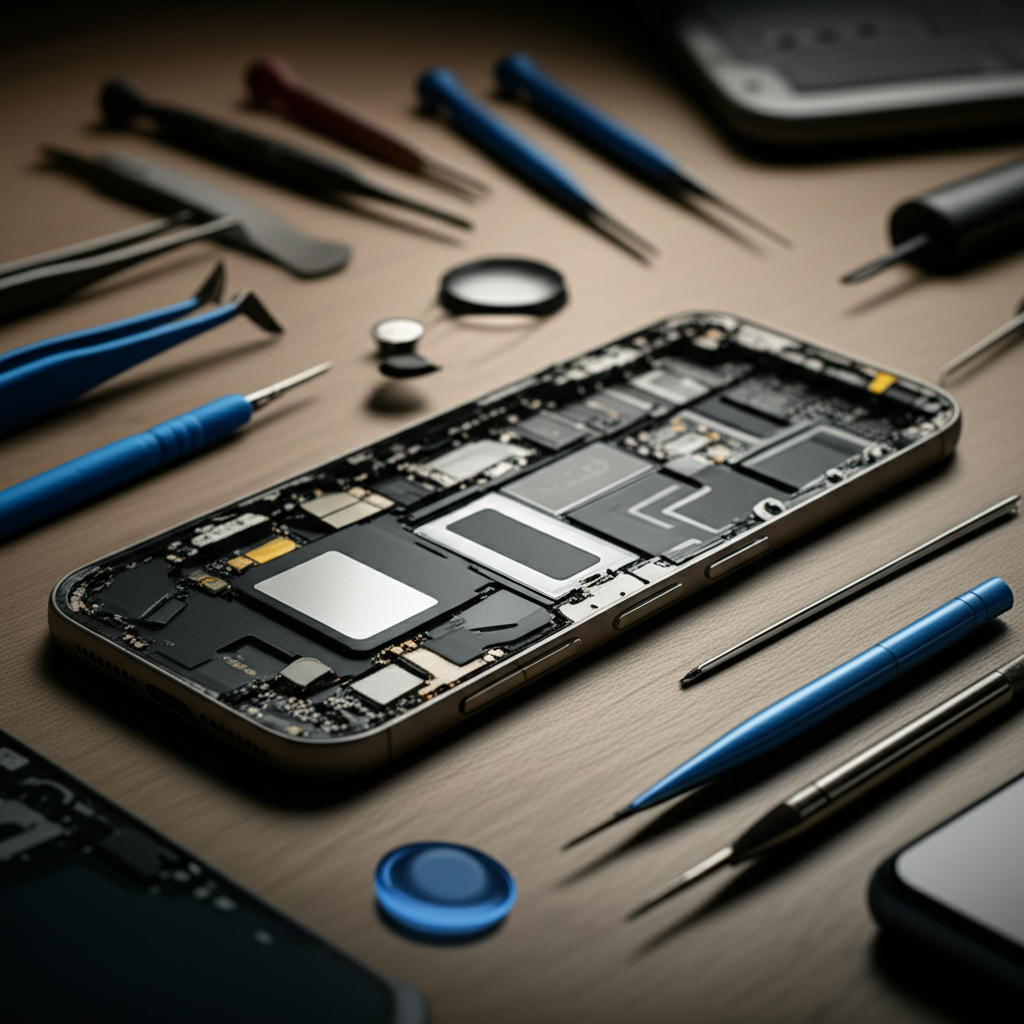
Having the right tools makes phone repair much safer and easier. You don’t need a full workshop. A few key items are usually enough for most basic fixes. These tools help you work precisely and avoid further damage.
The Basic Toolkit
A good repair kit typically includes small screwdrivers. These fit tiny screws in phones. A plastic spudger is useful for prying open cases. Tweezers help handle small parts. A suction cup can lift screens. You will also need a heat gun or hairdryer. This loosens adhesive.
Specialized Tools for Advanced Repairs
For more complex jobs, like motherboard repair, you might need more. A soldering iron is used to fix circuits. An anti-static wrist strap is crucial. It protects components from static electricity. A multimeter helps test electrical parts. Magnifying lamps aid in seeing tiny details.
ESD Protection: A Must-Have
Static electricity is a silent killer of phone parts. Even a small zap can damage sensitive components. ESD stands for Electrostatic Discharge. Always use an anti-static wrist strap. Work on an anti-static mat. This prevents costly mistakes.
Step-by-Step Guide: How Phone Repair for Common Issues
Let’s walk through some common repairs. We will focus on safety and clarity. Always back up your data before starting any repair. This protects your important information.
Replacing a Phone Battery
1. Gather your tools: You’ll need a specific screwdriver set, a spudger, a heat gun, and a new battery.
2. Heat the phone: Gently heat the edges of the phone’s back cover or screen. This softens the adhesive.
3. Pry open the phone: Use a suction cup to lift the screen slightly. Insert a thin tool to cut the adhesive. Carefully work your way around.
4. Disconnect the old battery: Locate the battery connector. Use a plastic spudger to gently disconnect it.
5. Remove the old battery: Some batteries are held by adhesive. Carefully pry it out.
6. Install the new battery: Place the new battery in position. Connect its cable.
7. Reassemble the phone: Reverse the steps to close the phone. Apply new adhesive if needed.
This process often takes less than an hour. Always refer to a guide specific to your phone model.
Fixing a Cracked Phone Screen
1. Identify your screen type: Some screens are one piece (digitizer and display together). Others are separate.
2. Heat and pry: Similar to battery replacement, heat the edges to soften adhesive.
3. Remove the old screen: Carefully lift the screen assembly. Disconnect any ribbon cables attached to the motherboard.
4. Clean the frame: Remove all old adhesive and glass shards.
5. Install the new screen: Connect the new screen’s ribbon cables. Secure it in place.
6. Test before sealing: Turn on the phone to check the new screen.
7. Seal the phone: Apply new adhesive and press the screen firmly.
Screen replacement is one of the most common phone repairs. It requires precision.
Repairing a Faulty Charging Port
1. Inspect the port: Look for visible dirt or damage. Use compressed air to blow out dust.
2. Disassemble the phone: You’ll likely need to remove the screen or back cover.
3. Locate the charging port: It’s usually on the bottom edge.
4. Check the connection: Ensure the port’s ribbon cable is securely connected to the motherboard.
5. Replace the port: If the port is damaged, it needs replacement. This often involves desoldering the old one.
6. Reassemble: Put the phone back together.
A faulty charging port can sometimes be a simple cleaning job. More often, it requires replacement.
Diagnosing Phone Issues: A Systematic Approach
When your phone acts up, don’t panic. A systematic approach helps find the root cause. This saves you from guessing. It ensures you fix the right problem.
Step 1: Observe the Symptoms
What exactly is happening? Is the phone slow? Does it shut off randomly? Are there strange noises? Write down everything you notice. Specific details are very helpful.
Step 2: Consider Recent Changes
Did the problem start after an app update? Did you drop the phone? Did it get wet? Recent events often point to the cause. A software update can cause bugs. Physical damage is usually obvious.
Step 3: Perform Basic Troubleshooting
Try restarting your phone. This fixes many minor glitches. Check for software updates. Ensure your storage isn’t full. These simple steps can resolve many issues.
Step 4: Use Diagnostic Tools
Some phones have built-in diagnostic tools. You can also find apps that help test hardware. These tools check battery health, screen response, and more. They provide valuable data.
Step 5: Seek Expert Advice (or Resources)
If you’re stuck, look for online guides. Websites like iFixit offer detailed repair manuals. For complex issues, consider a professional technician.
Essential Accessories for Phone Maintenance
Beyond repair tools, some accessories help keep your phone in top shape. Regular maintenance can prevent problems. It extends your phone’s lifespan.
Screen Protectors and Cases
These are your first line of defense. A good screen protector guards against scratches. A sturdy case absorbs shock from drops. They are inexpensive ways to protect your investment.
Cleaning Kits
Microfiber cloths and specialized cleaning solutions are useful. They keep your screen and body clean. This prevents buildup that can affect sensors or speakers. Always use gentle, alcohol-free cleaners.
Power Banks and Quality Chargers
A reliable power bank ensures you stay charged on the go. Using a high-quality charger is important. Cheap chargers can damage your battery. They might not deliver consistent power.
When to Call a Professional Technician
While DIY repairs are rewarding, some jobs are best left to experts. Complex issues require specialized skills. Pushing your limits can cause more damage.
Signs You Need a Pro
If your phone suffered water damage, a pro is often needed. Deep internal damage is hard to fix alone. If you’ve tried a repair and failed, don’t risk it further. Motherboard-level repairs are highly technical. These require advanced tools and expertise.
Choosing a Repair Service
Look for reputable repair shops. Check online reviews. Ask about their warranty on repairs. Some offer mail-in services. Ensure they use quality parts. A good technician will explain the repair clearly.
The Future of Phone Repair: Sustainability and Innovation
The phone repair industry is growing. More people are choosing repair over replacement. This is good for the environment. It reduces electronic waste.
Right to Repair Movement
There’s a growing push for “right to repair” laws. These laws aim to make it easier for consumers and independent shops to fix devices. They require manufacturers to provide parts and manuals. This movement supports sustainable practices.
Innovations in Repair Technology
New tools and techniques are constantly emerging. Micro-soldering allows for component-level fixes. Advanced diagnostic software helps pinpoint issues faster. These advancements make phone repair more accessible.
Frequently Asked Questions About How Phone Repair
What is the most common phone repair?
The most common phone repairs are screen replacements and battery replacements. These parts wear out or break from daily use and accidents.
Can I repair my phone myself?
Yes, many common repairs like screen and battery replacement can be done yourself. It requires the right tools and careful following of instructions.
How much does a typical phone repair cost?
Screen repairs can range from $50 to $300, depending on the phone model. Battery replacements are usually cheaper, often $30 to $100.
Is it safe to use a repaired phone?
Yes, if the repair is done correctly using quality parts, a repaired phone is safe to use. Poor repairs can sometimes lead to further issues.
What is ESD, and why is it important in phone repair?
ESD means Electrostatic Discharge. It’s static electricity that can damage delicate phone components. Using an anti-static wrist strap and mat protects your phone during repair.
Where can I find guides for my specific phone model?
Websites like iFixit offer detailed repair guides and videos for many phone models. Manufacturer support sites may also have some information.
How do I know if my phone is worth repairing?
Consider the age of your phone, the cost of repair, and the phone’s overall condition. If a repair costs more than half the price of a new, similar phone, it might not be worth it.
Conclusion
Learning how phone repair is a valuable skill. It empowers you to save money and reduce waste. With the right tools and knowledge, you can tackle many common issues. Always prioritize safety and follow guides specific to your device. For complex problems, professional help is a wise choice. Embrace the power of repair and keep your devices running longer. If you found this guide helpful, share it with friends who might need to fix their phones!

Belayet Hossain is a Senior Tech Expert and Certified AI Marketing Strategist. Holding an MSc in CSE (Russia) and over a decade of experience since 2011, he combines traditional systems engineering with modern AI insights. Specializing in Vibe Coding and Intelligent Marketing, Belayet provides forward-thinking analysis on software, digital trends, and SEO, helping readers navigate the rapidly evolving digital landscape. Connect with Belayet Hossain on Facebook, Twitter, Linkedin or read my complete biography.