
Published on: 14/09/2025 | Updated on: September 14, 2025
Nvidia GeForce RTX 2080 Mobile: Ultimate Gaming Performance
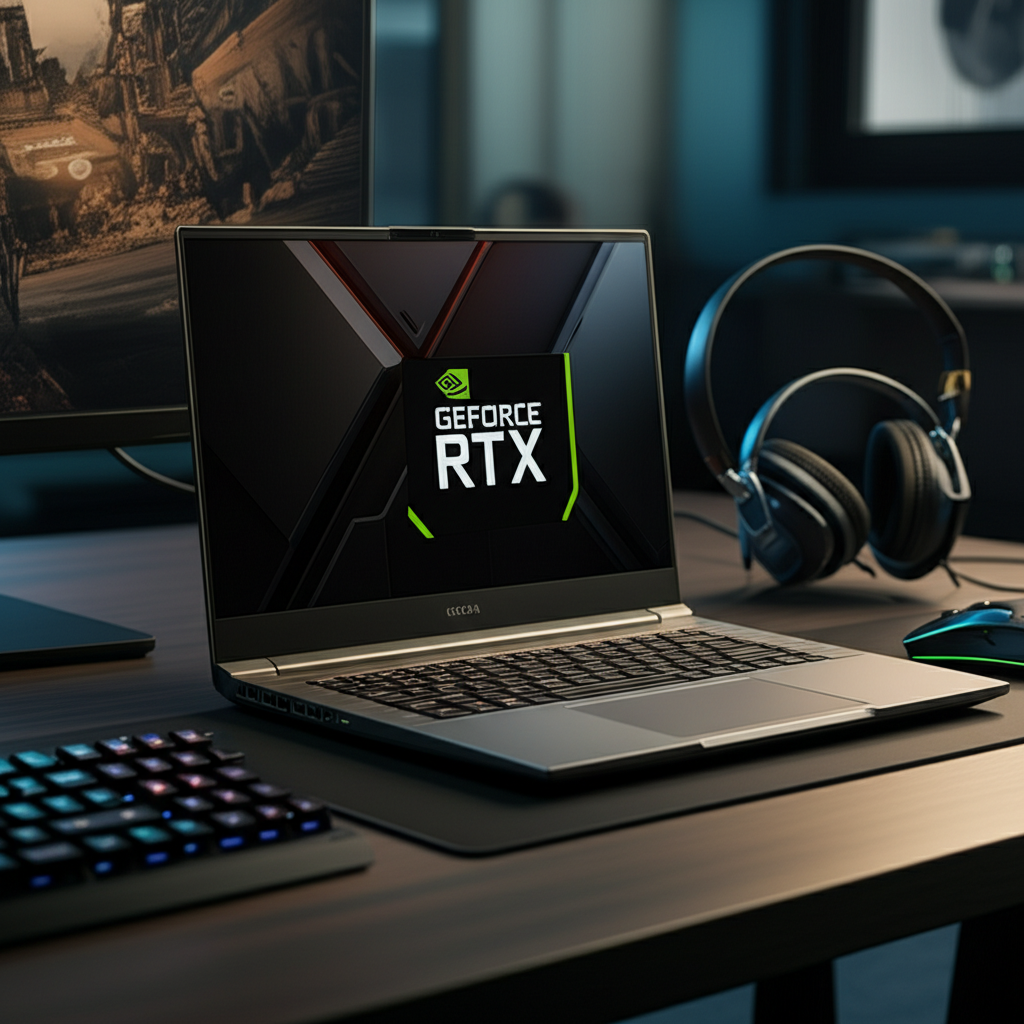
The Nvidia GeForce RTX 2080 Mobile delivers unparalleled gaming performance in laptops, bringing desktop-class power to portable machines with features like real-time ray tracing and AI-enhanced graphics.
Welcome, fellow tech enthusiasts! Are you dreaming of taking your gaming experience beyond the desktop and into the realm of portable powerhouses? Perhaps you’ve been eyeing those sleek gaming laptops, wondering if they can truly deliver the kind of immersive, high-fidelity graphics you crave. It’s a common quest for gamers and creative professionals alike: finding a mobile solution that doesn’t compromise on performance. The Nvidia GeForce RTX 2080 Mobile has long been a name whispered with reverence in this space, promising desktop-level gaming on the go. In this article, I’ll break down exactly what makes this mobile GPU so special, what kind of performance you can expect, and how it stacks up in today’s demanding gaming landscape. Get ready to discover the ultimate in mobile gaming prowess.
Unpacking the Powerhouse: What is the Nvidia GeForce RTX 2080 Mobile?
The Nvidia GeForce RTX 2080 Mobile represents a significant leap in laptop graphics technology. It’s not just a smaller version of its desktop counterpart; it’s a meticulously engineered GPU designed to deliver exceptional performance within the thermal and power constraints of a mobile chassis. This means you get advanced features like real-time ray tracing and AI-powered DLSS (Deep Learning Super Sampling) without needing to be tethered to a desk. It was a flagship offering, bringing enthusiast-level gaming capabilities to a portable form factor, and its impact on mobile gaming was profound.
This mobile GPU was built on Nvidia’s Turing architecture, which was a groundbreaking generation for its introduction of dedicated RT Cores for ray tracing and Tensor Cores for AI processing. These cores unlock visual fidelity previously only achievable on high-end desktops, making games look more realistic than ever before. The goal was clear: to provide an uncompromising gaming experience that could keep pace with the most demanding titles and creative workloads, all within a laptop.
Key Features That Define the RTX 2080 Mobile Experience
The magic of the Nvidia GeForce RTX 2080 Mobile lies in its innovative features, designed to push the boundaries of visual realism and performance. These aren’t just buzzwords; they translate into tangible benefits for gamers and creators. Understanding these core technologies is key to appreciating the full potential of this mobile graphics powerhouse.
Here are the standout features that make the RTX 2080 Mobile a true game-changer:
Real-Time Ray Tracing: This is perhaps the most significant innovation. Ray tracing simulates the physical behavior of light in real-time, creating incredibly lifelike reflections, shadows, and global illumination. Games utilizing this technology look astonishingly immersive and realistic.
DLSS (Deep Learning Super Sampling): Powered by AI, DLSS renders games at a lower resolution and then intelligently upscales them to your native resolution. This dramatically boosts frame rates while maintaining visual quality, often even improving it. It’s a critical technology for achieving smooth ray tracing performance.
Turing Architecture: The underlying architecture is a marvel of engineering, optimizing performance and power efficiency. It allows for more processing power to be packed into a smaller, cooler footprint suitable for laptops.
GDDR6 Memory: The RTX 2080 Mobile typically comes equipped with fast GDDR6 memory, which is crucial for handling high-resolution textures and complex graphical assets. This ensures smooth gameplay even in graphically intensive scenarios.
These features work in concert to provide a visual and performance experience that was previously unheard of in the mobile space. It was a significant upgrade that redefined what gamers could expect from a laptop.
Performance Benchmarks: What Can You Expect in Games?
When it comes to the Nvidia GeForce RTX 2080 Mobile, the numbers speak for themselves. This GPU was designed to handle virtually any modern AAA game at high settings and resolutions. While exact performance can vary based on the laptop’s cooling, CPU, and RAM, the RTX 2080 Mobile consistently delivered flagship-level frame rates.
In most titles at 1080p (Full HD) resolution, you could expect to push ultra settings with frame rates well over 100 FPS. For those gaming at 1440p (QHD), the RTX 2080 Mobile still offered a smooth experience, often achieving 60 FPS or more with high to ultra settings. Even pushing into 4K (UHD) was feasible in many games, especially when leveraging DLSS.
Here’s a general idea of what you might see in popular demanding titles:
| Game Title | Resolution | Settings | Avg. FPS (RTX 2080 Mobile) |
| :——————- | :——— | :——- | :————————- |
| Cyberpunk 2077 | 1080p | Ultra | 50-70 (with DLSS) |
| Red Dead Redemption 2 | 1080p | High | 70-90 |
| Assassin’s Creed Valhalla | 1080p | High | 60-80 |
| Call of Duty: Modern Warfare | 1440p | High | 90-120 |
| Shadow of the Tomb Raider | 1440p | Ultra | 70-90 |
These figures highlight the raw power of the RTX 2080 Mobile. It was capable of pushing high refresh rates for competitive gaming and delivering buttery-smooth visuals for immersive single-player adventures. This level of performance made gaming laptops a viable alternative to traditional desktop setups for serious gamers.
Ray Tracing and DLSS: The Future of Visuals, Today
The Nvidia GeForce RTX 2080 Mobile was at the forefront of bringing real-time ray tracing and DLSS to laptops. These technologies were revolutionary, offering a glimpse into the future of gaming visuals. While ray tracing can be computationally intensive, DLSS acts as a powerful accelerator, making these advanced graphical effects playable.
Ray tracing enhances realism by accurately simulating how light bounces in the real world. This results in more natural shadows, softer lighting, and reflections that behave as they should. Games like Control and Battlefield V showcased the stunning visual upgrades that ray tracing could provide, from realistic reflections on wet surfaces to incredibly detailed ambient occlusion.
DLSS, on the other hand, is an AI-driven upscaling technology that intelligently reconstructs images to a higher resolution. By rendering scenes at a lower internal resolution and then using AI to upscale them, DLSS significantly boosts frame rates. This is crucial for maintaining smooth gameplay, especially when ray tracing is enabled, as it effectively offsets the performance cost.
Together, ray tracing and DLSS offer a compelling package for visually demanding games. The RTX 2080 Mobile was one of the first mobile GPUs to truly enable this combination for a mainstream gaming audience, making cutting-edge graphics accessible on the go.
Beyond Gaming: Productivity and Creative Workloads
While the Nvidia GeForce RTX 2080 Mobile is undoubtedly a gaming titan, its capabilities extend far beyond leisure. The raw processing power and dedicated hardware for AI and graphics rendering make it an excellent choice for a variety of professional and creative applications. For users who also dabble in content creation, video editing, or 3D modeling, this mobile GPU can significantly accelerate workflows.
Applications that benefit from CUDA cores and the robust architecture of the RTX series include:
Video Editing: Software like Adobe Premiere Pro and DaVinci Resolve can leverage the GPU for faster rendering, smoother playback of high-resolution footage, and quicker application of effects.
3D Modeling and Rendering: Tools such as Blender, Maya, and Autodesk products can utilize the RTX 2080 Mobile for accelerated rendering times, allowing for faster iteration and visualization of complex 3D scenes.
AI and Machine Learning: The Tensor Cores, originally introduced for DLSS, are also adept at accelerating AI training and inference tasks, making it a powerful tool for developers and researchers on the go.
Graphic Design: While less demanding than 3D rendering, complex graphic design projects in Photoshop or Illustrator can see performance boosts, especially when dealing with large files or advanced filters.
The versatility of the Nvidia GeForce RTX 2080 Mobile means that a high-end gaming laptop can also serve as a potent workstation, reducing the need for separate devices for work and play. This makes it an incredibly valuable piece of hardware for professionals who require performance on the move.
Nvidia GeForce RTX 2080 Mobile vs. Its Contemporaries
When the Nvidia GeForce RTX 2080 Mobile was released, it was positioned at the very top of the mobile GPU hierarchy. It competed primarily with other high-end offerings from Nvidia and, to some extent, AMD’s mobile solutions. Understanding its place in the market helps to contextualize its performance and value proposition.
Compared to its predecessors, like the GTX 10-series mobile GPUs, the RTX 2080 Mobile offered a significant generational leap, primarily due to the inclusion of ray tracing and AI cores. It provided a much higher performance ceiling, allowing for higher resolutions and frame rates.
Within the RTX 20-series mobile lineup, the RTX 2080 Mobile sat above the RTX 2060 Mobile and RTX 2070 Mobile, offering more VRAM and higher clock speeds, translating to better performance in the most demanding scenarios and at higher resolutions. It was the undisputed king of mobile graphics for its generation, pushing the boundaries of what was considered possible in a laptop.
While newer generations of GPUs have since emerged, the RTX 2080 Mobile still holds its own, especially when considering its availability on the used market or in refurbished laptops. Its raw gaming performance remains impressive, and the foundational ray tracing and DLSS technologies it pioneered are now industry standards.
Cooling and Power: The Mobile Challenge
The biggest challenge for any high-performance mobile component is managing heat and power consumption. The Nvidia GeForce RTX 2080 Mobile is a powerful chip, and like all high-end GPUs, it generates a considerable amount of heat. Laptop manufacturers face the difficult task of designing cooling systems that can effectively dissipate this heat while keeping the device slim and relatively quiet.
This is why performance can vary significantly between different laptops equipped with the RTX 2080 Mobile. Laptops with more robust cooling solutions, larger chassis, and more fans can sustain higher clock speeds for longer periods without thermal throttling. Thermal throttling occurs when the GPU reduces its performance to prevent overheating, leading to inconsistent frame rates and a less-than-ideal gaming experience.
Power delivery is another critical factor. The RTX 2080 Mobile requires a substantial amount of power, which impacts battery life when unplugged and places demands on the laptop’s power brick and internal power delivery system. Gamers typically need to be plugged in to achieve maximum performance.
When choosing a laptop with an RTX 2080 Mobile, it’s essential to research its cooling system and power specifications. Reviews that focus on thermal performance and sustained load testing are invaluable for understanding how well a specific model can harness the full potential of this powerful GPU.
The Nvidia GeForce RTX 2080 Mobile Ecosystem and Software Support
Beyond the hardware, Nvidia provides a robust software ecosystem that enhances the user experience with the GeForce RTX 2080 Mobile. This includes drivers, control panels, and gaming-optimized software that ensures smooth performance and easy management of graphics settings. Staying up-to-date with these software components is crucial for unlocking the full potential of your GPU.
The Nvidia GeForce Experience software is a key part of this ecosystem. It offers several valuable features:
Driver Updates: Automatically notifies you when new drivers are available, ensuring optimal performance and compatibility with the latest games.
Game Optimization: Analyzes your system and suggests the best in-game graphics settings for your hardware, taking the guesswork out of optimization.
ShadowPlay/Share: Allows you to record, stream, and share your gameplay highlights easily.
In-Game Overlay: Provides access to various features, including performance monitoring, screenshots, and filters, without leaving the game.
Furthermore, Nvidia’s commitment to driver updates means that even as games evolve, the RTX 2080 Mobile continues to receive optimizations. This ensures that the hardware remains relevant and performs optimally across a wide range of titles. The ongoing support is a testament to Nvidia’s dedication to its gaming community and the longevity of its products.
Is the Nvidia GeForce RTX 2080 Mobile Still a Good Buy in Today’s Market?
This is a question many gamers and tech enthusiasts ponder, especially with newer generations of GPUs constantly hitting the market. The Nvidia GeForce RTX 2080 Mobile, while no longer the absolute cutting edge, remains a remarkably capable GPU. Its performance in 1080p and even 1440p gaming is still excellent, capable of handling most modern titles with high settings and smooth frame rates.
The primary advantage of considering an RTX 2080 Mobile laptop today would be its potential value, particularly on the used or refurbished market. You can often find powerful gaming laptops equipped with this GPU at a significantly lower price than newer models with comparable or only slightly better performance. This makes it an attractive option for budget-conscious gamers who still want high-end performance.
However, it’s important to weigh this against the latest technologies. Newer GPUs offer advancements in efficiency, further refined ray tracing capabilities, and newer AI upscaling techniques like DLSS 3 (which the RTX 2080 Mobile does not support). If you’re looking for the absolute best future-proofing or the latest graphical bells and whistles, newer hardware might be a better investment.
Ultimately, the decision depends on your budget, your gaming priorities, and your tolerance for older technologies. For many, the Nvidia GeForce RTX 2080 Mobile still offers an exceptional gaming experience that punches well above its weight class in terms of value.
Frequently Asked Questions about the Nvidia GeForce RTX 2080 Mobile
Here are some common questions beginners might have about the Nvidia GeForce RTX 2080 Mobile and its place in the gaming laptop landscape.
What is the difference between the desktop RTX 2080 and the mobile RTX 2080?

The mobile version is designed with lower power consumption and thermal output in mind, meaning it typically runs at slightly lower clock speeds and may have fewer CUDA cores than its desktop counterpart. However, it still offers incredible performance for a laptop.
Can the RTX 2080 Mobile run games at 4K resolution?
Yes, it can run many games at 4K, especially with the help of DLSS. However, for the most demanding titles or to achieve very high frame rates at 4K, you might need to lower some graphical settings.
Is DLSS important for the RTX 2080 Mobile?
Absolutely. DLSS is crucial for enabling smooth ray tracing performance and boosting frame rates in supported games. It’s one of the key technologies that makes the RTX series so powerful on mobile.
How much VRAM does the RTX 2080 Mobile typically have?
The Nvidia GeForce RTX 2080 Mobile usually comes with 8GB of GDDR6 VRAM, which is ample for most modern games at high resolutions.
What kind of gaming experience can I expect with an RTX 2080 Mobile laptop today?
You can expect a fantastic gaming experience, capable of running most current AAA titles at high settings and smooth frame rates, particularly at 1080p and 1440p. It’s still a very powerful mobile GPU.
Will future games still work well on the RTX 2080 Mobile?
Most future games will likely run well, especially at 1080p. However, you may need to adjust settings to medium or high, and rely on DLSS, to maintain optimal frame rates in the most graphically intensive titles.
Conclusion: The Enduring Legacy of Mobile Gaming Power
The Nvidia GeForce RTX 2080 Mobile stands as a testament to how far mobile gaming technology has come. It bridged the gap between desktop and laptop performance, offering features like real-time ray tracing and AI-powered DLSS in a portable package. For years, it represented the pinnacle of what a gaming laptop could achieve, delivering breathtaking visuals and incredibly smooth frame rates in even the most demanding titles.
While newer GPUs have since emerged, the legacy of the Nvidia GeForce RTX 2080 Mobile endures. It continues to be a highly capable graphics card, offering exceptional value, especially for those looking for powerful gaming performance without breaking the bank. Whether you’re a dedicated gamer, a creative professional, or a tech enthusiast, the RTX 2080 Mobile represents a significant milestone in portable computing, proving that ultimate gaming performance doesn’t always require a desktop.

Belayet Hossain is a Senior Tech Expert and Certified AI Marketing Strategist. Holding an MSc in CSE (Russia) and over a decade of experience since 2011, he combines traditional systems engineering with modern AI insights. Specializing in Vibe Coding and Intelligent Marketing, Belayet provides forward-thinking analysis on software, digital trends, and SEO, helping readers navigate the rapidly evolving digital landscape. Connect with Belayet Hossain on Facebook, Twitter, Linkedin or read my complete biography.