
Published on: 16/09/2025 | Updated on: September 16, 2025
SMT Meaning: Essential Breakthroughs Unveiled for Smarter Tech Today
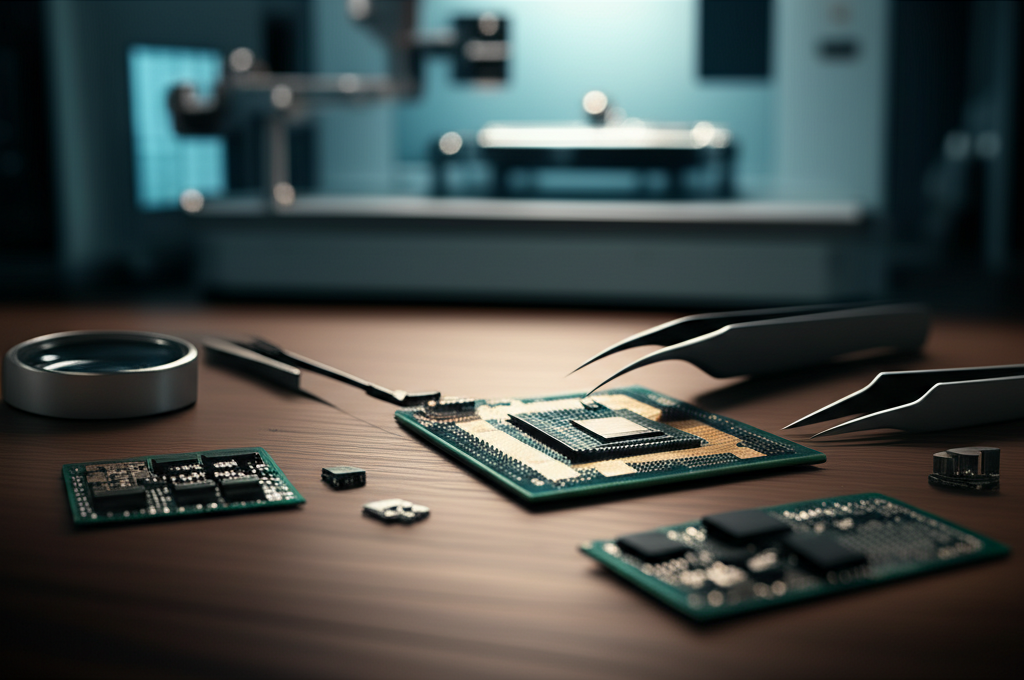
SMT meaning refers to Surface Mount Technology, a crucial method in electronics manufacturing that allows components to be mounted directly onto the surface of a printed circuit board. This innovation has revolutionized device design, leading to smaller, more powerful, and cost-effective gadgets we rely on daily.
Ever found yourself staring at a tech gadget, marveling at its sleek design and incredible power, and wondered how it all fits together? Often, the answer lies in a sophisticated manufacturing process that’s become the backbone of modern electronics. You might have encountered the acronym “SMT” and been curious about its significance. Don’t worry, understanding the SMT meaning is simpler than you think, and it unlocks a deeper appreciation for the technology that surrounds us. This article will demystify SMT, exploring its core principles, groundbreaking advantages, and how it’s shaping the future of smart devices.
What Exactly is the SMT Meaning?
The SMT meaning stands for Surface Mount Technology. It’s a method for assembling electronic circuits where the components are mounted directly onto the surface of a printed circuit board (PCB). Unlike older through-hole technology, where component leads were inserted into holes drilled through the board, SMT components have small leads or solder balls that are soldered directly to pads on the PCB surface. This fundamental shift has enabled incredible advancements in miniaturization and performance.
This technology is now the dominant method for PCB assembly worldwide. Its efficiency and suitability for automated manufacturing have made it indispensable for producing everything from tiny wearable devices to complex server systems. Understanding the SMT meaning is key to grasping the evolution of consumer electronics.
A Look Back: The Pre-SMT Era
Before SMT became the industry standard, electronics relied heavily on through-hole technology. This involved components with long leads that were pushed through pre-drilled holes in the PCB and then soldered on the opposite side. While functional, this method had significant limitations. It required more board space per component, making larger and heavier devices the norm.
Assembly was also more labor-intensive and slower, impacting production costs and the speed of innovation. The physical constraints of through-hole components made it challenging to pack more functionality into smaller form factors, a driving force behind much of today’s tech evolution. The limitations of this older approach highlight why the SMT meaning represents such a significant leap forward.
The Birth of SMT: A Technological Revolution
The development of SMT began in the 1960s, with significant advancements occurring in the 1980s and 1990s. Early pioneers recognized the potential for miniaturized components and automated placement. The goal was to create smaller, lighter, and more reliable electronic devices that could be mass-produced efficiently. This quest for smaller, faster, and more integrated electronics drove the innovation that led to the SMT meaning we understand today.
The introduction of components with surface-mountable leads and the development of automated pick-and-place machines were pivotal. These innovations paved the way for the dense, intricate PCBs found in virtually all modern electronic gadgets. The SMT meaning is intrinsically linked to this era of rapid technological advancement.
Key Principles of Surface Mount Technology
At its core, SMT involves several key stages. First, solder paste, a mixture of solder particles and flux, is applied to the PCB pads using a stencil. Next, automated machines, known as pick-and-place machines, precisely place the surface-mount components onto the solder paste. The board then passes through a reflow oven, where the solder paste melts, creating permanent electrical and mechanical connections between the component and the board.
This highly automated process allows for incredible precision and speed. It’s a stark contrast to the manual or semi-automated processes often required for through-hole assembly. Understanding these principles helps clarify the SMT meaning and its practical application.
The Advantages: Why SMT Became Dominant
The widespread adoption of SMT is due to its numerous advantages over through-hole technology. These benefits directly translate into the devices we use every day, making them smaller, more powerful, and more affordable. The SMT meaning is synonymous with these tangible improvements in electronic design and manufacturing.
Miniaturization: SMT components are significantly smaller than their through-hole counterparts. This allows for much denser component placement on PCBs, leading to smaller and lighter devices.
Cost-Effectiveness: Automated assembly processes for SMT are highly efficient, reducing labor costs and increasing production speed. This makes the manufacturing of complex electronics more economical.
Improved Performance: Shorter component leads mean reduced parasitic inductance and capacitance, which can lead to improved signal integrity and higher operating frequencies. This translates to faster and more responsive gadgets.
Higher Component Density: SMT allows components to be placed on both sides of the PCB, effectively doubling the component density and further enabling miniaturization and functionality.
Better Thermal Performance: Smaller components and shorter connections can sometimes lead to improved heat dissipation, contributing to device reliability.
Increased Reliability: Solder joints in SMT are often stronger and less prone to vibration-induced failures compared to through-hole joints, especially in compact designs.
These advantages collectively explain why the SMT meaning is so fundamental to modern electronics. They are the driving force behind the innovation we see in smartphones, laptops, wearables, and countless other smart devices.
SMT Components: The Building Blocks of Modern Electronics
SMT components come in various shapes and sizes, designed for direct surface attachment. Unlike through-hole components with long leads, SMT components feature solder pads, balls, or short leads that sit flush on the PCB. Some common types include:
Resistors and Capacitors: These are typically found in small rectangular packages (chip components).
Transistors and Diodes: Often come in small plastic or ceramic packages with flat leads or solder balls.
* Integrated Circuits (ICs): These are the most varied, with packages like QFPs (Quad Flat Packages), BGAs (Ball Grid Arrays), and SOICs (Small Outline Integrated Circuits). BGAs, for instance, use an array of solder balls on the underside of the chip for connection.
Each component type is designed to be handled and placed by automated machinery, facilitating the rapid assembly process. The diversity and miniaturization of these SMT components are a direct consequence of the technology itself.
The SMT Assembly Process: From Paste to Product
The journey of a PCB using SMT is a fascinating one, involving precision and automation. It begins with preparing the bare PCB. The first critical step is applying solder paste.
Solder Paste Application

A precisely cut stencil, essentially a thin metal sheet with openings corresponding to the component pads, is placed over the PCB. Solder paste is then squeegeed across the stencil, filling the openings and depositing a controlled amount of paste onto each pad. This step is crucial for ensuring good solder joints.
Component Placement
Next, the PCB moves to a pick-and-place machine. These highly sophisticated robots use vacuum nozzles or grippers to pick up components from reels or trays and place them accurately onto the solder paste-covered pads. Vision systems guide the machine to ensure perfect alignment.
Reflow Soldering
Once all components are placed, the PCB assembly enters a reflow oven. This oven has multiple heating zones that gradually bring the entire assembly up to a specific temperature. The temperature profile is carefully controlled to melt the solder paste without damaging the components or the PCB. As the solder cools, it solidifies, creating strong, permanent connections.
Inspection and Testing
After reflow, automated optical inspection (AOI) or X-ray inspection is often used to check the quality of the solder joints. Functional testing follows to ensure the assembled PCB operates as intended. This rigorous process ensures the reliability and performance implied by the SMT meaning.
SMT vs. Through-Hole Technology: A Comparative Look
While SMT is the modern standard, through-hole technology still has its place in specific applications. Understanding the differences helps appreciate the strengths of each.
| Feature | Surface Mount Technology (SMT) | Through-Hole Technology (THT) |
| :——————- | :————————————————————- | :———————————————————- |
| Component Size | Smaller, lighter, no long leads | Larger, heavier, with long leads |
| Board Space | Uses less board space, higher component density | Requires more board space, lower component density |
| Assembly Speed | Faster, highly automated | Slower, often requires manual insertion |
| Cost | Generally lower for mass production due to automation | Higher labor costs, can be cost-effective for small runs |
| Performance | Better signal integrity, higher frequencies possible | Can be limited by lead inductance/capacitance |
| Reliability | Stronger joints, less prone to vibration in compact designs | Can be prone to mechanical stress on leads |
| Dual-Sided Assembly | Easily supports components on both sides of the PCB | Primarily designed for single-sided or limited dual-sided |
| Component Types | Wide variety, including tiny chip components and BGAs | Traditional components with leads |
| Applications | Smartphones, laptops, wearables, complex PCBs, high volume | Power supplies, connectors, prototyping, high-power circuits |
This comparison highlights why the SMT meaning is so central to today’s high-density electronic devices. It’s the technology that enables the compact, powerful gadgets we’ve come to expect.
SMT in Action: Everyday Devices Revolutionized
The impact of SMT is visible in nearly every electronic device you own. Consider your smartphone: its slim profile, powerful processor, and vast array of features are only possible because of the dense circuitry enabled by SMT. Tiny processors, memory chips, and countless passive components are all placed using SMT, allowing for incredible functionality in a pocket-sized package.
Laptops, tablets, smartwatches, televisions, and even complex medical equipment all rely on SMT for their construction. The ability to pack more components into a smaller space has been a primary driver for innovation across all sectors of consumer electronics and beyond. The SMT meaning is thus intrinsically linked to the convenience and capability of modern life.
The Future of SMT: Innovations on the Horizon
The evolution of SMT is far from over. As technology demands continue to push boundaries, new advancements are constantly emerging. We’re seeing innovations in component packaging, such as 3D component stacking and wafer-level packaging, which further increase density and performance. The integration of AI in manufacturing processes is also optimizing SMT assembly lines for greater efficiency and defect detection.
Furthermore, the development of new materials for PCBs and solder alloys is enabling devices to operate under more extreme conditions or with even higher performance demands. The ongoing refinement of SMT ensures that the devices of tomorrow will be even smaller, smarter, and more powerful. The SMT meaning will continue to evolve alongside these technological leaps.
Challenges and Considerations in SMT Manufacturing
Despite its advantages, SMT manufacturing presents its own set of challenges. Precise control over solder paste deposition and reflow profiles is critical. Defects like solder bridges (unwanted connections), insufficient solder, or tombstoning (components standing on end) can occur if not managed carefully.
The miniaturization of components also means that manual rework or repair can become exceedingly difficult, often requiring specialized equipment and expertise. High-density PCBs with fine-pitch components, especially BGAs, demand rigorous inspection and quality control processes to ensure reliability. Overcoming these challenges is key to fully realizing the potential of the SMT meaning.
Choosing the Right Gadgets: How SMT Impacts Your Tech Choices
When you’re looking for new gadgets, understanding the underlying technology, like SMT, can indirectly inform your choices. Devices built with advanced SMT are generally more compact, offer better performance for their size, and can be more cost-effective due to efficient manufacturing. If you prioritize portability and power, devices leveraging the latest SMT innovations are likely your best bet.
For example, a sleek ultrabook or a feature-rich smartwatch owes its design and functionality to SMT. While you won’t typically see “SMT” listed as a feature, recognizing that high-density, miniaturized components are a hallmark of SMT can help you appreciate the engineering that goes into your favorite tech. The SMT meaning is about enabling the devices that enhance your productivity, entertainment, and lifestyle.
Frequently Asked Questions About SMT Meaning
What does SMT stand for in electronics?
SMT stands for Surface Mount Technology. It’s a method where electronic components are mounted directly onto the surface of a printed circuit board (PCB).
Is SMT better than through-hole?
SMT is generally preferred for modern electronics due to its ability to create smaller, denser, and more cost-effective devices through automated assembly. Through-hole technology is still used for certain applications like high-power circuits or prototyping where its mechanical strength is beneficial.
Can you repair SMT components?
Repairing SMT components can be challenging due to their small size and direct mounting. It often requires specialized tools like hot air rework stations and magnification, and is best left to professionals.
What are the most common SMT components?
Common SMT components include resistors, capacitors, transistors, diodes, and various types of integrated circuits (ICs) like QFPs and BGAs.
Why is SMT important for smartphones?
SMT is crucial for smartphones because it allows for the extreme miniaturization and high component density needed to pack so much functionality into a small, portable device.
Does SMT mean cheaper electronics?
SMT manufacturing processes are highly automated, which significantly reduces labor costs for mass production. This often translates to more affordable consumer electronics, especially for complex devices.
Conclusion: The Unseen Force Behind Your Smart Devices
The SMT meaning, Surface Mount Technology, is far more than just a manufacturing term; it’s the fundamental enabler of the compact, powerful, and ubiquitous electronic devices that define our modern world. From the smartphone in your pocket to the smart TV in your living room, SMT’s ability to densely pack components onto circuit boards has revolutionized how we interact with technology. Its efficiency, cost-effectiveness, and performance benefits have made it the undisputed standard in electronics assembly.
As we look to the future, continued innovation in SMT will undoubtedly lead to even more groundbreaking gadgets and smarter solutions. Understanding the SMT meaning provides a deeper appreciation for the intricate engineering behind your favorite tech. It’s a testament to human ingenuity, constantly pushing the boundaries of what’s possible in miniaturization and electronic performance.

Belayet Hossain is a Senior Tech Expert and Certified AI Marketing Strategist. Holding an MSc in CSE (Russia) and over a decade of experience since 2011, he combines traditional systems engineering with modern AI insights. Specializing in Vibe Coding and Intelligent Marketing, Belayet provides forward-thinking analysis on software, digital trends, and SEO, helping readers navigate the rapidly evolving digital landscape. Connect with Belayet Hossain on Facebook, Twitter, Linkedin or read my complete biography.