
Published on: 22/09/2025 | Updated on: September 22, 2025
The primary adhesive used for phone screens is a specialized, optically clear, pressure-sensitive adhesive (OCA) or liquid optically clear adhesive (LOCA). This guide details the types, application, and essential fix for phone screen adhesive.
Dropping your phone and seeing that spiderweb of cracks across the screen is a heart-sinking moment. More frustrating still is when the screen starts to lift or become loose after a repair, or even just over time. This often points to a failure in the adhesive that holds the delicate layers of your phone’s display together. Understanding what adhesive is used for phone screens isn’t just for repair professionals; it’s key to appreciating the tech inside your pocket and knowing how to tackle future issues. We’ll break down the science behind this crucial component and guide you through the essential fix.
The Crucial Role of Adhesive in Modern Smartphones
Modern smartphones are marvels of engineering, packing incredible technology into slim, elegant designs. A significant part of this design relies on how the various layers of the display are bonded together. The adhesive isn’t just a sticky substance; it’s a critical component that ensures structural integrity, optical clarity, and water resistance. Without the right adhesive, your phone’s screen would be prone to dust ingress, delamination, and even physical damage from everyday use.
This specialized bonding material plays a vital role in maintaining the phone’s slim profile and protecting the sensitive internal components. It ensures a seamless connection between the glass cover, the touch-sensitive digitizer, and the display panel itself.
Understanding Phone Screen Construction: More Than Just Glass
Before diving into the adhesive itself, it’s important to grasp what makes up a modern phone screen. It’s not simply a piece of glass. Typically, a smartphone display assembly consists of several layers: the outer protective glass (like Corning Gorilla Glass), a touch-sensitive digitizer layer, and the display panel (LCD or OLED). These layers are precisely bonded to provide a clear, responsive, and durable surface.
Each layer serves a specific function, and their seamless integration is what gives you that crisp image and smooth touch experience. The adhesive ensures these layers work in harmony without any optical distortion or air bubbles.
The Main Event: Optically Clear Adhesives (OCA) Explained
When we talk about what adhesive is used for phone screens, the primary answer is Optically Clear Adhesive, or OCA. OCA is a transparent, solid adhesive film that’s applied in a cleanroom environment. It’s known for its excellent clarity, UV resistance, and ability to bond glass to other surfaces without compromising visual quality. This makes it ideal for displays where light transmission and color accuracy are paramount.
OCA is a sophisticated material designed to withstand temperature fluctuations and mechanical stress. Its solid form factor requires precise application and lamination under controlled pressure and heat.
How OCA Works: The Science of Bonding

OCA works by creating a strong, permanent bond between the different layers of the phone screen assembly. It’s a pressure-sensitive adhesive, meaning it adheres upon application of pressure. Once laminated under specific temperature and pressure conditions, it forms a robust bond that is virtually indistinguishable from a solid piece of glass. This process eliminates air gaps, which can cause glare and reduce touch sensitivity.
The curing process for OCA is critical to its performance, ensuring a long-lasting and reliable bond. This is why professional repair shops use specialized equipment for screen replacements.
The Liquid Alternative: Liquid Optically Clear Adhesive (LOCA)
While OCA film is common, Liquid Optically Clear Adhesive (LOCA) is another prevalent type of adhesive used for phone screens, especially in certain repair scenarios and for some manufacturing processes. LOCA is a UV-curable liquid adhesive that fills in any microscopic gaps between the layers, creating a seamless bond. It offers excellent optical clarity and can provide a stronger bond in some applications compared to film adhesives.
LOCA is particularly useful for repairing screens where the original adhesive might have been liquid or when dealing with uneven surfaces. Its liquid nature allows it to conform perfectly to the contours of the display components.
When is LOCA the Preferred Choice?
LOCA is often preferred for its ability to create a bubble-free bond and its superior gap-filling properties. In many aftermarket repair situations, LOCA is used because it can be applied more easily by technicians compared to the lamination process required for OCA film. It’s also a good choice for water-resistant phones, as it can create a tighter seal against moisture ingress.
The key advantage of LOCA lies in its versatility and ability to adapt to various repair challenges. It’s a robust solution for ensuring display integrity.
The Application Process: Precision is Key
Applying the correct adhesive to a phone screen is a meticulous process that requires precision and specialized tools. Whether it’s OCA film or LOCA, improper application can lead to a host of problems, including air bubbles, poor touch response, and compromised display quality. Professional repair technicians use cleanroom environments, precision cutting machines for OCA, and UV curing lamps for LOCA to ensure a perfect bond.
This precision is what differentiates a professional repair from a DIY attempt that might go wrong. The careful handling of these adhesives is paramount for a successful outcome.
OCA Application: Lamination Under Pressure
Applying OCA film involves a multi-step process. First, the old adhesive is meticulously removed from the display assembly. Then, the OCA film is precisely cut to match the screen’s dimensions and carefully applied, often using a specialized machine to prevent air bubbles. Finally, the layers are bonded together using a vacuum laminator, which applies controlled heat and pressure to cure the adhesive and create a permanent bond.
This lamination process is crucial for achieving the flawless finish expected from a factory-assembled device. It ensures all layers are perfectly aligned and fused.
LOCA Application: The UV Curing Method
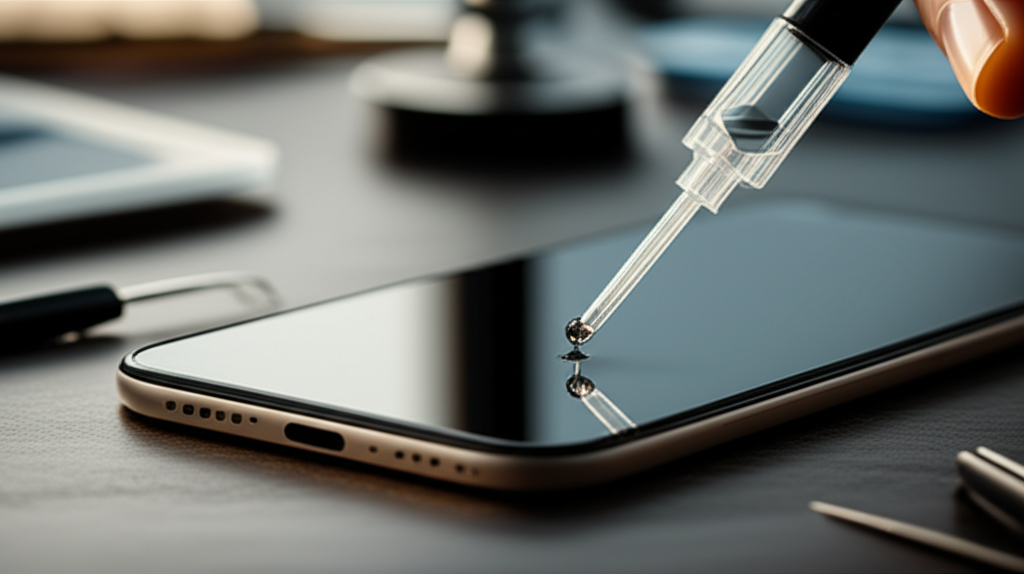
For LOCA, the process begins similarly with cleaning the old adhesive. The liquid adhesive is then carefully dispensed onto the display assembly, ensuring even coverage without excess. The glass or digitizer is then placed on top, and any excess LOCA is carefully wiped away. The assembly is then placed under a UV light source for a specific duration, which cures the liquid adhesive, solidifying it into a strong, clear bond.
The UV curing ensures the LOCA hardens uniformly, creating a robust and optically clear bond. This method is often favored for its efficiency and effectiveness in repair shops.
Common Problems and How to Fix Them
Even with the best materials, issues can arise with phone screen adhesives. Common problems include screen delamination (where the layers start to separate), air bubbles forming between layers, and a loss of touch sensitivity. These issues often stem from improper application, exposure to extreme temperatures, or physical impact. If your screen is lifting, it’s a clear sign the adhesive has failed.
Addressing these problems typically involves a complete screen replacement, as the adhesive is integrated into the display assembly. Attempting to re-adhere a loose screen without proper materials and tools is rarely successful long-term.
DIY vs. Professional Repair: Weighing Your Options
When your phone screen adhesive fails, you have two main options: a DIY repair or professional service. DIY repairs can be cheaper but come with significant risks. You’ll need specialized tools, a dust-free environment, and the correct adhesive (either OCA film or LOCA). Mistakes can lead to further damage, rendering your phone irreparable.
Professional repair offers expertise, specialized equipment, and often a warranty. While more expensive, it significantly increases the chances of a successful repair and preserves your device’s functionality and aesthetic. For complex repairs like screen bonding, professional help is usually recommended.
Choosing the Right Adhesive for Your Repair
If you’re considering a DIY repair, selecting the correct adhesive is paramount. For most modern smartphones, especially flagship models, an optically clear adhesive (OCA) film is the original material. However, for repair purposes, high-quality LOCA is often used and can be effective. Ensure you purchase adhesive specifically designed for mobile device screens and that it matches the type of repair you’re undertaking.
Always refer to repair guides for your specific phone model to determine the best adhesive and application method. Using generic or low-quality adhesive can lead to poor results.
Key Considerations for Adhesive Selection:
Optical Clarity: The adhesive must be perfectly transparent to avoid distorting the display image.
Bond Strength: It needs to create a durable bond that withstands daily use and environmental changes.
UV Resistance: Exposure to sunlight or UV light should not degrade the adhesive over time.
Flexibility: The adhesive should have some flexibility to accommodate minor shifts in the phone’s structure.
Ease of Application: Consider whether you are comfortable working with solid film or liquid adhesive.
The Future of Phone Screen Adhesives
The technology behind smartphone adhesives is continually evolving. Manufacturers are exploring new materials that offer enhanced durability, improved optical properties, and even self-healing capabilities. Innovations in nanotechnology and advanced polymer science are paving the way for adhesives that are stronger, thinner, and more resistant to damage. The focus remains on seamless integration, maintaining sleek designs, and improving the longevity of our devices.
As phones become more advanced with foldable screens and integrated sensors, the adhesives used will need to adapt to these new form factors and functionalities. The quest for the perfect bond continues.
Frequently Asked Questions (FAQ)
What kind of glue is used to stick a phone screen back on?
Typically, either Optically Clear Adhesive (OCA) film or Liquid Optically Clear Adhesive (LOCA) is used to bond phone screens. These are specialized adhesives designed for clarity and strong adhesion.
Can I use super glue to fix my phone screen?
No, you should never use super glue (cyanoacrylate) to fix a phone screen. It is not optically clear, can damage the display layers, and will likely make the problem worse.
Is OCA or LOCA better for phone screen repair?
OCA film is often the original material, requiring lamination. LOCA is a liquid UV-cured adhesive that can be easier to apply in repair settings and offers excellent gap-filling properties. Both can be effective if applied correctly.
How do I remove old adhesive from a phone screen?
Removing old adhesive requires careful scraping with a specialized tool (like a plastic spudger or razor blade) and often involves using an adhesive remover solution. It’s a delicate process to avoid damaging the display.
Will a loose phone screen affect its functionality?
Yes, a loose phone screen can affect functionality. It can lead to touch response issues, allow dust and moisture to enter the device, and potentially cause further damage to internal components.
* How long does phone screen adhesive last?
When applied correctly with the right materials, phone screen adhesive can last for the lifetime of the device. However, it can degrade over time due to heat, moisture, or physical impact.
Conclusion: Securing Your Smartphone’s Display
Understanding what adhesive is used for phone screens reveals the sophisticated engineering behind our everyday gadgets. From specialized OCA films to versatile LOCA liquids, these materials are crucial for maintaining the visual integrity, touch responsiveness, and structural soundness of your device. While DIY repairs are possible, the precision required often makes professional servicing the safest and most effective route. By appreciating the complexity of screen bonding, you can make informed decisions about repairs and better care for your valuable technology.

Belayet Hossain is a Senior Tech Expert and Certified AI Marketing Strategist. Holding an MSc in CSE (Russia) and over a decade of experience since 2011, he combines traditional systems engineering with modern AI insights. Specializing in Vibe Coding and Intelligent Marketing, Belayet provides forward-thinking analysis on software, digital trends, and SEO, helping readers navigate the rapidly evolving digital landscape. Connect with Belayet Hossain on Facebook, Twitter, Linkedin or read my complete biography.