


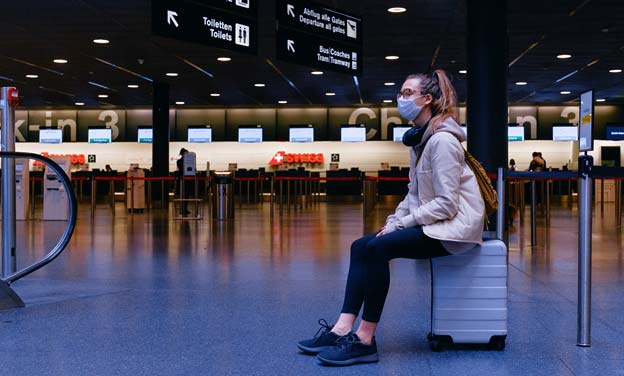
What is the current situation of the world, when meets technology and COVID-19? At the onset of the COVID-19 pandemic, the tourism and travel industries were hit hard as countries went into lockdown.
Travel restrictions coupled by the pandemic’s impact on the global economy resulted in the travel and tourism industry losing 42.1% in global revenue, according to a report from Statista.com.
Hopes of eradicating the virus are high, as Pfizer and Moderna reported significant developments in the creation of a vaccine, but McKinsey expects a recovery in the travel and tourism industries to come as late as 2024.
This will also depend on the speed at which vaccines are rolled out across the world. Despite such prospects, the COVID-19 pandemic has provided an opportunity for key players to try out new technologies and methods in order to restore demands without compromising the safety of travelers.
Traveling may have experienced a downward trajectory for much of 2020, but this embattled industry is learning from the situation and using it as a catalyst for continued innovation.
How has COVID-19 changed the travel and tourism sectors? What current trends will eventually shape the future of travel? What does the future hold for consumers and businesses alike?
For answers to these questions, we only need to look at the five important developments that technology and COVID-19 brought about and will definitely set the standards for safety and sustainability:

1. Investments on public hygiene
COVID-19 has, without a doubt, unearthed the weaknesses of the global travel sector in preparing for a severe global contagion.
Existing health protocols did little to contain it, as the virus has a higher transmission rate than influenza. Airports and hotels were caught off guard and had to impose stricter hygienic protocols on travelers.
As some economies began reopening with health restrictions in place, the travel and tourism sectors have begun working closely with public health officials to invest more along the lines of hygiene and safety.
Sure enough, the World Health Organization has issued public health advisories covering both essential and non-essential travels.
Aside from the mandatory use of masks, the WHO as well as its national counterparts have also encouraged local enterprises to adopt measures such as setting up of handwashing areas, encouraging the use of single-use utensils, and getting employees to use health and hygiene tracking apps.
When it comes to traveling, the World Travel and Tourism Council has proposed the implementation of safety stamps on establishments — both private and public — that follow global standards and practices on hygiene and sanitation.
From these developments, hygiene will surely factor in the choices of travelers who want nothing more than be safe throughout their journeys.
2. Contact tracing becomes the norm
South Korea, which became one of the earliest hotspots of the virus, was able to succeed in controlling local outbreaks of COVID-19. The country owes much of its success to its advanced contact tracing mechanisms.
Using surveillance systems, authorities can easily track individuals who have tested positive for COVID-19, trace the people they come in contact with, and implement early isolation measures that prevent the virus from spreading further.
Experts have noted that such draconian measures can lead to the infringement of privacy rights and individual liberties, but the South Korean example could provide the groundwork of effective and ethical contact tracing programs that can help restrict the spread of future pandemics.
In fact, such technologies as ID scanning and contactless temperature checks are already being implemented in travel terminals, tourism attractions, and other places where there are high concentrations of people.
There is a huge potential for using such methods as they can help make travel convenient and do away with lengthy protocols. It is only a matter for governments to iron out the ethical and constitutional issues that are attached to contact tracing methods.
3. Encouraging contactless payments
The worsening of the COVID-19 pandemic has encouraged consumers to use contactless payments in place of paying with cash. This followed reports that the virus could remain for days on paper money (although this remains to be proven).
Nevertheless, the situation has only intensified the use of e-wallets and debit transactions across the world. Although many of these transactions are concentrated within the e-commerce sector, the travel and tourism sectors can also benefit from contactless payments.
These can provide travelers less exposure to the virus and prove to them that traveling can be safe as well as convenient.
Contactless payments can also help enhance customer service and brand loyalty. Establishments utilizing alternative payment channels are in a good position to attract and retain clients.
In addition, contactless payments could also be leveraged alongside loyalty and cash-back programs and even social listening activities that can drive further customer engagement and drive growth.
In this global health situation where close interactions are limited, travelers who have recently emerged from lockdowns are itching to spend a lot. Key players will only need to provide the safest and easiest means to fund their experiences overseas.
4. Expansion of the domestic tourism sector
Not all countries are emerging from the COVID-19 pandemic. After all, the situation is far from over as countries like New Zealand and South Korea, lauded for their effective response against the contagion, are still seeing local outbreaks.
There is still a long way to go before traveling goes unhampered. However, local tourism industries will still need to thrive, and with international travel still under intense restrictions, local communities will feel the brunt of the effects.
As an alternative, government tourism agencies have encouraged domestic travel in order to keep cultural and natural vacation hotspots afloat up until international tourists are allowed.
Sure enough, staycation programs have been instituted in countries like the Philippines where local accommodations have taken a major hit to their annual growth.
These aim to support local communities and provide the local economy a buffer against the global slump in tourism demands. This has also intensified marketing for local travels and investment in health and safety tools.
The COVID-19 pandemic may have hampered everyone’s travel plans for 2020, but it did bring opportunities for local and international players to leverage.
Through continued innovation and partnerships between the public and private sectors, we can only hope for things to turn out for the best as 2021 rolls in. Hope there were many useful discussions you found in this article about Technology and COVID-19.

Belayet Hossain is a Senior Tech Expert and Certified AI Marketing Strategist. Holding an MSc in CSE (Russia) and over a decade of experience since 2011, he combines traditional systems engineering with modern AI insights. Specializing in Vibe Coding and Intelligent Marketing, Belayet provides forward-thinking analysis on software, digital trends, and SEO, helping readers navigate the rapidly evolving digital landscape. Connect with Belayet Hossain on Facebook, Twitter, Linkedin or read my complete biography.